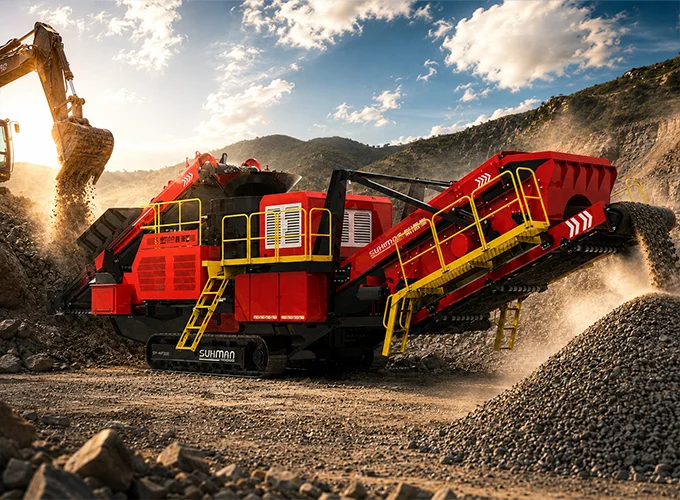
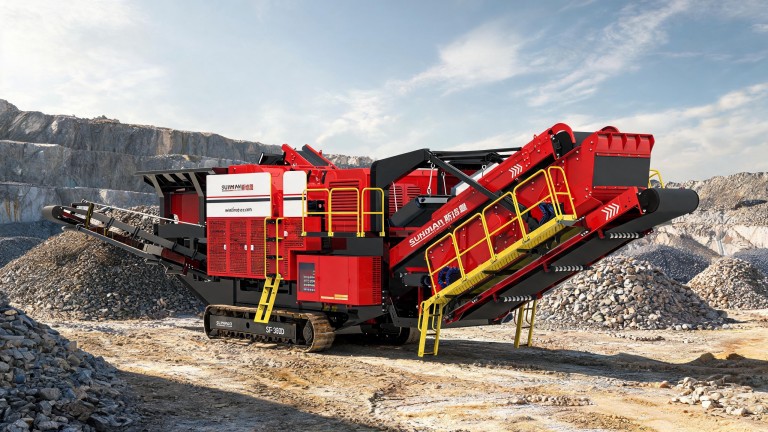
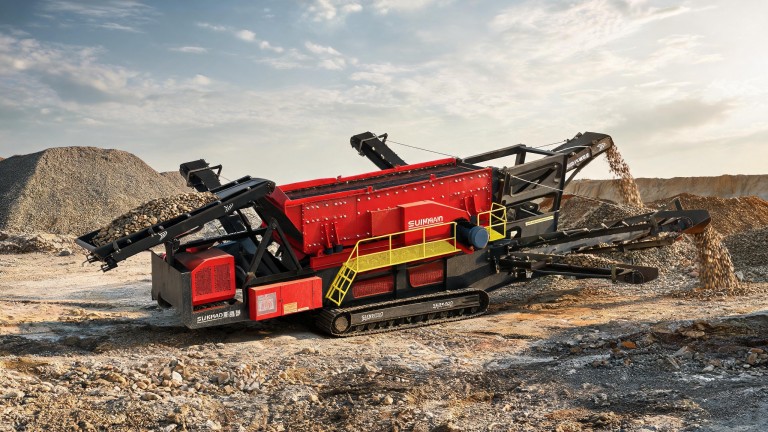
Mobile crushers may seem like versatile tools on construction sites and in mining operations, but they have hidden drawbacks that can disrupt work processes and increase costs, so when making a choice, it is important to consider all the weaknesses of these units in advance to avoid encountering unforeseen problems during operation
Limited productivity when processing hard rock
Despite their compact size, mobile crushers cannot match the power of their stationary counterparts; when processing particularly hard materials such as granite or basalt, their processing rate drops by 30–40 per cent, and the frequency of component failures increases significantly, leading to downtime and delays in fulfilling orders
High maintenance costs and wear and tear on parts
All components of a mobile crusher operate under conditions of constant vibration and stress whilst being transported between sites, therefore, wear parts such as crushing plates and bearings wear out 25–30 per cent faster than in stationary equipment, whilst regular lubrication and checking of fastenings require additional labour and financial investment
Limited options for adjusting the output particle size distribution
Due to their design characteristics, mobile models do not allow the size of the output fraction to be adjusted with the same high degree of precision as stationary units, and when it is necessary to produce uniform material for specific construction works, it is often necessary to carry out reprocessing, which increases fuel consumption and the time taken to complete the task