Don’t go!
Please get in touch, and our engineers will draw up a bespoke solution for your project.

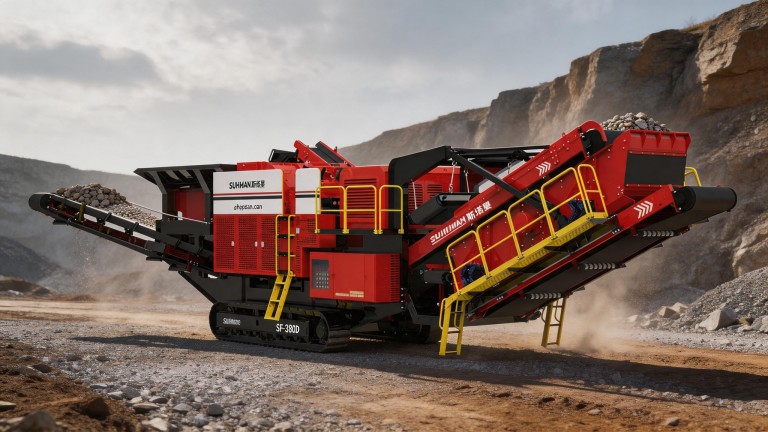
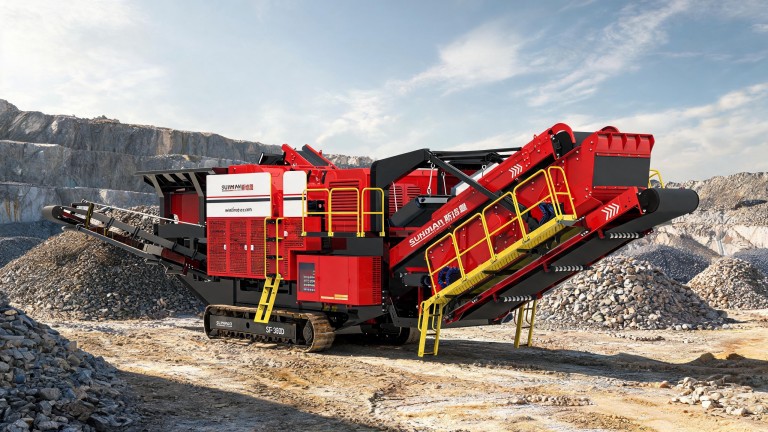
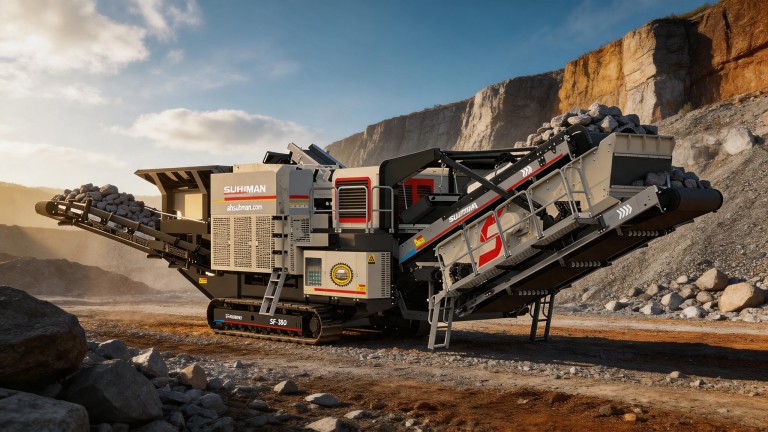
A mobile jaw crusher is indispensable on construction sites and in mines; before purchasing one, it is worth examining its key specifications: the dimensions of the feed opening (to suit the size of the raw material), the output capacity by particle size (to suit the volume of work), the engine power (to match the load) and the weight and manoeuvrability (for easy movement).

A turnkey mobile jaw crusher in Russia — a ready-made solution for crushing rock and construction waste, saving time on installation. It is best to order from the manufacturers’ official distributors or major suppliers, taking into account capacity, component service life, the provision of commissioning services, and adaptation to Russian conditions.

Mobile jaw crushers cost 300,000 roubles and upwards, depending on their capacity and configuration. To avoid paying over the odds, base your decision on your actual production needs and avoid unnecessary features. To get the best deal without compromising on quality, compare offers from dealers and reputable sellers of second-hand equipment, and keep an eye out for manufacturers’ special offers.

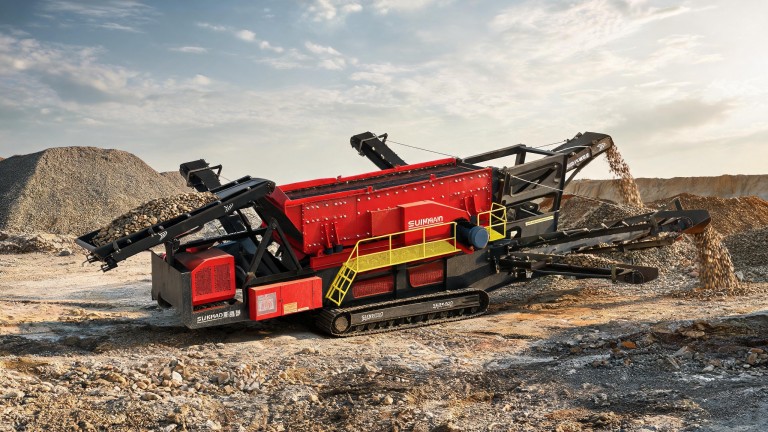
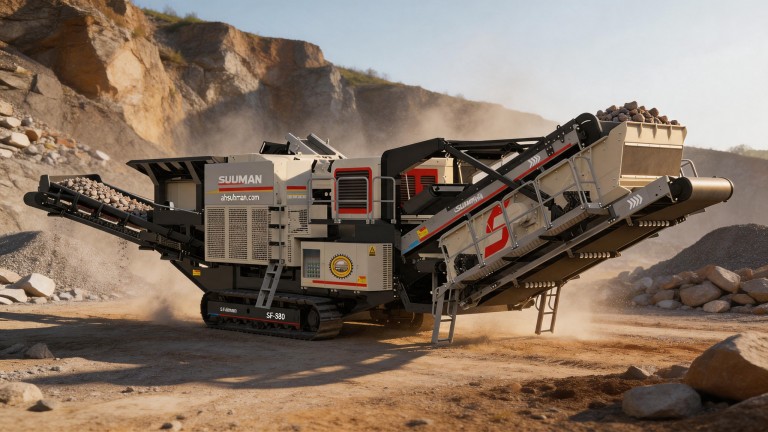
A mobile jaw crusher with a pre-screen combines screening and crushing, increases productivity, reduces wear and tear and logistics costs, and is suitable for temporary sites. When selecting a unit, factors such as the type of raw material, throughput, particle sizes and dimensions are taken into account.

A compact, mobile jaw crusher for quarries is an indispensable piece of equipment, offering the advantages of flexibility, cost-effectiveness and compactness, and enabling the processing of rock of varying hardness without the need for complex installation. When selecting a model, factors such as rock hardness, particle size, daily processing capacity, as well as ease of maintenance and the availability of spare parts are taken into account.

A mobile jaw crusher with a capacity of 300 tonnes per hour — a mobile unit for crushing hard rock, featuring a reinforced jaw assembly; it is suitable for a range of raw materials, site topography and compatibility with other equipment, and reduces logistics and energy costs.

Dust generated during stone crushing is harmful to workers’ health and reduces the service life of equipment. There are simple, cost-effective methods for reducing dust levels: moistening the raw material with water before processing, sealing off the crushing area with wear-resistant material, and installing a local extraction system with a filter.

A stationary jaw crusher requires a robust, correctly designed foundation to ensure stable, long-term operation. The design takes into account the total weight of the crusher, the dynamic load caused by the impact of the jaw plates, and the bearing capacity of the ground. The foundation is laid below the frost line and reinforced with steel bars. Once the concrete has set, the supports are checked for levelness and the concrete is allowed to reach full strength before installation.

A crushing and screening plant with a capacity of 200 t/h is a key component of mining and construction operations; it comprises a hopper, crushers, screens and conveyors. During the design phase, it is essential to test the raw material, allow for a capacity margin of ≥15%, and provide sufficient space for maintenance. Common mistakes include allocating too little space for screens and failing to consider the vibrational compatibility of components.

For processing basalt with a feed size of up to 600 mm, a PE series jaw crusher is ideal: it can withstand the stresses of crushing hard, abrasive raw materials; choose a model with a feed opening of 600 mm or more and reinforced, wear-resistant jaws. It is more cost-effective to buy directly from the manufacturer without intermediaries; this avoids mark-ups and provides free advice and warranty service.