Don’t go!

You haven’t yet received your free quote and the exact price.
Please get in touch, and our engineers will draw up a bespoke solution for your project.
imag 32

Turnkey iron ore crushing plant: what you need to know before placing an order and how to choose the right contractor

A turnkey iron ore crushing line saves the client the trouble of coordinating individual stages of the work. Before placing an order, you need to determine the throughput, the size of the final fractions and the characteristics of the raw material; check the contractor’s portfolio; avoid selecting them solely on the basis of a low price; and sign a contract with clear deadlines and a list of works.

Read MoreTurnkey iron ore crushing plant: what you need to know before placing an order and how to choose the right contractor
imag 17

A production line for 5–20 mm crushed stone: how to choose the optimal configuration and what key benefits specialised equipment offers

A 5–20 mm crushed stone production line is essential for construction and roadworks; its configuration is tailored to the raw material, capacity and purity of the fraction. Factors taken into account during selection include rock hardness, throughput of 10–500 tonnes per hour, and separation accuracy. Specialised equipment reduces the need for spare parts replacement by 40–60% and electricity consumption by 15–25%. Common mistakes include cutting corners on screening and ignoring the need for increased capacity.

Read MoreA production line for 5–20 mm crushed stone: how to choose the optimal configuration and what key benefits specialised equipment offers
imag 12

A 300-metric-tonne-per-hour basalt crushing plant: how to choose the right one and what are the key advantages of such equipment

For a basalt crushing line with a capacity of 300 t/h, the correct selection of equipment guarantees stability and profitability: select a jaw crusher for primary crushing and a cone crusher for secondary crushing, taking into account the hardness of the basalt, the particle size distribution and the service life of the components. Such a line is resilient to heavy loads, saves energy and produces minimal waste. To maximise service life, check components regularly, prevent foreign metal from entering the system, and carry out scheduled maintenance.

Read MoreA 300-metric-tonne-per-hour basalt crushing plant: how to choose the right one and what are the key advantages of such equipment
imag 12

Industrial glass crusher with dust extraction: how to choose the right model and what to look out for when buying

A dust-extraction industrial glass crusher is essential for production; choosing the right one affects both efficiency and safety. When selecting a machine, it is worth assessing its capacity (ensuring the processing volume meets requirements and the permissible glass size), dust removal efficiency (at least 99% capture rate, sealed housing, replaceable filters), as well as reliability (wear-resistant parts) and the availability of after-sales service.

Read MoreIndustrial glass crusher with dust extraction: how to choose the right model and what to look out for when buying
imag 12

Vertical impact crusher for quartz sand: how to choose the right model and what are its main advantages for processing raw materials

Vertical impact crushers for quartz sand are selected based on capacity, sand particle size distribution and the hardness of the raw material: up to 75 kW for small-scale operations, from 132 kW for large-scale operations, with wear protection checks. Their advantages include: precise crushing, a cuboid particle shape, low energy consumption and durable working parts. For efficient operation, it is necessary to check the rotor balance, prevent metal contamination, adjust clearances and carry out timely maintenance.


Read MoreVertical impact crusher for quartz sand: how to choose the right model and what are its main advantages for processing raw materials
imag 17

150 metric tonnes per hour rotary crusher: how much does it cost and where is the best place to buy such machinery for production lines? 150 metric tonnes per hour rotary crusher: what factors influence the price of such equipment?

A rotary crusher with a capacity of 150 tonnes per hour is in high demand; its price depends on the materials, the rotor, the automation, the specifications and the manufacturer. It is more cost-effective to buy directly from official manufacturers, avoiding cheap offers from dubious suppliers. Before purchasing, check the certificates and warranty, and consult specialists to ensure the machine is suited to your specific requirements.

Read More150 metric tonnes per hour rotary crusher: how much does it cost and where is the best place to buy such machinery for production lines? 150 metric tonnes per hour rotary crusher: what factors influence the price of such equipment?
imag 17

Automatically adjustable cone crusher: what are its advantages and how to choose the right model

A self-adjusting cone crusher is an efficient piece of equipment for crushing mineral raw materials: it offers stable throughput, a low failure rate, automatic gap adjustment and protection against jamming. When selecting a model, consider the type of raw material, throughput, particle size, installation space and the availability of spare parts; compact models are suitable for small to medium-sized operations, whilst heavily loaded production lines require models with real-time monitoring – opt for tried-and-tested manufacturers.

Read MoreAutomatically adjustable cone crusher: what are its advantages and how to choose the right model
imag 32

Jaw crusher price: how much does high-quality equipment cost and where can you find the best deals?

A jaw crusher is a piece of industrial equipment; its price ranges from 150,000 to several million roubles, depending on its capacity, the materials used in its components, the availability of additional options, and the type of production. You can distinguish a high-quality machine from a counterfeit by checking the manufacturer’s markings, certificates, smooth welds, smooth operation and the availability of after-sales service. Attractive offers are available from authorised dealers and at industrial trade fairs and exhibitions; it is also possible to purchase tried-and-tested second-hand equipment with a residual warranty.

Read MoreJaw crusher price: how much does high-quality equipment cost and where can you find the best deals?
imag 27

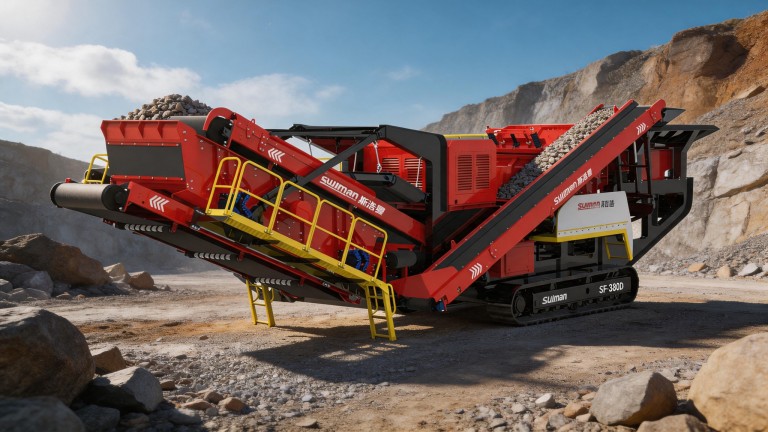
A 300-tonne-per-hour mobile jaw crusher: what are its advantages and how to choose the right model for your production facility

The mobile jaw crusher, with a capacity of 300 tonnes per hour, offers high productivity and manoeuvrability, requires no permanent installation and reduces logistics costs. When selecting this equipment, factors such as the type of raw material, site conditions, ease of maintenance and compatibility with existing production lines are taken into account.

Read MoreA 300-tonne-per-hour mobile jaw crusher: what are its advantages and how to choose the right model for your production facility
imag 22

Which is better: a mobile or stationary crusher? How to choose the right option for your needs. What are the key differences between them that you should consider before buying?

The choice between a mobile and a stationary crusher should be based on production requirements, operating conditions and budget: stationary crushers are suitable for permanent sites with high processing volumes, whilst mobile crushers are ideal for work at various remote sites, helping to reduce logistics costs.

Read MoreWhich is better: a mobile or stationary crusher? How to choose the right option for your needs. What are the key differences between them that you should consider before buying?