Don’t go!
Please get in touch, and our engineers will draw up a bespoke solution for your project.

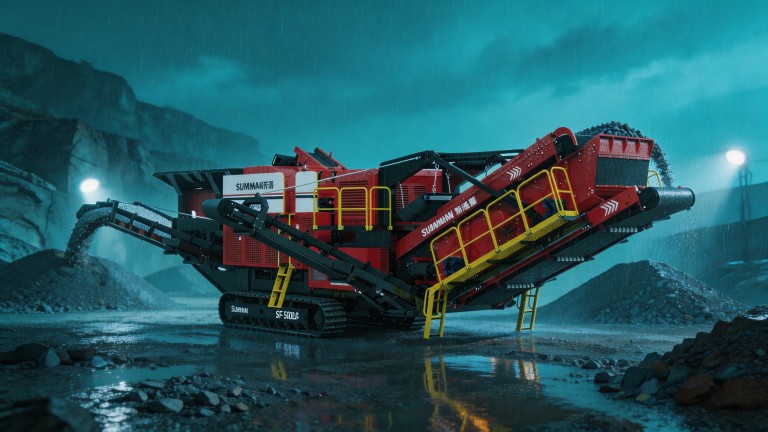
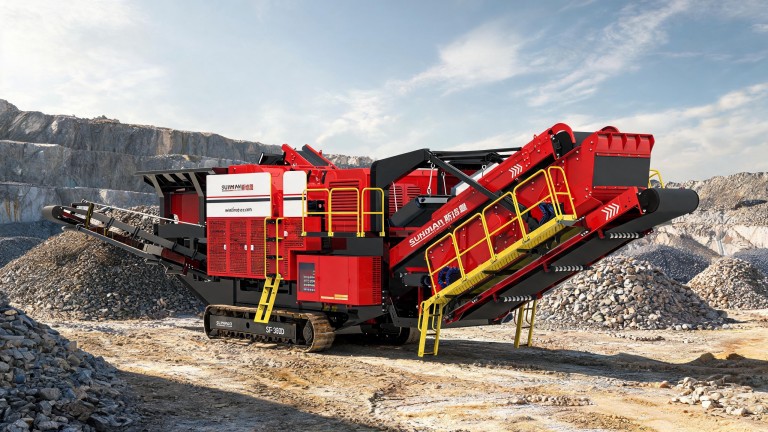
The new generation of mobile jaw crushers is compact, high-performance and adaptable to a variety of crushing conditions. It requires no complex installation, operates on uneven ground, extends the service life of components by 30%, reduces energy consumption by 15%, features convenient maintenance access points and emergency shut-off systems, and is a sensible choice for production lines.

Heavy-duty mobile jaw crushers for mining and construction sites require careful selection: choose a model based on feed capacity, drive type, fuel consumption and compatibility with the raw material. Choose experienced manufacturers with local service networks, and check the warranty cover for key components, the availability of spare parts and prompt service support to avoid downtime.

The European mobile jaw crusher is an efficient, easy-to-operate piece of equipment that does not require complex fixed installation and is fitted with overload protection. When selecting a model, factors such as feed size, throughput, operating conditions, as well as ease of maintenance, after-sales service and the option to add additional components are taken into account.

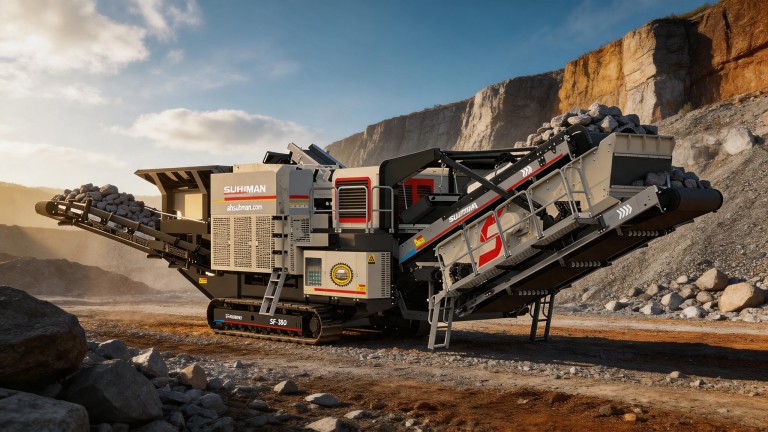
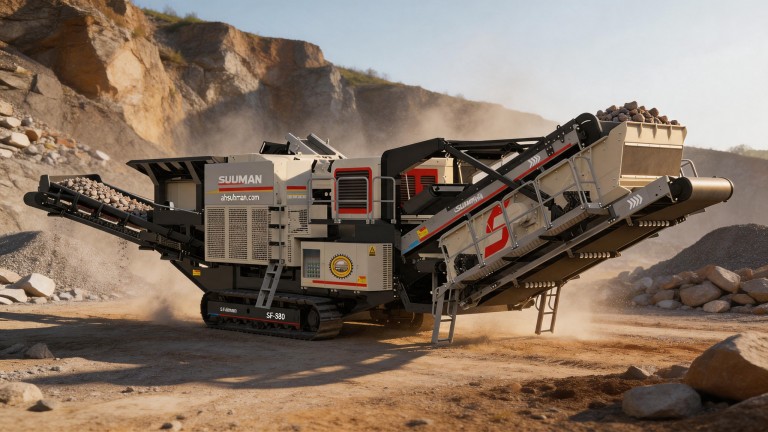
A mobile jaw crusher with a conveyor is a versatile addition to production lines: it is compact, can move independently, requires no permanent installation, and its integrated conveyor reduces costs and downtime, whilst being easy to integrate into existing lines. When making your selection, take into account the type of raw material, throughput, the required output size, ease of maintenance and climatic suitability.

A mobile jaw crusher for ore processes rock on site, saving on transport costs. When choosing a model, consider the size of the jaw opening, the throughput and the particle size distribution of the final product; for rough terrain, choose tracked models; for flat sites, choose wheeled models. Also, check that the dealer has spare parts in stock, and opt for models with reinforced, wear-resistant jaw plates.

A mobile jaw crusher with a capacity of 500 t/h is a reliable piece of equipment for industrial sites: it does not require a fixed installation, is easy to move, can be commissioned quickly and is energy-efficient. When selecting a machine, take into account the properties of the raw material, the requirements for the particle sizes and the site conditions. To extend the service life, regularly check wear parts, follow the maintenance schedule and do not overload the equipment.

A mobile jaw crusher with a capacity of 50 tonnes per hour is a popular choice for crushing hard materials. Before purchasing, check the hardness of the jaw plates, the suitability of the engine power, the size of the feed material, the compactness of the chassis, protection against non-crushable objects, the warranty and the availability of spare parts. It is best to order from direct, reputable manufacturers; avoid cheap options that come without a warranty.

The total cost of ownership of a mobile crushing plant depends on the purchase price, maintenance, fuel/energy, replacement parts, logistics and staff wages, with costs rising when processing hard, abrasive rock and during round-the-clock operation. Optimising operating modes, carrying out preventive maintenance, using high-quality parts and training staff can reduce costs by 25–30% without compromising productivity.

A mobile jaw crusher consumes energy due to the load, wear and tear on components, and operating conditions. The main factors contributing to excessive energy consumption are the hardness and size of the raw material, and wear on the jaw plates. The calculation is based on the motor’s rated power multiplied by a load factor of 0.6–0.8, multiplied by the operating time, minus the idle time. Preventative maintenance of the jaw plates, appropriate selection of raw material and a reduction in idle time will reduce energy over-consumption by 20–25%.

Calculating the throughput of a crushed stone production line is a key stage in its design and operation, helping to prevent downtime and overloads. A correct calculation involves determining the parameters of the components, modelling the flow of raw materials, and adjusting the figures to suit the specific conditions of the plant. Common errors include ignoring the difference between rated and actual capacity, failing to account for maintenance time, and mismatched throughput capacities of the plant components. The calculations are verified by conducting an 8–12-hour trial run of the line, and the parameters are adjusted if deviations exceed 10%.