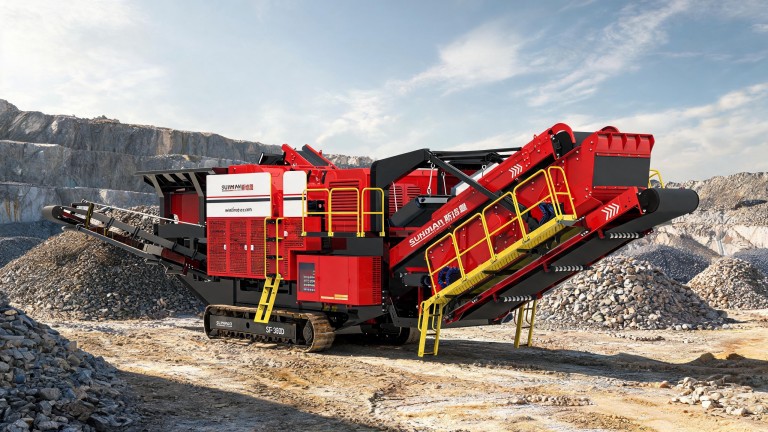
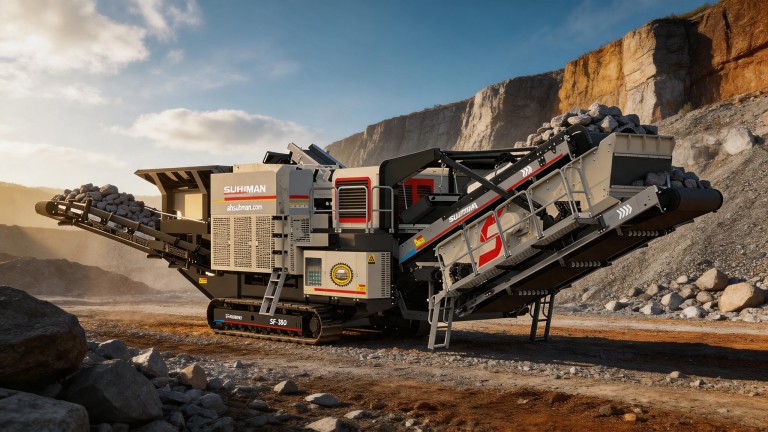
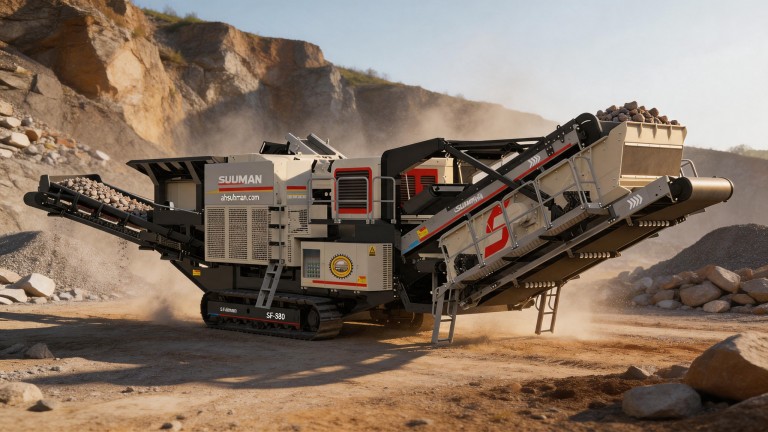
A mobile jaw crusher with a pre-screen combines the functions of sorting and crushing raw materials, prevents unwanted fractions from entering the working unit, increases productivity and reduces equipment wear. To select the right model, simply consider the type of raw material, the required output size and the scale of your production requirements.
Key features of the equipment
The primary screen in the first stage separates out the fine fractions that are already ready and do not require crushing, whilst simultaneously retaining large pieces that do not meet the feed specifications. The jaw crusher uniformly reduces the remaining feed to the specified size, whilst the mobile chassis allows the plant to be moved quickly between work sites without the need for complex assembly. The integration of the two units within a single housing reduces the amount of auxiliary equipment required and lowers on-site logistics costs.
Key criteria for selecting a model
The first parameter is the type of raw material to be processed: for hard rock, models with increased jaw compression force are selected, whilst standard configurations are sufficient for soft construction waste. Next, the required hourly throughput and the permissible feed and discharge particle sizes are taken into account, whilst also considering any size and weight restrictions for movement within the production site. In addition, the availability of options for adjusting the gap between the jaws is assessed to enable rapid changes to the specifications of the final fraction.
Benefits for manufacturing tasks
This type of equipment is particularly advantageous for work at temporary sites, and for processing construction waste and rock at the point of extraction. It does not require a permanent foundation, can be brought into operation quickly, and pre-sorting reduces the load on the jaw assembly, extending the service life of wear parts. As a result, the user obtains a finished fraction of the required size in a single pass, without additional processing stages or unnecessary transport operations between individual pieces of machinery.