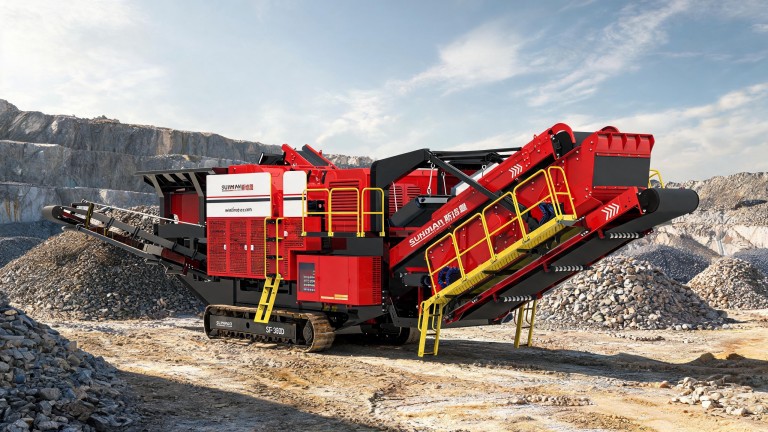
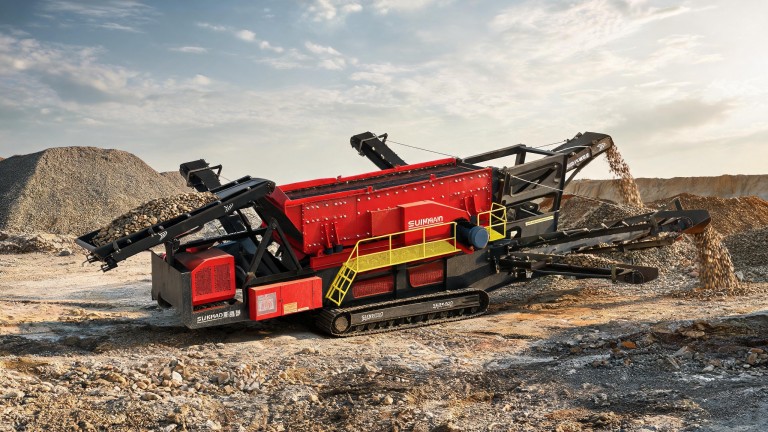
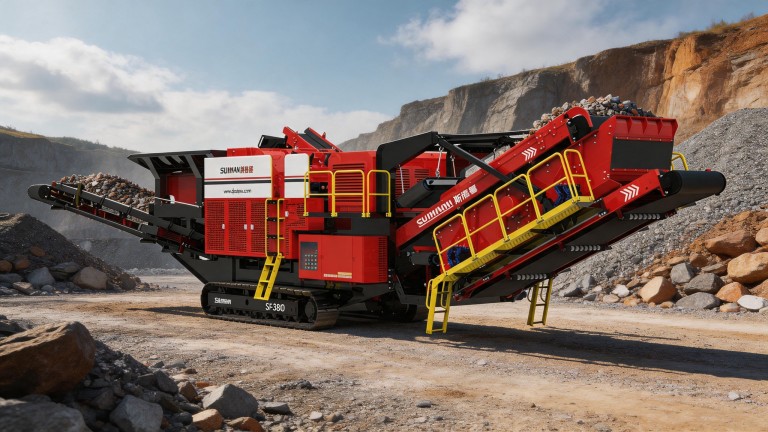
This paper summarises key data on the crushing process for three common types of rock — granite, basalt and limestone – and highlights their individual characteristics during processing, performance indicators and typical areas of application for the resulting crushed stone, helping readers to quickly familiarise themselves with the process’s technical parameters.
The physical properties of ores as the basis for crushing
Granite, basalt and limestone have fundamentally different hardness and brittleness properties, which directly determine the load placed on crushing equipment. Granite and basalt are high-hardness rocks with a Mohs hardness of 6–7, whilst limestone has a rating of 3–4, making it considerably easier to process without causing excessive wear to the plant’s working parts.
Energy consumption figures for crushing
The energy consumption required to produce the 5–20 mm fraction varies by more than a factor of two between different rock types. Crushing one tonne of basalt requires 18–22 kWh, granite 15–18 kWh, whilst limestone requires just 7–9 kWh, which results in a difference in the production cost of the end product for manufacturers.
Optimal crushing processes for each type of rock
For hard granite and basalt, a two- or three-stage process using jaw and cone crushers is recommended to avoid frequent equipment breakdowns. For soft limestone, a single-stage process using rotary crushers is sufficient, as this ensures the required cubicity of the particles without the unnecessary costs associated with additional processing stages.
Fractional composition of the finished product
With identical equipment settings, the yield of standard construction aggregates varies: for limestone, it accounts for 85–90% of the total processed mass; for granite, 78–82%; and for basalt, 75–79%. At the same time, the proportion of fine particles is lowest in granite, making it the preferred choice for concrete mixes. Basalt has high flexural strength, making it in demand for road construction, whilst limestone is suitable for the production of non-structural mortars and aggregates for lightweight concrete.