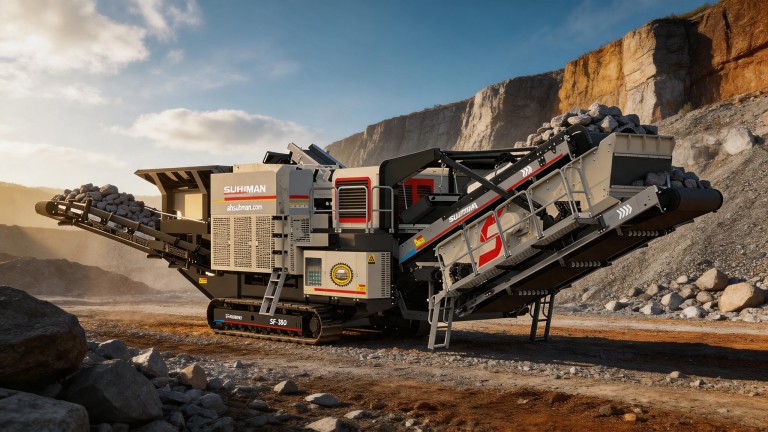
The maintenance programme for a mobile crusher during the first 500 operating hours comprises a mandatory set of preventative measures which lay the foundations for long-term, trouble-free operation of the equipment, prevent premature wear of components and eliminate the risk of sudden breakdowns during the early stages of operation; All procedures strictly comply with the manufacturer’s guidelines and do not entail any additional costs when carried out in a timely manner.
Diagnosis of key components following the initial run-in period
During the first 500 operating hours, the mobile crusher undergoes a natural running-in period for all moving components; as part of this maintenance procedure, the tightness of all bolted connections on the frame, the undercarriage and the crushing mechanism; they ensure there is no play in the joints and mountings that may have developed under load during operation; and they also check the integrity of the welds on the load-bearing structures.
Replacement of operating fluids and filter elements
During the first 500 operating hours, minute metal particles formed during the running-in of components accumulate in the engine and gearbox oils, therefore, a complete change of the engine, hydraulic and gearbox oils is essential; at the same time, all relevant filters, including the oil, fuel and hydraulic filters; the levels of coolant and brake fluid in the machine’s running gear must also be checked and topped up if necessary.
Inspection and adjustment of the crushing unit
The crushing mechanism is the main working component of the crusher; as part of routine maintenance, the degree of wear on the liners, crushing plates and hammers is assessed, and, where necessary, the clearance between the fixed and moving plates is adjusted to ensure the required output particle size; The rotor is also checked for balance to eliminate any vibrations that may arise from uneven wear of the working components and which could adversely affect the overall structure of the plant.
Inspection of the hydraulic and electrical systems
Technicians check all hydraulic lines for leaks, ensuring there are no fluid leaks at the hose connections, check the functionality of all hydraulic actuators responsible for raising the feed hopper and adjusting the crushing gap, whilst simultaneously diagnosing electrical connections, the condition of cable insulation and the functionality of the control panel, thereby eliminating the risk of short circuits and malfunctions in the automatic control system.
Final test run and data recording
Once all procedures have been completed, an idle and load test run of the crusher is carried out; the readings from the pressure, temperature and vibration levels, compare the values obtained with the manufacturer’s specifications, record all maintenance results in the equipment’s service logbook, and provide recommendations on operating conditions until the next scheduled maintenance to ensure the plant’s stable performance during subsequent stages of use.