Don’t go!
Please get in touch, and our engineers will draw up a bespoke solution for your project.

When selecting a jaw crusher with a capacity of 250 t/h, three key factors must be taken into account: the characteristics of the material to be processed (select reinforced jaw plates if the raw material is highly abrasive), check the actual throughput under operating conditions, and confirm the availability of local service and spare parts from the supplier.

A 150 t/h jaw crusher for granite — a reliable solution for crushing hard raw materials. When choosing, consider the following: a compressive strength of at least 350 MPa, a suitable feed opening, proven performance with granite; crushing chamber components made from high-manganese steel, convenient gap adjustment, and reliable lubrication. Buy from manufacturers with at least 10 years’ experience and avoid dubious intermediaries.

A jaw crusher for primary ore crushing is a reliable piece of equipment for mining enterprises: it is selected based on the size of the feed pieces (the 10% has a smaller feed opening), its capacity and the hardness of the raw material. It features two jaws and a robust alloy steel housing, and is characterised by low energy consumption, simple maintenance and a consistent particle size distribution at the outlet.

A stationary jaw crusher for granite aggregate is essential for production; choosing the right model improves efficiency. When selecting a machine, assess the feed opening size and the desired output size; do not opt for excessive capacity. Look for wear-resistant manganese steel liners, an optimal grooving profile and a fully welded frame. Check the warranty, the availability of spare parts and maintenance requirements.

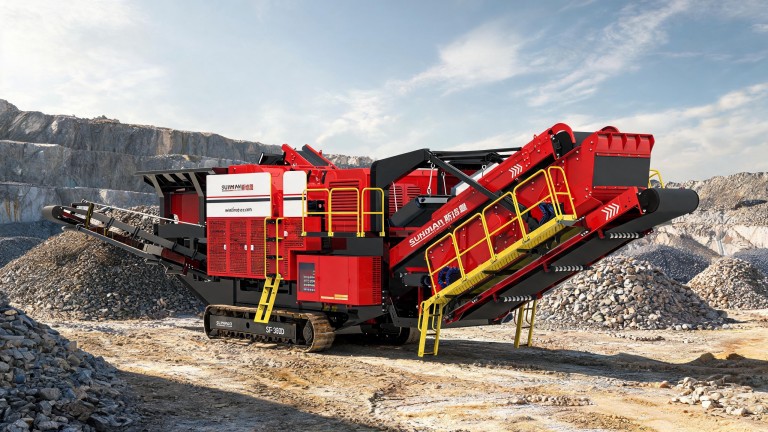
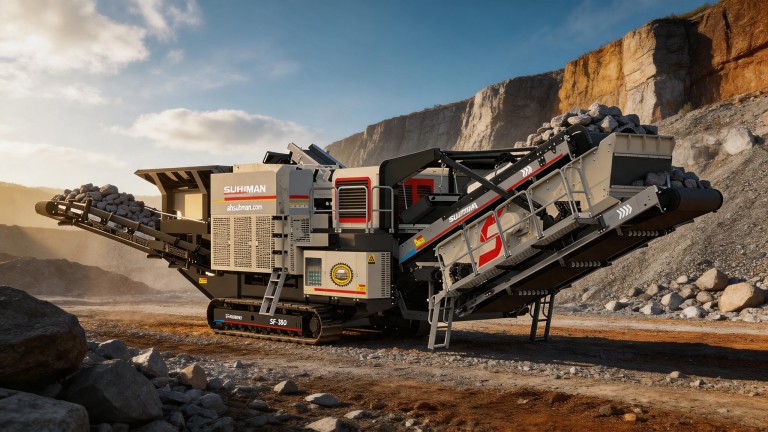
Turnkey mobile jaw crushers in Russia are essential for mining and construction companies. When making a selection, factors such as capacity, jaw strength, mobility, energy consumption and maintenance are taken into account. The turnkey package includes supply, delivery, commissioning, training and a warranty. It is advisable to order from official manufacturers’ representatives with local warehouses.

A mobile jaw crusher with a magnetic separator is required by mining and processing companies. It is best to order directly from manufacturers — there are no commissions and you can get bonuses; do not buy cheap, reconditioned equipment. Select equipment based on capacity, particle size, separator power, weight, dimensions, energy consumption and the availability of spare parts, taking into account the specific requirements of your production process.

A compact, mobile jaw crusher for quarries is a reliable piece of kit; the model you choose affects operational efficiency, whilst a cost-effective purchase helps keep costs down. When making your selection, take into account the size of the raw material, capacity and dimensions; opt for dust-protected models that are easy to maintain. Order directly from regional manufacturers, and check the warranty and spare parts supply arrangements.

A jaw crusher is a piece of industrial equipment; its price ranges from 150,000 to several million roubles, depending on its capacity, the materials used in its components, the availability of additional options, and the type of production. You can distinguish a high-quality machine from a counterfeit by checking the manufacturer’s markings, certificates, smooth welds, smooth operation and the availability of after-sales service. Attractive offers are available from authorised dealers and at industrial trade fairs and exhibitions; it is also possible to purchase tried-and-tested second-hand equipment with a residual warranty.

When choosing a mobile jaw crusher for limestone, focus on throughput and engine power. First, check the feed opening size to accommodate the raw material and the appropriate output size, the chassis’s manoeuvrability, and protection against limestone dust. Opt for tried-and-tested brands with local service centres and spare parts supply to avoid downtime.

When selecting a mobile jaw crusher for basalt (a hard, abrasive rock), bear in mind the following: 1) jaw plates made of high-manganese steel with chromium; 2) an inlet opening 15–20% larger than the maximum feed size, with capacity to match the required throughput; 3) straightforward diagnostics, readily available spare parts and overload protection.