Don’t go!
Please get in touch, and our engineers will draw up a bespoke solution for your project.

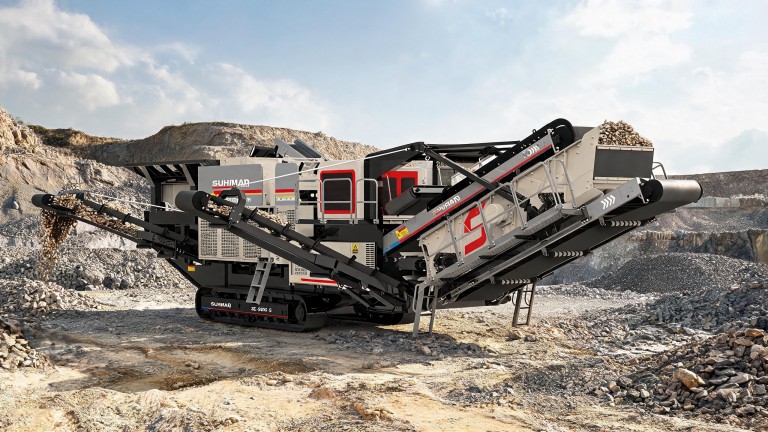
The granite crushing line (200 t/h) is a reliable asset for mining and construction companies. When selecting equipment, assess the characteristics of the raw material, choose a jaw (primary) and cone (secondary) crusher, and check the wear resistance of components and the supplier’s after-sales service. It produces standard particle sizes, is suitable for small and medium-sized operations, and does not require a large investment. To ensure efficiency, carry out scheduled maintenance, ensure a consistent feed of raw material, and set up particle size control.


The cost of twin-shaft coal crushers ranges from hundreds to tens of thousands of euros, depending on capacity, materials, specifications and warranty. It is more cost-effective to buy directly from manufacturers at specialised trade fairs or industry exhibitions. When making your choice, weigh up the machine’s capacity against your actual needs, and clarify the terms of delivery and after-sales service.

Валковая дробилка для влажной глины — незаменимый производственный инструмент. При выборе ориентируйтесь на производительность предприятия, влажность сырья и нужную фракцию, предпочитайте модели с износостойкими валками. Обращайте внимание на регулируемый зазор между валками и систему самоочистки. При эксплуатации проверяйте сырье на посторонние включения, контролируйте подшипники, смазывайте узлы по регламенту и не превышайте заявленную производительность.

При выборе дробилки для гипса с регулировкой фракций ориентируйтесь на производительность вашего производства, нужный диапазон размеров готового материала, условия эксплуатации. Учитывайте диапазон регулировки фракций, подходящую производительность, надежность узлов из износостойкой стали и простоту обслуживания.

Choosing the right crusher for slag from metallurgical production affects operational efficiency and cost-effectiveness. It is important to take into account the characteristics of the raw slag (selecting the type of crusher based on its hardness and particle size distribution), ensure that the capacity is 10–15% higher than the average daily processing volume, and take into account the service life of wear parts and the availability of after-sales support from the supplier.

A dust-extraction industrial glass crusher is essential for production; choosing the right one affects both efficiency and safety. When selecting a machine, it is worth assessing its capacity (ensuring the processing volume meets requirements and the permissible glass size), dust removal efficiency (at least 99% capture rate, sealed housing, replaceable filters), as well as reliability (wear-resistant parts) and the availability of after-sales service.

Hammer crushers for bricks and concrete are indispensable tools for DIY enthusiasts when it comes to disposing of construction waste. For domestic use, compact models with a power output of 1.2–2 kW are suitable; these do not require connection to a three-phase mains supply and weigh up to 50 kg. When choosing a model, you should consider the size of the input pieces (up to 150 mm), a forged steel rotor and the ability to adjust the size of the output material. The machine processes waste into usable rubble, saving you both money and time on waste disposal.

An industrial hammer mill for coal requires the correct choice of model in terms of capacity, particle size, hammer strength, compliance with installation guidelines, preparation for operation and safe operation to ensure efficiency and a long service life.

There is high demand for a hammer crusher for limestone with a capacity of 50 t/h: select one based on the hardness of the raw material, particle size distribution and the durability of its components; look for suppliers at trade fairs, among experienced manufacturers and on trusted platforms. Before purchasing, request a trial run and clarify the warranty, spare parts supply and technical support.

When purchasing a centrifugal crusher for cuboid crushed stone, you need to assess three parameters to avoid unnecessary expenditure and unreliable operation: ensuring that the capacity matches the volume of raw material to be processed (do not choose a model with either excessive or insufficient capacity), the service life of the working components (select models made from hardened, high-alloy steel) and suitability for the particle size of the raw material.