Don’t go!

You haven’t yet received your free quote and the exact price.
Please get in touch, and our engineers will draw up a bespoke solution for your project.
imag 27

Concrete crushing plant with rebar separation: how to choose the right equipment and where to order a high-quality service at a competitive price

To crush concrete whilst separating the reinforcement, you need to select specialist equipment suited to the scale of the work and a reliable contractor. Mobile hydraulic shears are suitable for small sites, whilst stationary systems with a separator are required for industrial-scale projects. Choose contractors with at least three years’ experience, their own equipment and a transparent quotation; this guarantees quality, safety and no unnecessary expenditure.

Read MoreConcrete crushing plant with rebar separation: how to choose the right equipment and where to order a high-quality service at a competitive price
imag 17

A crushing line for high-strength quartzite: how to choose the best equipment and what mistakes to avoid when setting it up

When crushing hard quartzite, the equipment is selected according to the hardness of the raw material: jaw crushers for the primary stage, cone crushers for the secondary stage; hammer crushers are not suitable. Common mistakes include overestimating throughput capacity, incorrect clearances between components, and neglecting dust extraction. Regular inspection of components, a uniform feed of raw material and scheduled maintenance extend the equipment’s service life by 1.5–2 times.

Read MoreA crushing line for high-strength quartzite: how to choose the best equipment and what mistakes to avoid when setting it up
imag 32

Crushing plant for gold-bearing ore: how to choose the right option and what to look out for when buying

A crushing plant for gold-bearing ore is a key part of the raw material processing cycle; the wrong choice leads to gold losses and unnecessary expenditure. When selecting a system, three key points should be considered: analyse the characteristics of the feed ore, match the capacity to the company’s plans, and check the service life of components and the manufacturer’s warranty.

Read MoreCrushing plant for gold-bearing ore: how to choose the right option and what to look out for when buying
imag 32

Turnkey iron ore crushing plant: what you need to know before placing an order and how to choose the right contractor

A turnkey iron ore crushing line saves the client the trouble of coordinating individual stages of the work. Before placing an order, you need to determine the throughput, the size of the final fractions and the characteristics of the raw material; check the contractor’s portfolio; avoid selecting them solely on the basis of a low price; and sign a contract with clear deadlines and a list of works.

Read MoreTurnkey iron ore crushing plant: what you need to know before placing an order and how to choose the right contractor
imag 17

A construction waste processing line for producing crushed stone: how to choose the best option and what to look out for when starting up the line

A construction waste processing line that turns waste into crushed stone recycles rubbish and produces a sought-after raw material; the right choice and preparation guarantee stable operation and a quick return on investment. When selecting a line, factors such as throughput, particle size distribution and the ability to remove impurities are assessed. The site requires a concrete foundation, storage areas, access for lorries, and noise and dust protection. Before commissioning, components, automation systems and lubrication are checked, and the plant is run at idle for 15–20 minutes.


Read MoreA construction waste processing line for producing crushed stone: how to choose the best option and what to look out for when starting up the line
imag 17

Limestone crushing plant with a screen: how to choose an effective option and what to look out for when buying

The choice of an effective limestone crushing plant incorporating a screen depends on throughput, the hardness of the raw material and operating costs. You need to select equipment with a power reserve of 15–20% relative to the daily throughput, choose a screen with adjustable mesh sizes and a wear-resistant crushing unit, analyse energy costs, spare parts and servicing, and avoid choosing models that are too cheap.

Read MoreLimestone crushing plant with a screen: how to choose an effective option and what to look out for when buying
imag 17

A production line for 5–20 mm crushed stone: how to choose the optimal configuration and what key benefits specialised equipment offers

A 5–20 mm crushed stone production line is essential for construction and roadworks; its configuration is tailored to the raw material, capacity and purity of the fraction. Factors taken into account during selection include rock hardness, throughput of 10–500 tonnes per hour, and separation accuracy. Specialised equipment reduces the need for spare parts replacement by 40–60% and electricity consumption by 15–25%. Common mistakes include cutting corners on screening and ignoring the need for increased capacity.

Read MoreA production line for 5–20 mm crushed stone: how to choose the optimal configuration and what key benefits specialised equipment offers
imag 32

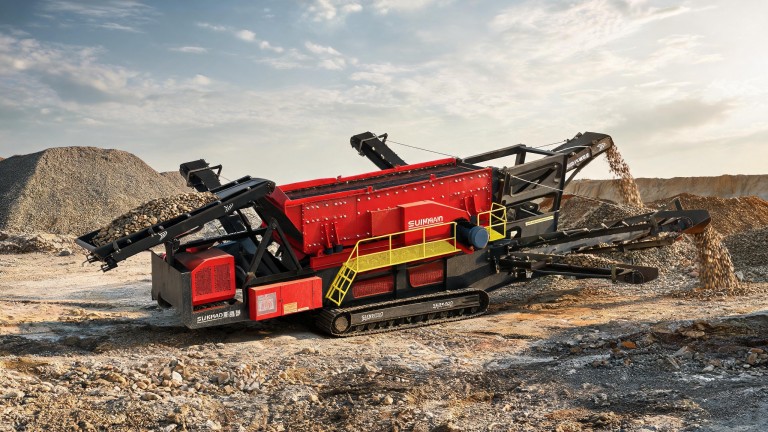
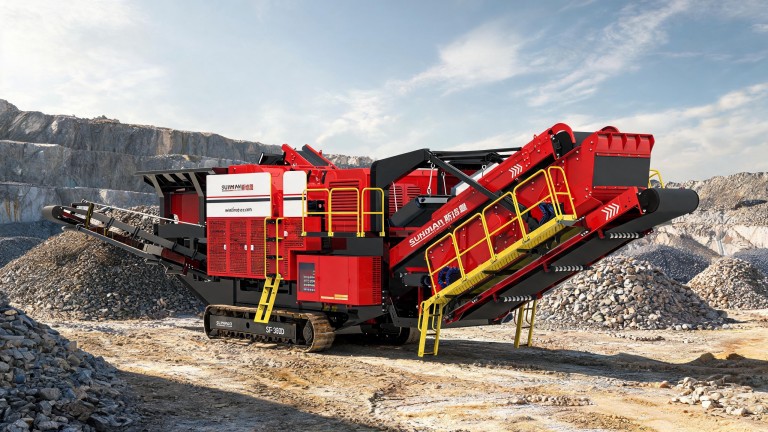
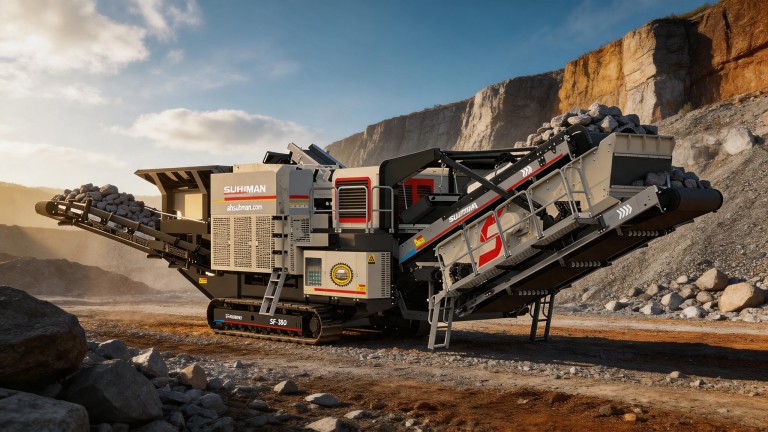
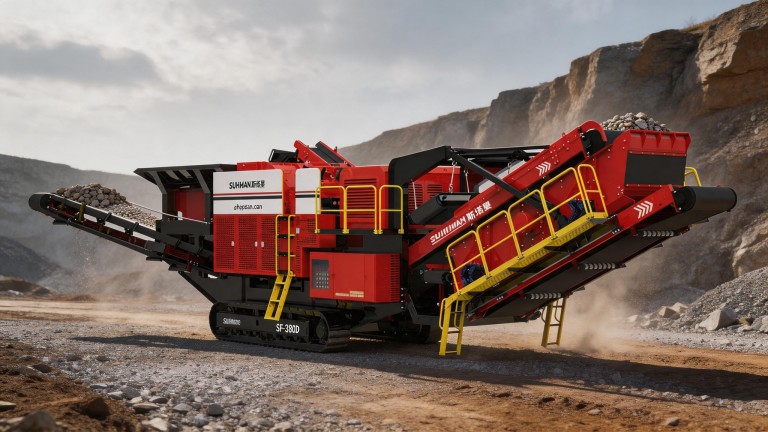
Mobile tracked crushing and screening plant: what are its advantages and how to choose the right model for your production needs

A tracked mobile crushing and screening plant is a versatile piece of production equipment: it can navigate over challenging terrain, requires no complex site preparation, and combines crushing and screening. When making your selection, take into account the type of raw material, throughput capacity (do not opt for a capacity exceeding 30%), the ability to adjust particle size, and ease of maintenance.

Read MoreMobile tracked crushing and screening plant: what are its advantages and how to choose the right model for your production needs
imag 12

A turnkey crushing and screening plant for a quarry: what key factors should be taken into account when choosing one, and how to organise the installation process correctly

A turnkey crushing and screening plant for a quarry is selected taking into account the specific characteristics of the raw material, the scale of operations and compatibility with existing production lines. Installation is carried out in accordance with standard procedures: site and foundation preparation, assembly of components, and trial runs. Regular maintenance extends the service life by 30–40% and prevents downtime.

Read MoreA turnkey crushing and screening plant for a quarry: what key factors should be taken into account when choosing one, and how to organise the installation process correctly
imag 12

A 300-metric-tonne-per-hour basalt crushing plant: how to choose the right one and what are the key advantages of such equipment

For a basalt crushing line with a capacity of 300 t/h, the correct selection of equipment guarantees stability and profitability: select a jaw crusher for primary crushing and a cone crusher for secondary crushing, taking into account the hardness of the basalt, the particle size distribution and the service life of the components. Such a line is resilient to heavy loads, saves energy and produces minimal waste. To maximise service life, check components regularly, prevent foreign metal from entering the system, and carry out scheduled maintenance.

Read MoreA 300-metric-tonne-per-hour basalt crushing plant: how to choose the right one and what are the key advantages of such equipment