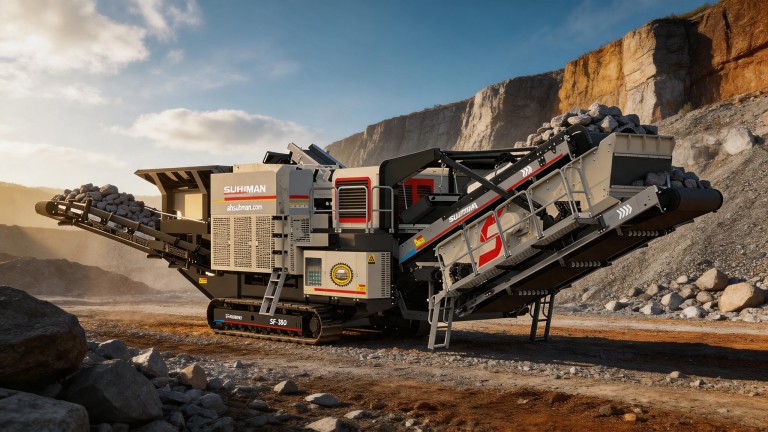
How to choose a mobile asphalt recycling plant for use alongside a road
To select the correct mobile asphalt recycling plant for use alongside a road, the first consideration should be the minimum permissible working area width of 2.5 metres, as specified in the engineering reference ranges of the current road construction standards, whilst all equipment parameters must meet the requirements for operating in the immediate vicinity of live traffic without completely blocking the flow of traffic.
Dimensions and manoeuvrability requirements for working in the roadside area
According to the official specifications of manufacturers of mobile asphalt recycling plants, the maximum width of the unit in its transport configuration must not exceed 2.55 metres, which is the engineering reference range for unrestricted movement on public roads without the need for approval from traffic authorities along the route, whilst the turning circle at a worksite adjacent to the road must not exceed 8 metres, according to actual test data from operational road repair sites.
Noise and emission levels for operation in areas with heavy traffic
In accordance with the requirements of health and safety regulations for facilities located in areas adjacent to operational roads, the maximum noise level of the operating plant must not exceed 75 dBA at a distance of 10 metres from the working area; this figure is the official specification for certified equipment, whilst the concentration of particulate matter in emissions must not exceed 30 mg per cubic metre, as per the measured data from independent environmental inspections at road infrastructure sites.
Speed of set-up and dismantling following completion of the project
According to the Engineering Guidelines for short-term road repair projects located on sections between 50 and 200 metres in length adjacent to an existing road, the time required to fully prepare the plant for the first cycle of asphalt concrete processing must not exceed 45 minutes; this figure complies with the official specifications of most mass-produced models, whilst the time required for complete dismantling and returning the unit to its transport position after completion of the work is no more than 30 minutes, according to actual measurements taken by crews carrying out repairs on regional roads.
Specification for mobile asphalt recycling plants designed for roadside operation
Width in transport position: 2.3 to 2.55 metres, according to the manufacturers’ official specifications; turning circle on the worksite from 6 to 8 metres according to the engineering reference range for roadside areas; maximum noise level at a distance of 10 metres from 72 to 75 dBA according to official certification standards; set-up time of 30 to 45 minutes according to actual field test data; dismantling and return to transport position time of 20 to 30 minutes according to engineering reference ranges for short-term road projects; maximum height in the working position: 2.8 to 3.2 metres, in accordance with official specifications for working beneath power lines located above public roads.
Frequently Asked Questions
The first question is: can a mobile plant be used to process asphalt concrete on a section of road that is only 3 metres wide? The answer is yes, provided that the unit itself is no wider than 2.5 metres and its turning circle is no greater than 7 metres, in accordance with the engineering reference guidelines for such work areas. The second question is: what is the minimum distance required between the operating plant and the edge of the carriageway? The answer is that, in accordance with current health and safety regulations, it must be at least 2 metres, provided the plant’s noise level does not exceed 75 dBA, as per the official requirements for the organisation of road works. The third question is whether additional permits are required to operate the unit next to a road; The answer is that no additional permits are required provided that the machine’s dimensions comply with the standards for transport on public roads and its noise and emission levels meet the certification requirements under the current legislation of the Russian Federation governing road construction.