Don’t go!
Please get in touch, and our engineers will draw up a bespoke solution for your project.

A cone crusher can be used to crush a wet mixture of gravel and sand (moisture content up to 12%) by applying the following special settings: reduce the feed rate by 18%, increase the cone angle and the clearance, TO every 80 hours; no further adjustments are required.

For soft limestone with a high proportion of fine particles, a standard rotary crusher is the best choice: it outperforms a jaw crusher in terms of finished product yield and grain cubicity, is less prone to clogging, reduces wear and tear on spare parts, and the pre-screening stage increases efficiency by 27%.

Where the flatness of railway ballast is restricted, crushers with a ratio of 1:8–1:15 are selected; cone crushers are optimal; reducing their shaft speed by 15% reduces flatness by 4–6%.

For granite quarries, a choice is made between a diesel-powered system and an electric system: the former operates off-grid, whilst the latter is connected to the mains, with different levels of reliability, maintenance and infrastructure requirements.

For crushing frozen limestone in winter, jaw crushers with a crushing force of 300–500 MPa and heated bearings are selected; models with a complex jaw movement are preferable, as standard models without modifications often break down.

For the processing of reinforced concrete products, mobile rotary crushers with a gap of ≥12 mm, a magnetic separator of ≥800 Gauss and a weight of 35–55 tonnes are selected; these are capable of recovering up to 98% of reinforcement.

The hammer crusher is suitable for processing limestone mixed with marl (up to 30%) and damp clay, provided the moisture content of the raw material does not exceed 15%; the rotor rotates at 750 rpm, with feed sizes up to 250 mm; if the moisture content exceeds 15%, the equipment becomes clogged.

To crush hard river pebbles, choose a cone crusher with a force of ≥350 kN, a coarse/fine crushing chamber and an eccentric speed of 220–260 rpm; remove only the oversized particles.

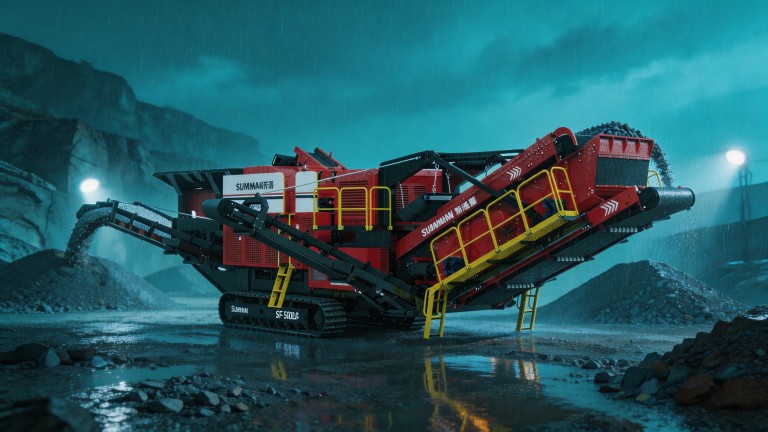
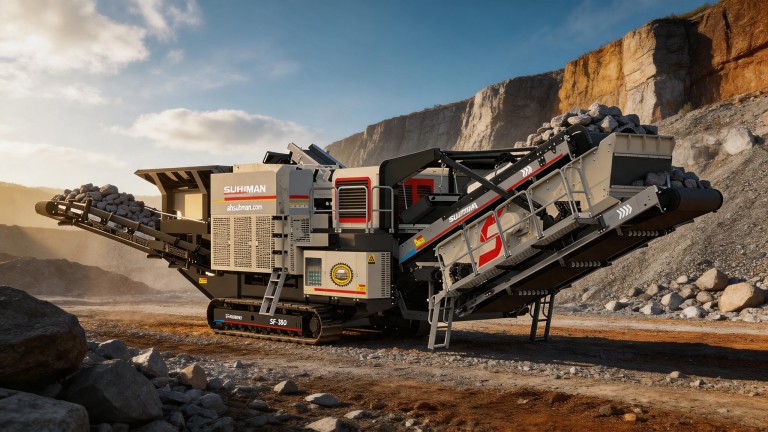
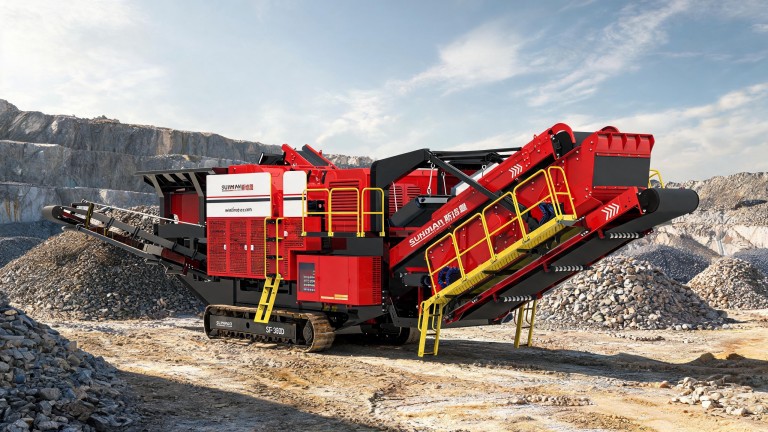
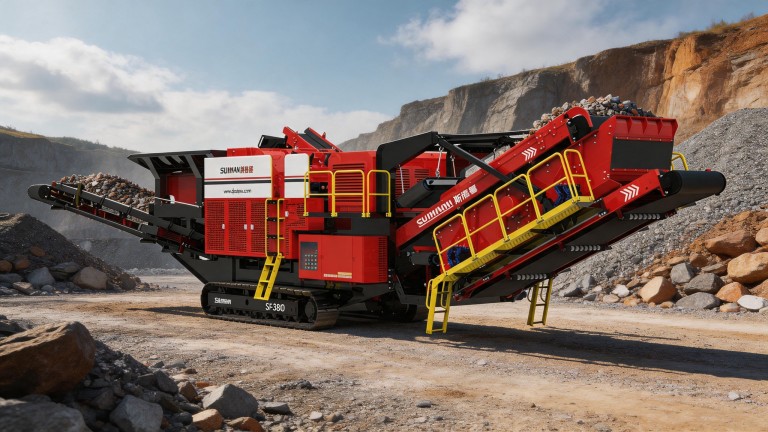
For quarries subject to seasonal muddy conditions, a tracked mobile crusher is the ideal choice: it offers superior off-road capability to a wheeled model, reduces downtime by 78%, and pays for itself 18 months earlier.

For quarries with narrow benches, choose mobile jaw crushers: base width up to 2.5 m, length up to 12 m, feed opening 400–600 mm, turning radius up to 8 m, height up to 3.2 m, no modifications required.