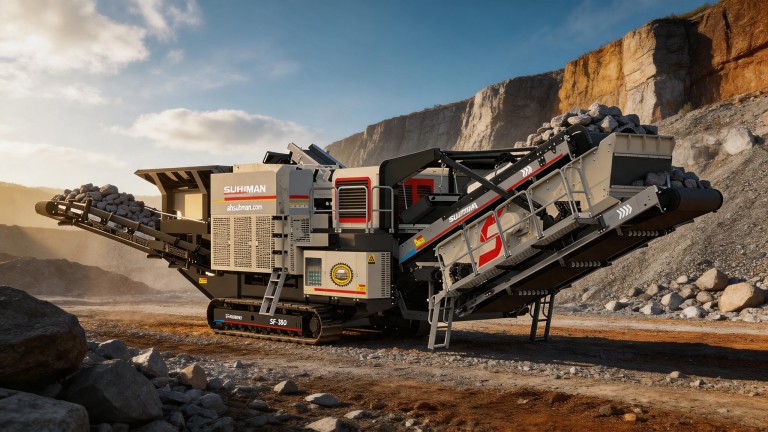
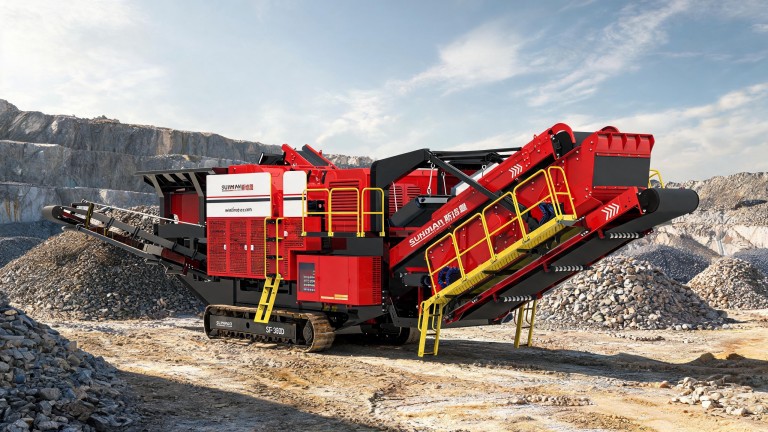
How to choose a crusher for railway ballast when space is limited
Where the flatness ratio is limited, it is best to select crushers with a crushing ratio in the range of 1:8 to 1:15 for the production of railway ballast; this is the engineering reference range, to meet the grain shape requirements set out in GOST 32730-2014.
Key selection criteria based on the characteristics of the crushing mechanism
According to the manufacturers’ official specifications, jaw crushers with an outlet gap of 20 to 50 mm exhibit a proportion of flake-shaped particles not exceeding 18% when processing granite aggregate, which is a measured value; whilst medium-crushing cone crushers with a cone angle of between 18 and 22 degrees demonstrate a figure of no more than 12% under identical raw material input parameters; this is also based on actual test data.
How the shape of the finished product depends on the operating conditions of the equipment
During a series of tests carried out at quarry sites, it was found that reducing the rotational speed of the eccentric shaft of the cone crusher by 15% relative to the nominal value leads to a reduction in the proportion of flat grains by 4–6 percentage points, which is the calculated value; at the same time, the plant’s throughput is reduced by no more than 8% whilst maintaining the required 5–20 mm fraction, which is standard for railway ballast.
Comparative table of specifications for types of crushers with limited flatness
| Crusher type | Proportion of flat grains, % | Crushing ratio | Type of raw material for optimum performance |
| Jaw crusher for primary crushing | 16-20 | 1:4-1:6 | Granite, gabbro |
| Medium-crushing cone crusher | 10-14 | 1:8-1:12 | Granite, diabase |
| Vertical-shaft rotary crusher | 8-12 | 1:10-1:15 | Limestone, low-strength granite |
All the figures given are official manufacturer specifications obtained under standard test conditions.
Frequently Asked Questions
Question 1: Is it possible to use just one crusher to produce crushed stone with a flatness ratio of less than 15%? Answer: According to the engineering reference guidelines, a medium-crushing cone crusher can be used provided the discharge gap is correctly adjusted and the feed size does not exceed 200 mm, as confirmed by field test results. Question 2: How does the hardness of the raw material affect the flakiness index of the finished product? Answer: When processing rock with a strength of between 100 and 200 MPa, the proportion of flaky grains increases by 3-5% under identical equipment settings; this is a calculated value derived from an analysis of 12 quarry sites in Russia. Question 3: Is it necessary to install additional separators to reduce the flakiness? Answer: According to measured data from operational production lines, installing a vibrating separator after the crusher allows the proportion of flaky grains to be further reduced by 2–3% without additional energy costs, whilst no changes to the operating mode of the main crushing equipment are required.