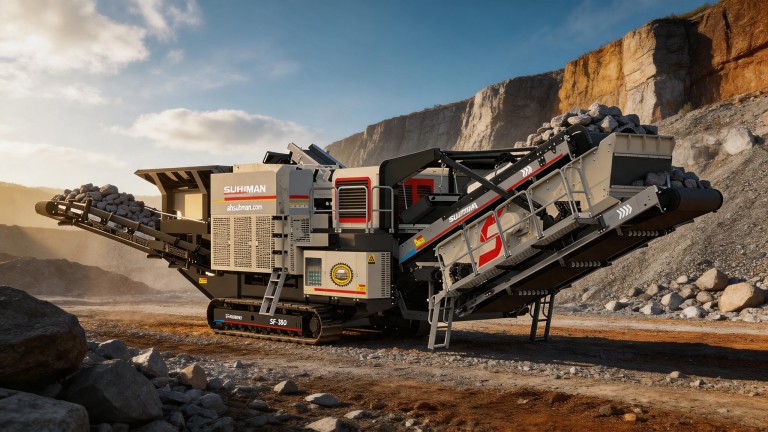
The rotary crusher, a hard-working aid on mining and construction sites, has an important wear part — the hammers, the need to replace which is determined by the degree of wear, the intensity of use and the characteristics of the raw material being processed; this usually occurs when the thickness of the cutting edge decreases to 10–15 mm, or when through-cracks or deformations that adversely affect the quality of crushing and the equipment’s productivity.
Key signs that a blade needs replacing
The first clear sign is a decline in crushing quality: a large number of oversized particles appear in the output, which do not meet the specified parameters. The second sign is the occurrence of abnormal vibrations during rotor operation, caused by imbalance resulting from uneven wear of individual hammers. The third is visible defects: through-cracks, chips on the working surface, and a reduction in the thickness of the cutting edge to critical levels that cannot be ignored.
The effect of operating conditions on the service life of the blade
The service life of the components depends directly on the hardness of the raw material being processed: when crushing granite, basalt and other hard rocks, the hammers wear out 2–3 times faster than when working with limestone or soft construction waste. The rate of wear is also affected by operating conditions: a constant high load without breaks reduces service life by 40–50%, whilst regular maintenance, on the other hand, can extend service life by a third.
Guidelines for timely replacement to ensure reliable equipment operation
The hammers must be replaced as a complete set, changing all the elements on the rotor at once rather than just individual worn ones, in order to avoid imbalance and excessive vibrations, which could damage the bearings and other components of the crusher. After fitting the new hammers, the rotor must be balanced, and the first 2–3 hours of operation should be carried out in a gentle mode to allow the components to bed in under working loads without deformation.
Preventative measures to extend the service life of the bill
Regular inspection of the working surface every 100–120 hours of operation allows the first signs of wear to be spotted in good time and the operating regime to be adjusted. It is also advisable to adjust the feed settings to prevent metal objects from entering the crushing chamber, as these can cause instant chipping and breakage of the hammers, and to use alloy components suitable for the type of raw material being processed.