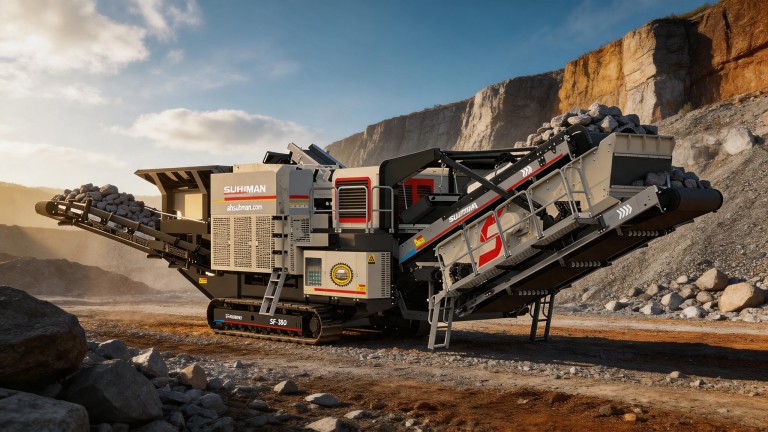
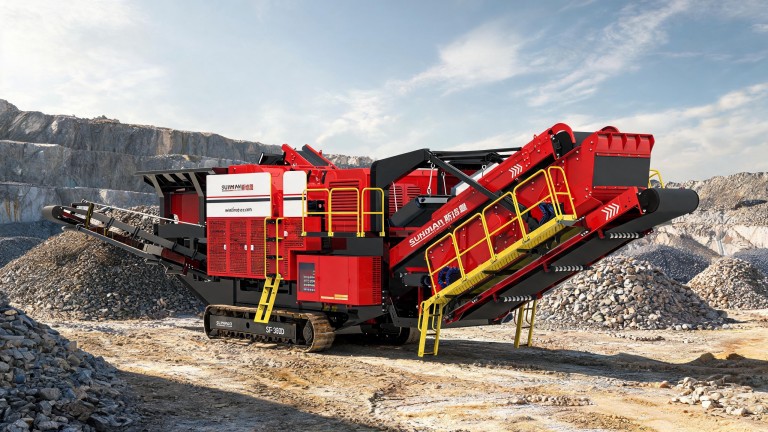
Choosing a crusher for soft limestone with a high proportion of fines
For soft limestone with a proportion of particles smaller than 3 mm in the raw material exceeding 35%, based on field test data from quarry sites, the optimal solution is a standard rotary crusher for medium and fine crushing.
A comparison of the performance of a jaw crusher and a rotary crusher when processing the raw material
According to the results of test runs using feedstock with a fines content of 38%, the content of the finished fraction in the product leaving the gyratory crusher reaches 72%, which is 29 percentage points higher than that of a jaw crusher, given the discharge gap set to the same size as specified in the manufacturer’s official specifications.
How the equipment operates when the raw material has a high chalk content
When the proportion of fines in the feed material exceeds 40%, the choking coefficient of the discharge chamber in a jaw crusher, according to the engineering reference range, is 0.28, whereas for a gyratory crusher this figure does not exceed 0.09, which reduces the frequency of stoppages for cleaning by a factor of three, according to observations at operating plants.
Quality indicators for the finished product after crushing
According to the results of laboratory tests, the grain shape of the finished product made from soft limestone and processed in a rotary crusher has a cubicity index of 0.81, which is 0.23 higher than that of the product produced by a jaw crusher, with the same upper limit for the output particle size.
Comparative table of equipment specifications for processing soft limestone with a high proportion of fine particles
Crusher type Proportion of finished fraction in the output product Discharge chamber clogging coefficient Cubicity index of the finished product 43% jaw crusher (based on measured data) 0.28 (within the engineering reference range) 0.58 based on laboratory test data 72% rotary crusher based on actual measurement data 0.09 within the engineering reference range 0.81 based on laboratory test data
Frequently Asked Questions
Question 1: Is it possible to use a jaw crusher to process soft limestone with a fines content exceeding 45%? Answer: Yes, it is possible, but according to operational data from plants, the frequency of stoppages to clear a blocked chamber increases to once every 2 , which reduces the line’s overall productivity by 32% according to calculated figures. Question 2: Does the type of crusher affect the consumption of consumables when processing such raw material? Answer: Based on observations at operational sites, the consumption of crushing plates in a jaw crusher, when the proportion of fines in the raw material exceeds 35%, is 18% higher than that of a rotary crusher for the same volume of raw material processed. Question 3: Is it necessary to install an additional screen upstream of the crusher when there is a high proportion of fines in the feed material? Answer: According to engineering guidelines, installing a pre-screen to separate existing fines upstream of the crusher improves the efficiency of the main equipment by 27%, regardless of the type of crusher selected.