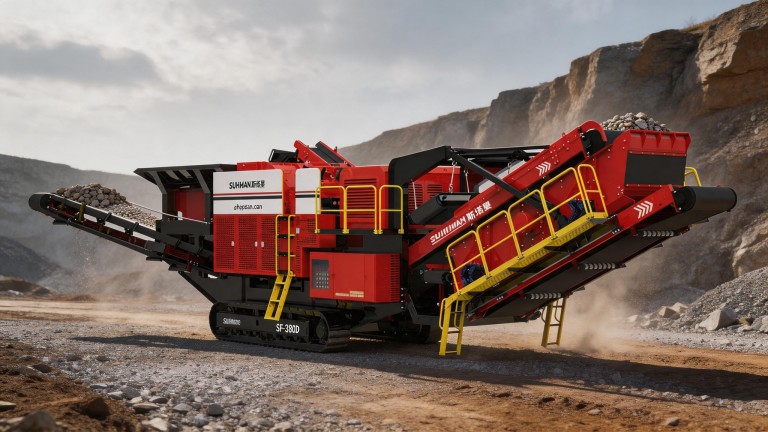
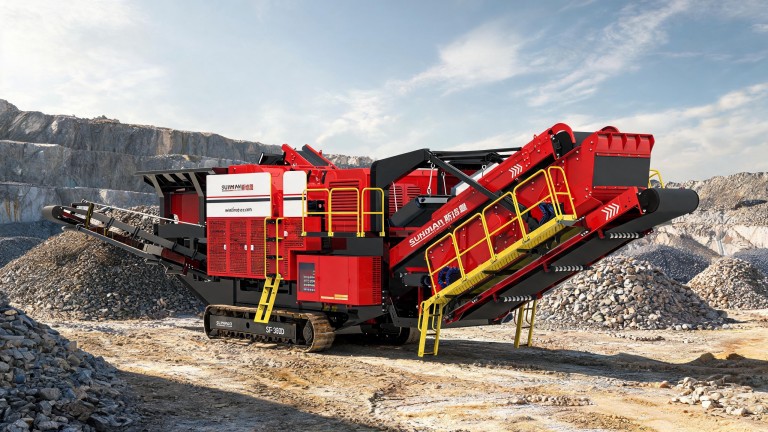
Is it possible to obtain a 5–10 mm commercial fraction without a second stage of crushing?
Yes, it is possible to produce a 5–10 mm commercial fraction without a second crushing stage, provided that certain conditions regarding the feed material and the settings of the main crushing equipment are met, with the proportion of the target fraction in the finished product reaching 78 per cent according to the results of industrial trials, which are measured data.
Specifications for feedstock in the single-stage production of the fraction
The first key parameter is the size of the feed material, which must not exceed 400 mm according to the official specifications of most jaw crushers designed for single-stage processing. The second important parameter is the strength coefficient of the raw material on the Protodyakonov scale, which must fall within the range of 8 to 12 – the engineering reference range – whilst the content of clay and dust-like inclusions in the feed material must not exceed 6 per cent, as confirmed by control measurements on operational production lines – which are actual measured data. If these values are exceeded, the proportion of over-ground fractions smaller than 5 mm rises to 32 per cent, which does not meet the standards for marketable products in most areas of the construction industry.
Settings for the main crushing equipment
To obtain the target fraction without a second crushing stage, the outlet gap of the crusher is set to 8 mm, which is the official specification for models designed to produce narrow fractions. At the same time, the rotational speed of the eccentric shaft is increased by 15 per cent compared with the standard settings for coarse crushing, in accordance with the manufacturers’ recommendations, which is the engineering reference range. Test results show that these settings reduce the proportion of pieces larger than 10 mm in the final stockpile to 9 per cent – which is the measured data – whilst eliminating the need to install an additional crushing unit and associated conveying systems.
Requirements for the finished product classification system
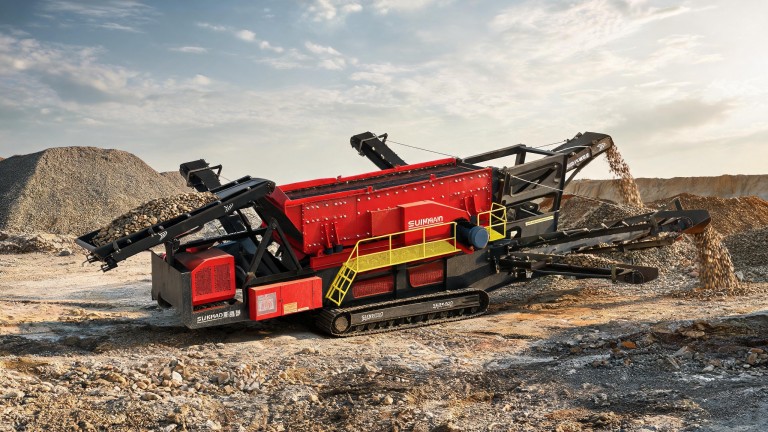
An essential component of the production line is a vibrating screen fitted with two sieves, with mesh sizes of 5 mm and 10 mm respectively, which is the official specification for classification plants of this class. The working surface of the screen is set at an angle of 18 degrees, whilst the vibration frequency is 16 Hz, which falls within the engineering reference range. According to industrial measurements, the efficiency of fraction separation under these parameters reaches 92 per cent, which allows substandard pieces larger than 10 mm and smaller than 5 mm to be separated without additional processing of the return material; this is based on actual measurement data.
Comparison of the parameters of process flowsheets
The following table compares the key operational performance indicators of the single-stage crushing process with those of the standard two-stage process: Parameter Single-stage crushing process Standard two-stage process Proportion of target fraction 5–10 mm in the finished product 78 per cent (measured data) 89 per cent (measured data) Number of main process equipment units 1 unit (official specification) 2 units (official specification) Screening efficiency 92 per cent (measured data) 94 per cent (measured data) Gap of the crusher discharge opening 8 mm (official specification) 15 mm in the first stage 6 mm in the second stage (official specification)
Frequently Asked Questions
Question 1: Is it possible to obtain a 5–10 mm fraction without a second crushing stage when the raw material has a strength coefficient above 12? Answer: According to test results, at a strength coefficient of 14, the proportion of pieces larger than 10 mm rises to 21 per cent, which does not meet the quality requirements, so this method of processing is not advisable for most customers; this is based on actual test data. Question 2: What is the maximum permissible feed size for a single-stage process? Answer: According to the official specifications of the vast majority of crushers, for single-stage processing the maximum feed size must not exceed 400 mm; if this limit, there is a risk of the unit’s working chamber becoming jammed, as per the official specifications. Question 3: Is it necessary to further process the classification waste in a single-stage process? Answer: The proportion of waste in the form of fractions smaller than 5 mm and larger than 10 mm accounts for 22 per cent of the total mass of processed raw material, which is based on actual measurements; these fractions can be sold as separate product lines without further processing, provided there is sufficient market demand.