Don’t go!
Please get in touch, and our engineers will draw up a bespoke solution for your project.

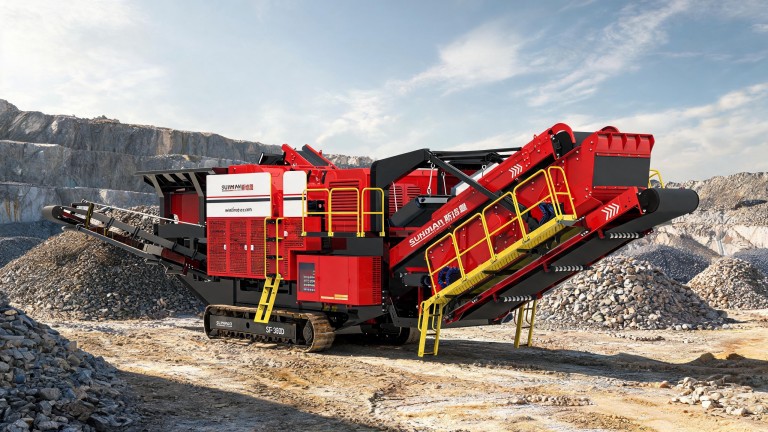
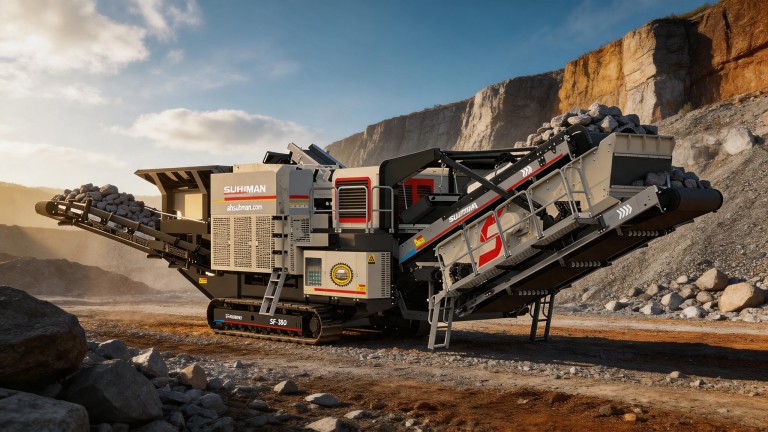
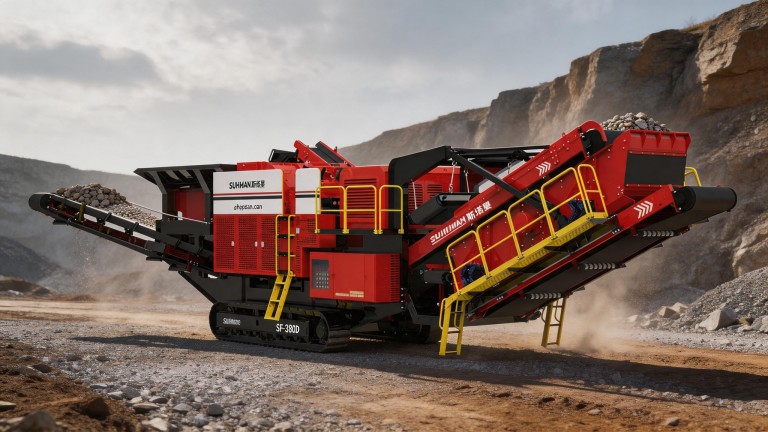
A mobile jaw crusher for quarries is an indispensable piece of highly mobile and efficient equipment: it requires no permanent installation, reduces logistics costs and is capable of handling hard rock. When selecting a unit, factors such as capacity, feed size, unit dimensions, drive type (diesel/electric) and the availability of after-sales service and spare parts are taken into account.

A mobile jaw crusher for quarries processes hard rock. When choosing one, consider its capacity, feed opening size and the type of undercarriage. Check the material of the housing and jaw plates, the overload protection and the warranty. It is better value to buy directly from the manufacturer; compare offers and clarify delivery and after-sales service.

A mobile jaw crusher for crushed stone is suitable for small-scale mineral processing enterprises. When making your choice, take into account production capacity, the hardness of the raw material and the ability to operate in confined spaces. It offers mobility, low running costs and flexible configuration. Avoid models with excessively high capacity, and check that after-sales service and spare parts are available in your region.

A mobile jaw crusher for crushed stone is essential for construction sites and quarries; when choosing one, it is worth considering: the capacity required for the job, the material of the jaw plates (high-manganese steel), the type of chassis (tracked for off-road use, wheeled for frequent travel) and ease of maintenance.

A mobile jaw crusher for ore processes rock on site, saving on transport costs. When choosing a model, consider the size of the jaw opening, the throughput and the particle size distribution of the final product; for rough terrain, choose tracked models; for flat sites, choose wheeled models. Also, check that the dealer has spare parts in stock, and opt for models with reinforced, wear-resistant jaw plates.

When selecting a mobile jaw crusher for quartz, it is important to take into account the hardness of the raw material (choose wear-resistant jaw plates), capacity (avoid over-specifying power), the chassis design suited to the operating conditions, the ability to adjust the output size, as well as the warranty and availability of spare parts; this will ensure reliable operation and low running costs.

A mobile granite jaw crusher is suitable for construction sites and quarries. When choosing one, you should consider the feed opening size and throughput, ensuring that the required capacity is not exceeded by more than 20%. For frequent transport, choose tracked models; for level sites, choose wheeled models. Check for local service centres and request a test run before purchasing.

To ensure the mobile jaw crusher for limestone operates effectively, its specifications must be tailored to the raw material and operating conditions: the size of the feed pieces, throughput and the strength of the jaw plates must all be taken into account. It is also important to set the operating mode correctly and carry out regular maintenance on the equipment to improve efficiency and avoid downtime.

A mobile jaw crusher for basalt has a significant impact on operational efficiency; your choice should be based on its specifications. Calculate the required throughput: 20–50 tonnes per hour for small sites, and from 100 tonnes per hour for large-scale projects. Opt for models with high-manganese steel jaws and a diesel drive for remote sites; check the mobility of the unit and the availability of after-sales service in the region.

A mobile jaw crusher with a capacity of 400 t/h is a reliable piece of equipment for raw material extraction. When making your selection, consider the type of raw material, the dimensions of the undercarriage, the availability of output size adjustment, energy consumption, the service life of the jaw plates and the level of automation. Order directly from manufacturers, compare specifications, and clarify delivery and installation times to avoid unnecessary costs.