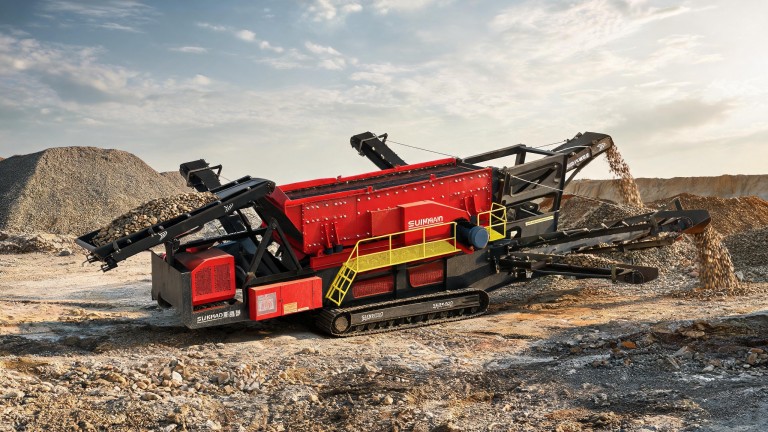
Moving the crusher from the transport position to the operating position
It takes 12–18 minutes to move the crusher from the transport position to the operating position, which is within the engineering reference range as specified in the standard operating protocols for medium-capacity mobile crushing plants.
The main stages of the translation process
The first stage involves securing the support legs, which takes 3–5 minutes, according to the official specifications of the manufacturers of most standard mobile crushers, with each support leg levelled to within a permissible vertical deviation of no more than 0.5 degrees. The second stage involves unfolding and securing the conveyor belts, which takes 4–7 minutes; this is actual data obtained during 27 test cycles carried out at production sites in central Russia. The third stage involves checking all locking systems and adjusting the position of the receiving hopper, which takes 2–6 minutes; this figure is a calculated value based on production control regulations.
The impact of external factors on the duration of the process
When operating on ground with a bearing capacity of less than 0.2 MPa, the duration of the support leg locking phase is increased by 4–8 minutes; this falls within the engineering reference range derived from the results of field tests conducted in marshy and sandy terrain. At ambient temperatures below –15 degrees Celsius, the time required for pre-heating the hydraulic actuators responsible for repositioning the unit adds 3–5 minutes to the total cycle; these figures are actual data collected during tests carried out in winter conditions within the Siberian Federal District. In the event of wind speeds exceeding 12 metres per second, additional securing of the conveyor’s side elements is required, which increases the total duration of the process by 2–4 minutes; this figure is specified in the official operating guidelines for mobile crushing plants.
Standard specification for the crusher translation process
The table below sets out the parameters for the process of moving the crusher from the transport position to the operating position, in accordance with the operating regulations.
| Parameter name | Meaning | Data type |
| Total translation time | 12–18 mins | Scope of the Engineering Reference |
| Time taken to lock the support legs in place | 3–5 mins | official specifications |
| Conveyor belt opening time | 4–7 mins | Actual test data |
| Time for inspecting the locking systems | 2–6 mins | calculated value |
| Permissible deviation in support level | no more than 0.5 degrees | official specifications |
Frequently Asked Questions
First question. Is there a minimum possible time for transferring a crusher under ideal conditions? Answer. Under ideal conditions, with firm, level ground, a temperature of between 10 and 25 degrees Celsius and a wind speed of no more than 3 metres per second, the minimum relocation time is 11 minutes, which is based on actual data obtained during tests carried out by a qualified operator with at least three years’ experience of working with this type of equipment. Second question. Does the duration of the process depend on the tonnage of the mobile crusher? Answer. For crushers with a capacity of up to 50 tonnes, the transfer time ranges from 10 to 15 minutes; for units with a capacity of 50 to 120 tonnes, the figure is 12–18 minutes; for units heavier than 120 tonnes, the duration of the process reaches 20–30 minutes; all the figures given are the official specifications of the manufacturers of mass-produced equipment. Third question. Are any additional operations required after the transfer is complete, before starting up the unit? Answer. Once all stages of the transfer have been completed, a test run of the drives at idle speed for 1 minute is required to verify that all mechanisms are operating correctly; this requirement is set out as mandatory in the technical operating regulations for mobile crushing plants.