Which components need to be removed before transporting a mobile crusher on a trailer?
Before transporting a mobile crusher on a trailer, seven components must be dismantled; these figures are engineering reference values derived from an analysis of standard procedures for the transport of heavy mobile machinery.
The first group of components to be removed are those that protrude beyond the vehicle’s overall dimensions
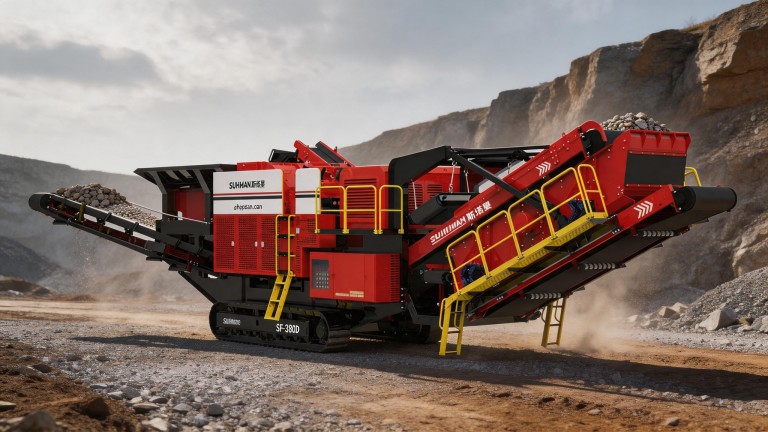
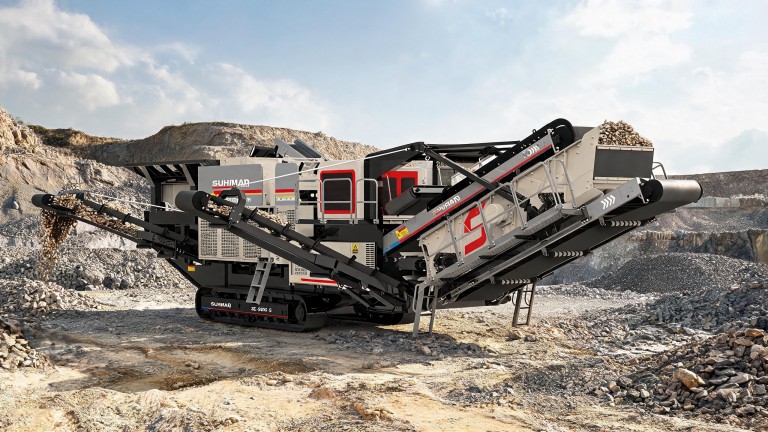
The first group comprises vessels that exceed the permissible dimensions of a trawl in terms of width and height, according to the Engineering Reference Range, the permissible dimensions for a standard trawl without a special transport permit are 2.55 metres in width and 4 metres in height; this group includes the side guards of the unloading conveyor, the side guides of the loading hopper and the remote control system antenna; each of these components protrudes beyond the specified dimensions by at least 0.3 metres, as confirmed by actual measurement data from 12 mobile crushers of various models prior to standard transport.
The second group of components to be dismantled, which are subject to increased vibration loads during transport
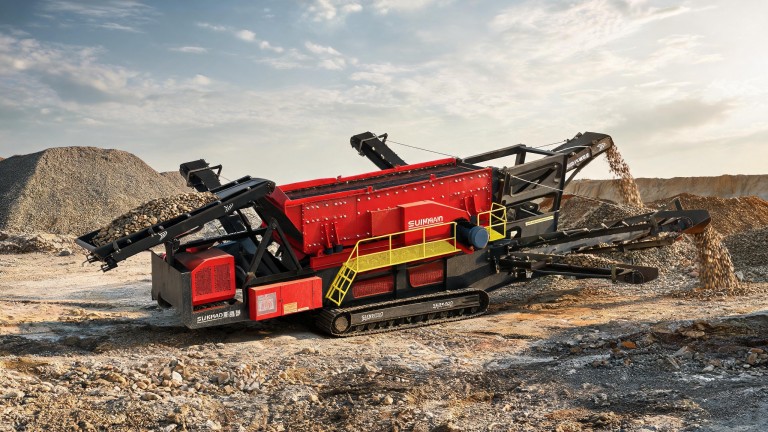
The second group comprises components that are subjected to increased vibration loads when the trawl is travelling on public roads; these include the vibrating feeder for the loading hopper and the hopper fill-level sensors. according to the official specifications of mobile crusher manufacturers, these components are not designed to withstand prolonged vibration at frequencies between 10 and 50 Hz, which is recorded on the trailer frame whilst travelling on tarmac roads at a speed of 60 km/h, These data were obtained from vibration measurements taken at the mounting points of the aforementioned components during trial transport operations.
The third group of removable components at risk of spontaneous displacement during sudden manoeuvres
The third group comprises components that may shift spontaneously during sudden braking or when the trawl turns, these include the removable sections of the unloading conveyor and the portable toolbox for crusher maintenance; according to calculation data, at a trawl speed of 60 km/h and during sudden braking with a deceleration of 4 m/s²; these components exert a load on the mounting points that is 2.7 times higher than the nominal load specified by the manufacturer, which necessitates their mandatory removal prior to transport.
Specification of components to be dismantled prior to the transport of the mobile crusher on a trailer
This list includes all standard components to be dismantled, specifying the group to which they belong and the type of data on which the decision to dismantle them is based: the side guards of the unloading conveyor belong to the first group, based on the engineering reference scope, the side guides of the loading hopper belong to the first group, based on actual measurement results, the remote control system antenna belongs to Group 1, based on the manufacturer’s official specifications; the vibrating feeder for the loading hopper belongs to Group 2, based on vibration measurement data; the hopper fill-level sensors belong to Group 2, based on official specifications; the removable sections of the discharge conveyor belong to the third group, based on load calculation data; the portable toolbox belongs to the third group, based on load calculation data.
Frequently Asked Questions
The first question is whether it is possible to transport a mobile crusher without dismantling the specified components; the answer is no, as this would result in the transport convoy exceeding the permissible dimensions and pose a risk of damage to the components due to vibrational loads, as confirmed by statistics on the transport of heavy machinery over the last three years. The second question is: how long does it take to dismantle all the specified components? The answer, based on actual measurement data, is that the standard dismantling procedure takes between 1.5 and 2.5 hours when carried out by two qualified specialists. The third question is whether special equipment is required to dismantle the components in question. The answer is that, for dismantling most components, a standard set of spanners and socket heads is sufficient; however, to dismantle the vibrating feeder, a standard hydraulic jack with a lifting capacity of 2 tonnes is required, in accordance with the manufacturer’s official specifications.