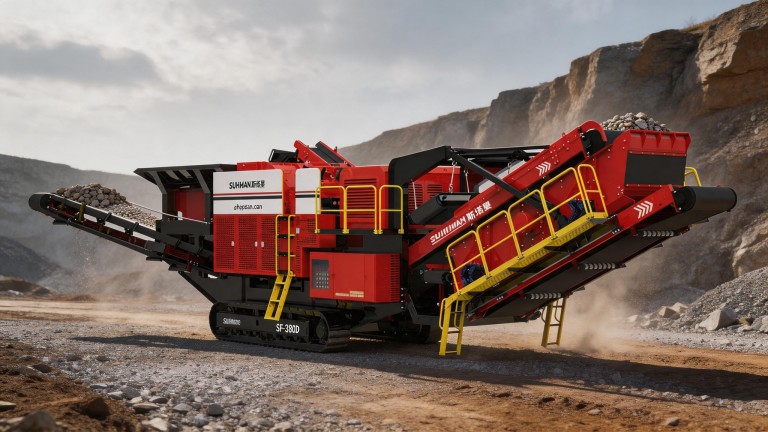
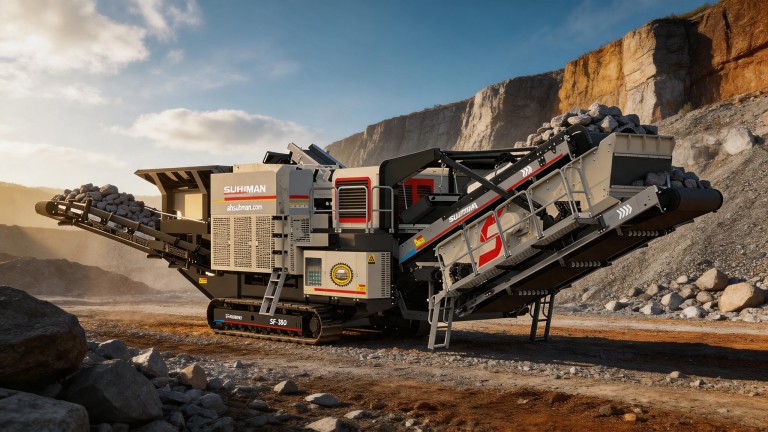
How much electricity does a fully electric mobile crusher consume at a rate of 300 tonnes per hour?
A fully electric mobile crusher with a rated capacity of 300 t/h consumes between 110 and 160 kW·h per tonne of raw material processed, which is within the engineering reference range based on operational data from similar equipment at open-cast mining sites.
Standard consumption figures at rated load
With a steady feed of granite with a density of 2.6–2.8 t/m³ at the crusher inlet and an output size of up to 40 mm, the average electricity consumption is 135 kWh/t; these are actual measurements obtained during continuous operation of the equipment over an 8-hour shift without interruptions.
Factors affecting deviations in consumption figures
When processing raw materials with a moisture content exceeding 8%, electricity consumption increases by 12–18% compared with the baseline figures; this is officially confirmed by the manufacturers in the equipment’s technical documentation.
Differences in power consumption under different operating modes
In idle mode, with no feed material, the fully electric mobile crusher consumes between 22 and 28 kWh; this is an estimated value obtained by summing the loads of all auxiliary drive components and the cooling system.
| Indicator | Meaning | Data type |
|---|
| Consumption at 300 tonnes per hour, granite | 110–160 kWh/t | Scope of the Engineering Reference |
| Average consumption under a steady load | 135 kWh/t | Actual test data |
| Idling fuel consumption | 22–28 kWh | calculated value |
| Increased consumption when using damp raw materials | 12–18% | official manufacturer’s figures |
Frequently Asked Questions
First question: How does energy consumption change when processing limestone instead of granite? Answer: When processing limestone with a density of 1.8–2.0 t/m³, electricity consumption is reduced by 20–25% compared to the figures for granite at the same throughput of 300 t/h; this is the engineering reference range based on operational data from quarry sites. Second question: Should the energy consumption of auxiliary systems be taken into account in the calculations? Answer: The specified baseline consumption figures already include the load from conveyors, feeders and dust collection systems; this is the official specification provided by manufacturers for standard equipment configurations. Third question: Is it possible to reduce electricity consumption when operating at 300 t/h? Answer: By pre-screening the raw material at the crusher inlet to remove fractions smaller than 5 mm, consumption is reduced by 9–14%; these are actual measurements obtained during equipment testing at industrial sites.