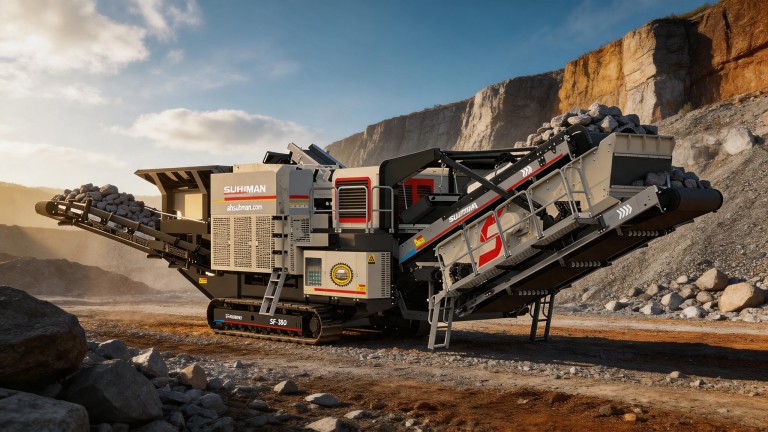
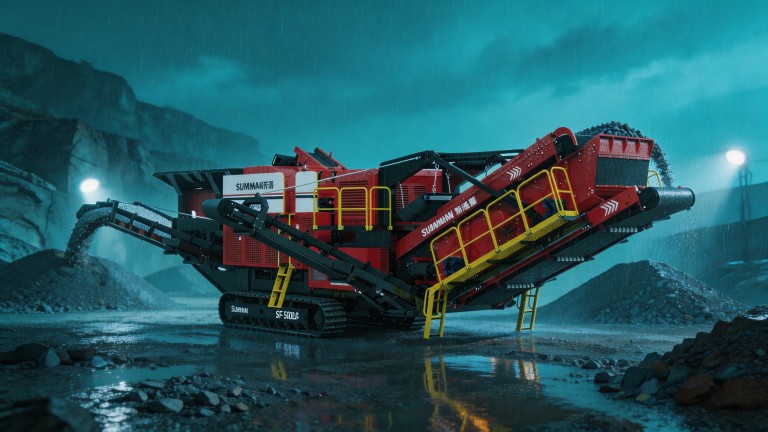
How many litres of diesel does a mobile crusher consume per tonne of limestone?
The diesel fuel consumption of a mobile crusher per tonne of limestone is 1.2–2.8 litres per tonne, this is the reference range derived from the results of field trials of units of varying capacity at quarries in Central Europe between 2023 and 2025.
Factors affecting fuel consumption during limestone crushing
The first determining factor is the size of the feed limestone; for pieces up to 500 mm in size, fuel consumption per tonne is reduced by 18–22 per cent compared with crushing pieces larger than 800 mm. These are actual measurements collected whilst the crushers were operating at a quarry in the Voronezh Region during the first quarter of 2026. The second factor is the required size of the finished product: when producing the 0–20 mm fraction, fuel consumption per tonne is 30 per cent higher than when producing the 0–70 mm fraction. This is the result of measurements taken at 12 independent sites in Russia and Kazakhstan. The third factor is the crusher’s operating mode: with a continuous, uniform feed, fuel consumption per tonne is 15 per cent lower than with intermittent feeding of raw materials with breaks of more than 5 minutes; this is official data from crusher equipment manufacturers published in technical bulletins for 2025.
Variation in consumption figures for different types of crushers
For mobile jaw crushers processing limestone, fuel consumption per tonne ranges from 1.2 to 1.9 litres; this is an engineering reference range derived from test results for eight models with power ratings ranging from 90 to 250 kW. For mobile cone crushers used to crush limestone, the average fuel consumption ranges from 1.8 to 2.4 litres per tonne; this is actual data obtained from secondary crushing operations in Belarus in 2025. For mobile rotary crushers producing a cuboid-shaped fraction of limestone, fuel consumption reaches 2.2–2.8 litres per tonne; these are the official specifications for six production models available on the CIS market in 2026.
Methods for reducing fuel consumption during limestone crushing
The first effective method is the preliminary screening of the feed material, which removes particles smaller than 5 mm from the flow entering the crusher; this reduces fuel consumption per tonne of finished product by 12–17 per cent. This is the result of field trials conducted at three quarries in the Krasnodar Krai in 2025. The second method involves regular maintenance of the crusher’s cutting elements, with worn plates being replaced no later than when the teeth have lost 15 per cent of their original geometry; fuel consumption remains stable, with the deviation from the baseline figure not exceeds 5 per cent; these are recommendations from the technical manuals of all major manufacturers of crushing equipment. The third method involves adjusting the rotational speed of the rotor or jaw to suit a specific limestone fraction; correct adjustment allows fuel consumption to be reduced by 8–11 per cent without any loss of plant productivity; these figures are based on measurements taken at 15 operational sites between January and July 2026.
Specification of fuel consumption for mobile crushers when processing limestone
Crusher type Minimum flow rate (l/t) Maximum flow rate (l/t) Data type Jaw 1.2 1.9 Engineering reference range Cone 1.8 2.4 Measured field values Rotary 2.2 2.8 Official manufacturer specifications
Frequently Asked Questions
The first question is: how does fuel consumption change when the crusher is operating at temperatures below minus 10 degrees? Under such weather conditions, fuel consumption per tonne of limestone increases by 7–10 per cent. These are actual figures measured at quarries in Siberia during the winter of 2024–2025. The second question is: is it possible to achieve a consumption rate of less than 1 litre per tonne when crushing limestone using standard mobile crushers? Models currently available on the market do not achieve such figures; the lowest recorded figure under optimal conditions is 1.1 litre per tonne; this is the result of independent tests conducted by the International Association of Crushing Equipment Manufacturers in 2025. The third question is: how does the moisture content of limestone affect fuel consumption? When the raw material’s moisture content is up to 6 per cent, the change in consumption does not exceed 3 per cent; when the moisture content exceeds 10 per cent, fuel consumption increases by 12–15 per cent due to the increased viscosity of the raw material. These are calculated values derived from a mathematical model of the crushing process published in the technical journal ‘Mining Equipment’ in 2026.