Don’t go!
Please get in touch, and our engineers will draw up a bespoke solution for your project.

Manganese plates for jaw crushers are key working components; their selection and the reliability of the supplier influence the service life of the equipment and production efficiency. When selecting plates, ensure they match the model’s geometry and have a manganese content of 12-14%. Choose suppliers with at least five years’ experience, relevant certifications and a proven track record; check the warranty and delivery times. Look for components on specialist platforms or from authorised dealers, and avoid offers that are too cheap.

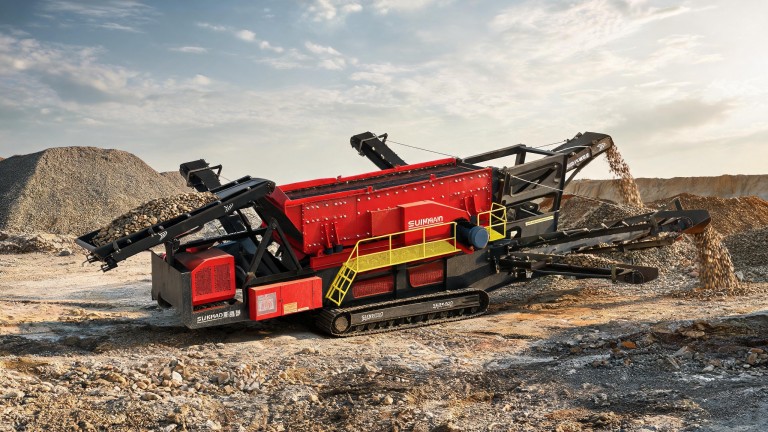
Crushers for processing tailings are a key piece of mining equipment. When selecting a crusher, the characteristics of the tailings, the required throughput and the desired product size are taken into account. During installation, a sturdy foundation is laid, clearances are adjusted, and safety guards and dust extraction systems are checked. During operation, care is taken to prevent metal contamination, wear on components is monitored, the crushing chamber is cleaned regularly, and the various assemblies are serviced.


A coal slag crusher processes waste into a usable fraction. Choose a model based on processing capacity and the hardness of the raw material; do not opt for excessive capacity. Common causes of breakdowns include metal contamination, cold starts without preheating, and neglecting lubrication. Install a magnetic separator, inspect the crushing chamber, adhere to the maintenance schedule, and do not overload the machine.

When selecting a manganese ore crusher with a capacity of 100 t/h, the average hardness and high abrasiveness of the raw material are taken into account, and models with hardened plates are chosen. For the crushing stage, jaw crushers (for coarse crushing) or cone crushers (for medium/fine crushing) are suitable; power and throughput capacity are also checked. To ensure stable operation, the condition of components is regularly monitored and the equipment is synchronised with associated machinery.

When selecting a crusher for the primary crushing of copper ore, it is important to take into account throughput, feed size, ore hardness, energy consumption, the service life of wear parts, and the ease of replacing spare parts. It is best to order equipment from reputable mining manufacturers, as this will prevent downtime and reduce operating costs.

To choose the right crusher for river stone and pebbles, you need to assess the scale of the work and the required particle size of the finished product. Jaw or cone crushers are suitable for hard raw materials, whilst a rotary crusher is added at the final stage for cuboid material. It is more cost-effective to buy directly from official manufacturers rather than through intermediaries, who can increase the price by up to a third.

An adjustable marble fraction crusher is essential for high-quality stone processing; when selecting one, consider the range of particle sizes, power output, the material of the working parts, overload protection, ease of maintenance and the availability of spare parts. It produces precise particle sizes, adapts to different tasks, saves time, reduces waste and improves profitability.

Brick rubble crushers on construction sites speed up waste disposal; choosing the right model and hiring one can reduce costs. Choose a model based on capacity (up to 1 m³/h for small sites, from 3 m³/h for large ones) and drive type (electric for mains-powered units, diesel for off-grid units). When renting, check the condition of the equipment, compare suppliers’ terms and conditions, and clarify delivery and collection arrangements. Renting is cost-effective for short-term projects, requires no major investment and eliminates the need to worry about storage.

Asphalt and road crushers process waste into recycled material; making the right choice affects both efficiency and cost-effectiveness. It is important to consider throughput, the size of the feed material, the type of drive (electric for stationary operation, diesel for remote sites), and to choose reputable manufacturers with local after-sales services and readily available spare parts.

A reinforced concrete crusher with a magnetic separator combines crushing and metal removal, thereby improving profitability. When selecting a unit, factors such as throughput, the separator’s capacity and compatibility with existing equipment are assessed. It reduces costs, produces ready-to-use recycled raw materials and minimises wear and tear on the crusher. The separator must be cleaned regularly and the blades maintained to ensure consistent performance.