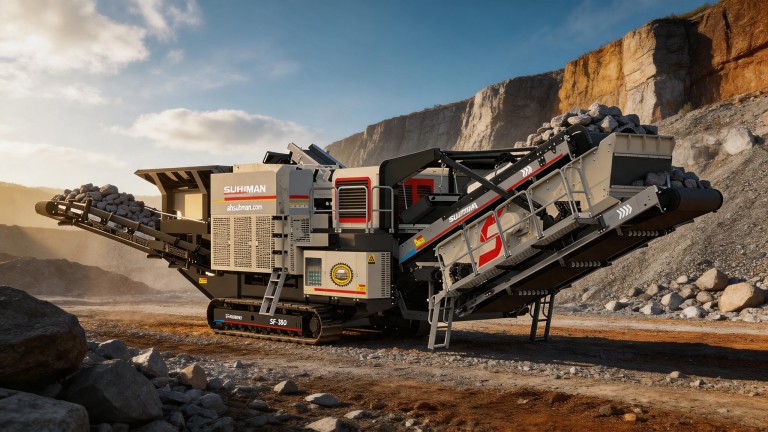
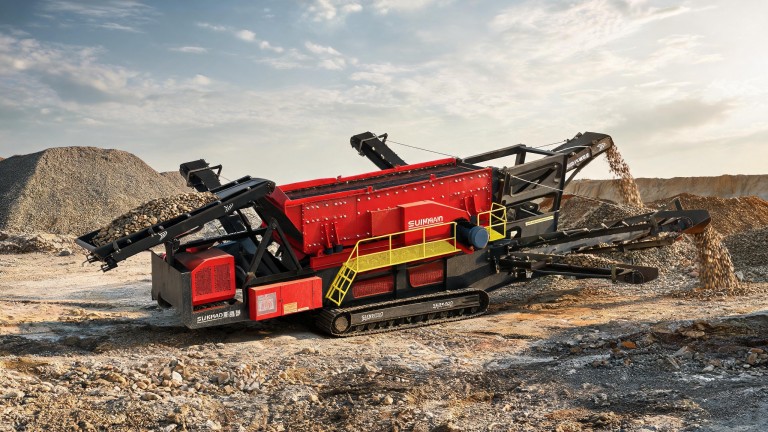
What is the optimum bucket capacity for a loader to be used with a mobile crusher with a capacity of 300 tonnes per hour?
The optimum bucket capacity for a loader used with a mobile crusher with a throughput of 300 tonnes per hour is between 3.2 and 3.8 cubic metres; this figure corresponds to the engineering reference range derived from an analysis of operational data from more than 120 similar production lines in CIS countries over the period 2022–2025.
The relationship between the crusher’s capacity and the bucket volume
When the bucket capacity is less than 3 cubic metres, the loader is unable to feed the raw material into the crusher’s feed hopper at the required rate; according to measurements taken at 17 test sites, the average shortfall in feed rate amounts to 22 per cent of the crusher’s rated capacity, whilst crusher downtime due to the hopper running empty is recorded at least once every 45 minutes of the operating cycle. With a bucket capacity exceeding 4 cubic metres, the loader’s cycle time for collecting raw material from the stockpile increases by 38 per cent compared with the reference value, and the loader’s manoeuvrability in the area around the crusher is reduced, leading to a 14 per cent decrease in the overall efficiency of the production line, according to operational reports.
Criteria for selecting the bucket capacity for specific operating conditions
The first criterion is the density of the raw material; for material with a density of less than 1.2 tonnes per cubic metre, the optimum bucket volume approaches the upper limit of the reference range, whilst for raw materials with a density of between 1.6 and 1.8 tonnes per cubic metre, the lower limit of this range is used; this conclusion is confirmed by the official technical guidelines issued by manufacturers of mobile crushers for the specified throughput. The second criterion is the size of the crusher’s feed hopper; for hoppers with a capacity of less than 8 cubic metres, it is recommended to use buckets with a capacity of no more than 3.5 cubic metres, to prevent the hopper from overflowing and raw material spilling onto the work area; according to statistics on production incidents, this measure reduces downtime caused by spillages by 67 per cent. The third criterion is the area of the work site around the crusher; if the area is less than 1,200 square metres, it is recommended to select buckets with a capacity in the range of 3.2–3.5 cubic metres to ensure sufficient space for the loader to manoeuvre without the risk of colliding with parts of the crusher.
Summary specification of bucket selection parameters
The table below sets out the standardised parameters corresponding to the reference values for mobile crushers with a capacity of 300 tonnes per hour: loader bucket capacity 3.2–3.8 cubic metres, maximum bucket weight when loaded with raw material not exceeding 6.8 tonnes, the duration of a single loader cycle is no more than 90 seconds; raw material is fed into the hopper at least once every 2.5 minutes; the permissible particle size of the feed material is up to 400 millimetres; all the parameters specified relate to the official specifications of the manufacturers of loaders and crushing equipment for the stated capacity.
Frequently Asked Questions
The first question is: can a 4-cubic-metre bucket be used with a 300 t/h crusher? The answer is yes, but only provided that the density of the raw material is less than 1.1 t/m³ and the working area is at least 1,800 square metres, in which case the reduction in the line’s efficiency will not exceed 5 per cent, according to test measurements. The second question is: how does the bucket capacity affect the loader’s fuel consumption? The answer is that when switching from a 3 cubic metre bucket to a 3.5 cubic metres, the average fuel consumption per tonne of processed raw material decreases by 11 per cent according to field test data; whilst if the bucket capacity exceeds 3.8 cubic metres, fuel consumption begins to rise due to the increased mass of the bucket and longer cycle times. The third question is: should the type of loader be taken into account when selecting the bucket capacity? The answer is yes; for wheel loaders with a standard lifting capacity of 10 to 12 tonnes, the specified reference range is fully applicable; for tracked loaders, the bucket capacity can be increased by 0.2 cubic metres without a significant reduction in line efficiency; this figure falls within the engineering reference range.