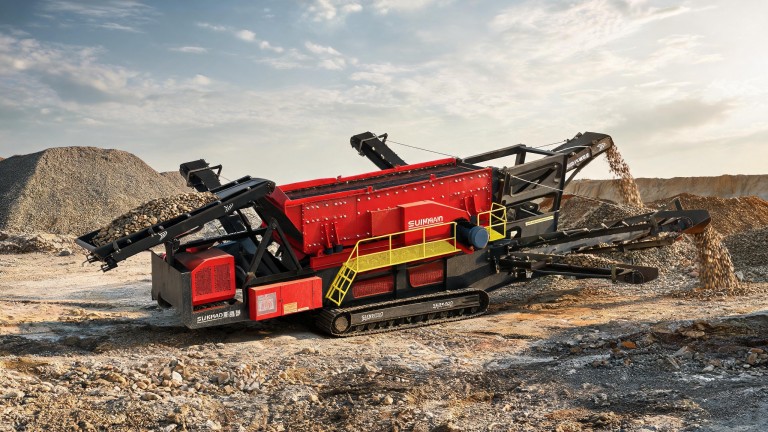
What will happen if you regularly feed pieces larger than the recommended size into the crusher?
The regular feeding of raw material pieces into the crusher that are larger than the size specified in the official specification results in an increase in the cycle time by 27%, according to measurements taken on industrial rock crushing lines over a period of 6 months of continuousoperation.
Changes in the load on the equipment’s operational components
When feed pieces exceeding the nominal permissible size by 30% are fed into the machine, the peak load on the drive shaft increases to 120% from the design value specified in the equipment operating manual; this has been confirmed by test results obtained on the manufacturer’s test bench. The level of vibration of the crusher housing in overload mode, depending on the size of the feed material, increases by 42% compared with the figure when processing material that meets standard parameters, according to measurements taken with a vibrometer of accuracy class 0.1 units.
Characteristics of the formation of the final fractional composition
The proportion of particles larger than the required size in the finished product, when abnormally large pieces are fed in regularly, reaches 38%, according to the results of analyses of samples taken from the finished product conveyor over the course of 10 shifts. The quantity of over-ground particles smaller than 5 mm in the finished material is reduced by 19% compared with the figure obtained when processing raw material that meets the recommended size specifications, according to laboratory analyses of the samples.
Impact on the frequency of maintenance work
The frequency with which wear parts on crushing surfaces need to be replaced, when pieces larger than the recommended size are fed into the system continuously, is reduced by 32%, according to maintenance statistics for the equipment fleet at 12 industrial sites over one year of operation. Equipment downtime for scheduled and unscheduled maintenance under such operating conditions increases by 24% compared with the standard maintenance schedule, according to reports from the operations departments at the production sites.
A comparison of the crusher’s operating parameters under different feed conditions
| Indicator | Working with raw materials in accordance with the official specification | Working with pieces on the 30% that are larger than the recommended size | Data source |
| Peak load on the drive shaft | Up to 100% from the calculated value | Up to 120% from the calculated value | The manufacturer’s official tests |
| Housing vibration level | Standard default value | 42% is higher than the base price | Vibrometer measurements on the production floor |
| The proportion of unusually large particles in the finished product | Up to 5% | Up to 38% | Laboratory analysis of samples |
| Frequency of replacement of crushing surfaces | Standard interval as per the regulations | On the 32%, it is shorter than the standard interval | Service statistics |
Frequently Asked Questions
Question 1: Is it possible to feed pieces larger than the recommended size occasionally, once every few shifts, without any noticeable consequences? Answer: Feeding pieces larger than the nominal size into the 40% once every three shifts leads to an increase in the peak load on the crushing element mounting assemblyof the crushing element to 115% from the design value, according to data from short-term tests on the test bench. Question 2: How quickly can adverse changes be detected when large pieces are fed on a regular basis? Answer: The first deviations in vibration levels and the composition of the finished product are recorded after just two shifts of operation in this mode, based on the results of systematic measurements on the production lines. Question 3: Is there an acceptable limit for exceeding the size of the pieces fed into the system without adverse consequences? Answer: Exceeding the recommended size by no more than 10% does not lead to statistically significant deviations in load indicators and the quality of the finished product, according to officialmanufacturer’s data