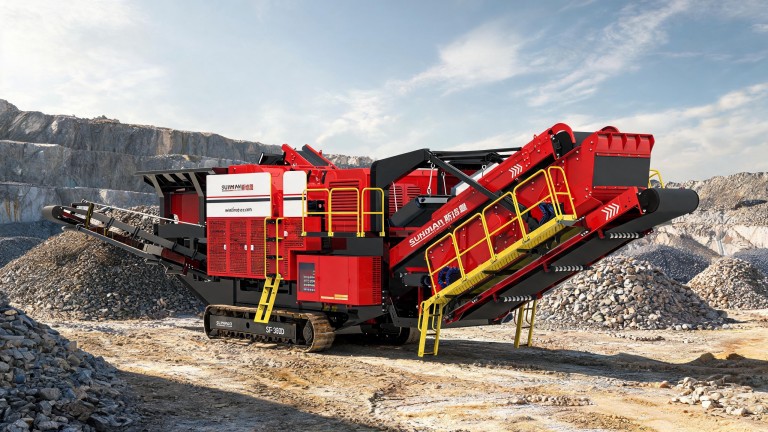
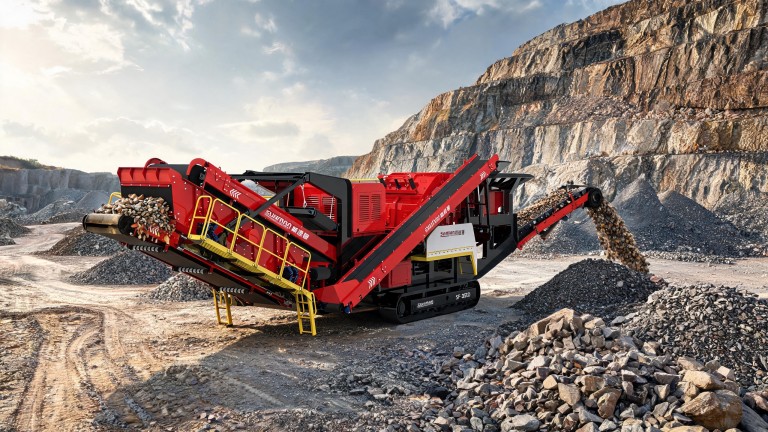
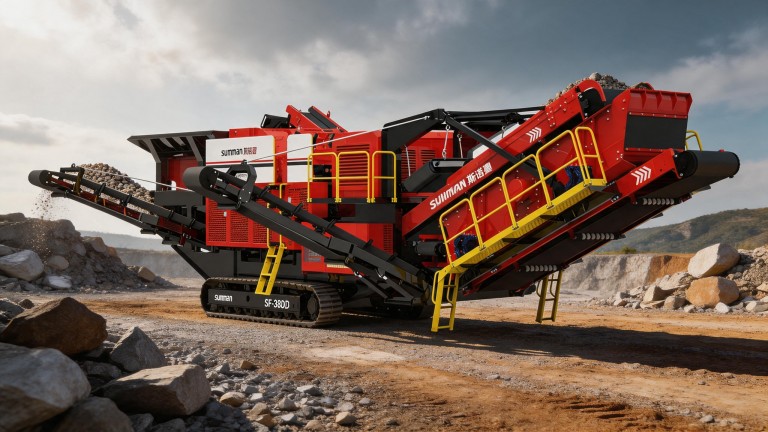
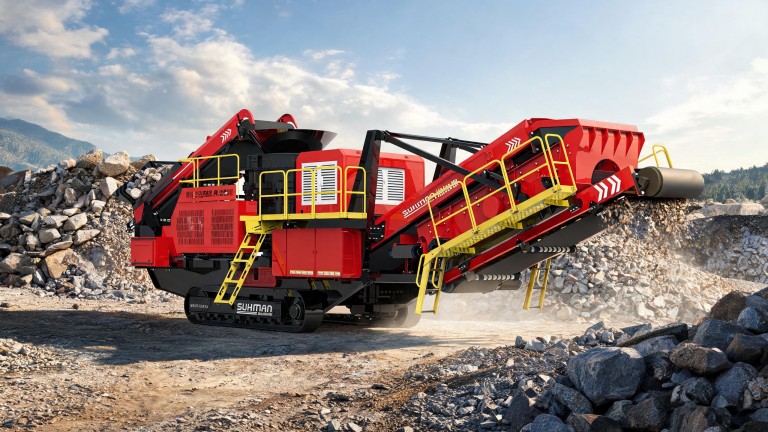
The mobile plant, with a capacity of 100, 200 and 300 tonnes per hour, is a versatile solution for processing bulk materials; it can be adapted to various production tasks and ensures high efficiency without being tied to fixed sites.
Key technical features of the complex
This system features a modular design, which allows the capacity to be quickly adjusted within the specified range by connecting additional components; all parts are made from wear-resistant alloys, ensuring a long service life when working with abrasive materials.
Advantages of the mobile version
Unlike fixed-line systems, this unit is capable of moving independently between sites without the need for complex dismantling and reassembly, reducing set-up time to just a few hours – a particularly valuable feature for companies operating at temporary construction or mining sites.
Areas of application for the unit
The plant is used effectively in mineral extraction, the production of construction aggregate, the processing of construction waste and the preparation of aggregates for concrete; and can handle granite, limestone, slag and other common bulk materials without any loss of productivity.
Control System and Safety
The plant is equipped with an integrated automatic monitoring system which tracks the load on components, energy consumption and the parameters of the finished product in real time; all safety features comply with current Russian and international standards, thereby eliminating the risk of accidents during normal operation.
Cost-effectiveness for the user
Flexible capacity adjustment means you do not have to pay for excess capacity when workloads are low, whilst low maintenance costs and the absence of expenditure on constructing a permanent foundation reduce the complex’s payback period to 1.5–2 years, depending on the intensity of use.