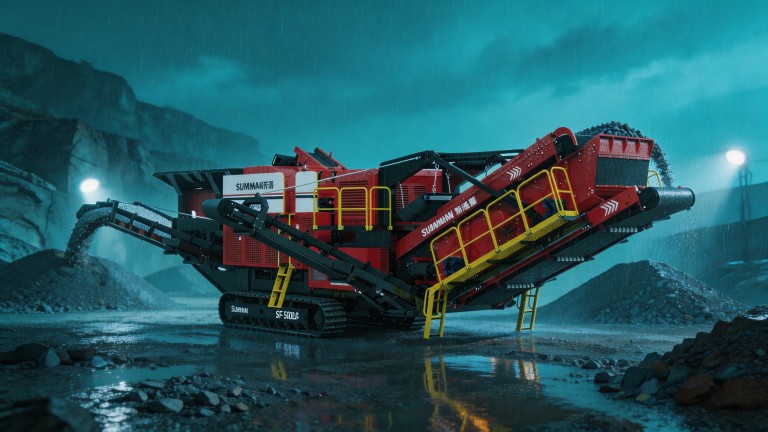
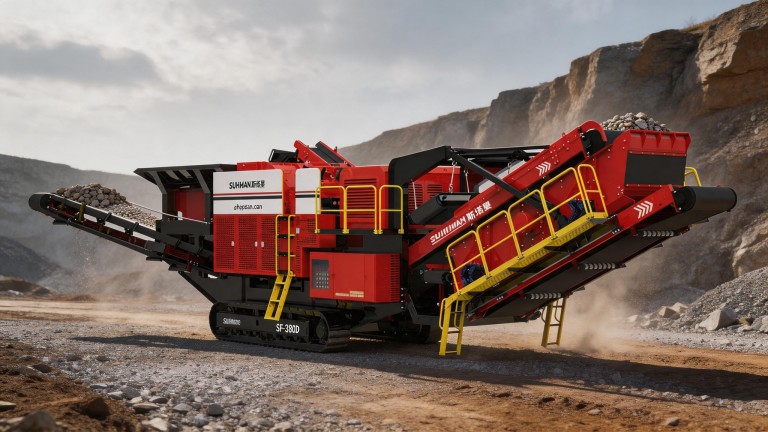
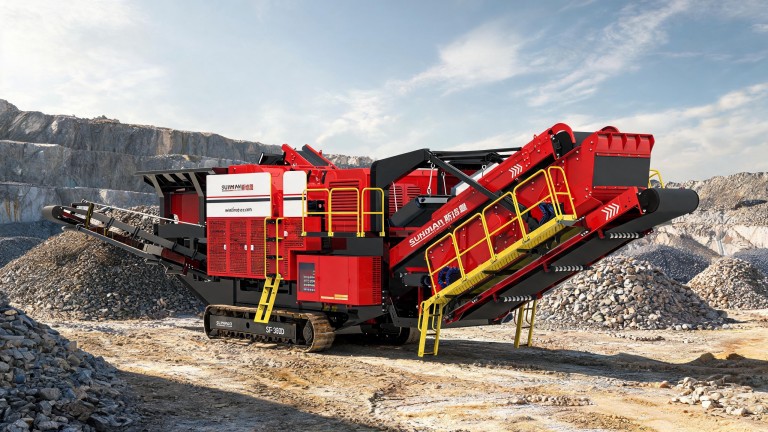
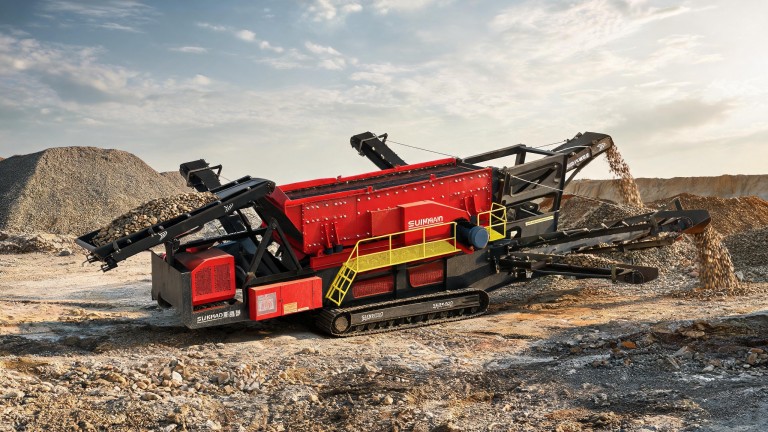
A mobile jaw crusher for reinforced concrete is an indispensable tool on construction sites and at waste processing facilities; to choose the right model, simply assess your operational requirements, the robustness of the housing and ease of maintenance, This will enable you to select a unit that can handle the workload without unnecessary costs.
Determine the performance required for your tasks
Before purchasing, work out how many cubic metres of reinforced concrete you need to process per shift; for small sites, models with a capacity of up to 50 m³/h are sufficient, whilst for large industrial complexes, units with a capacity of up to 200 m³/h are suitable. It is not worth choosing a crusher that is too powerful if the workload is low, as this will lead to unnecessary expenditure on fuel and maintenance.
Assess the strength of the crusher’s side plates and body
Reinforced concrete is very hard, so the crusher’s main working parts must be made from high-alloy steel that is resistant to abrasion; check that the unit’s housing has a reinforced frame that will not deform during regular processing of large fragments of reinforced concrete; this directly affects the service life of the equipment.
Please note the portability and ease of maintenance
Since the equipment is referred to as mobile Ensure that it can be easily transported between sites and is compact enough to operate in confined spaces; also check how easy it is to replace worn jaw plates and carry out regular cleaning to remove rebar residue, This will minimise downtime and reduce maintenance costs during operation.