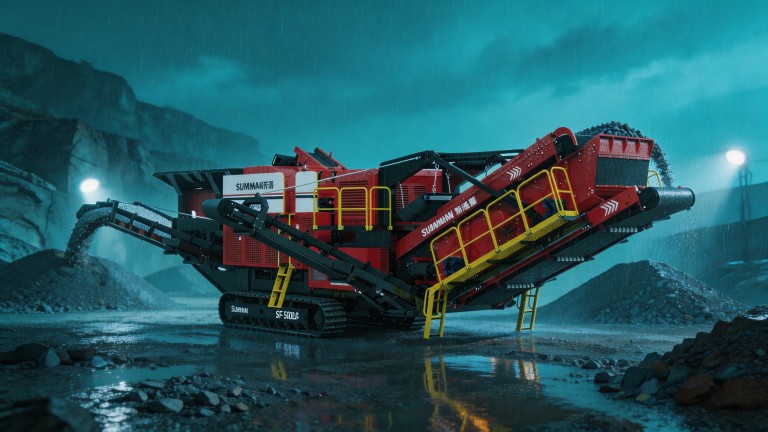
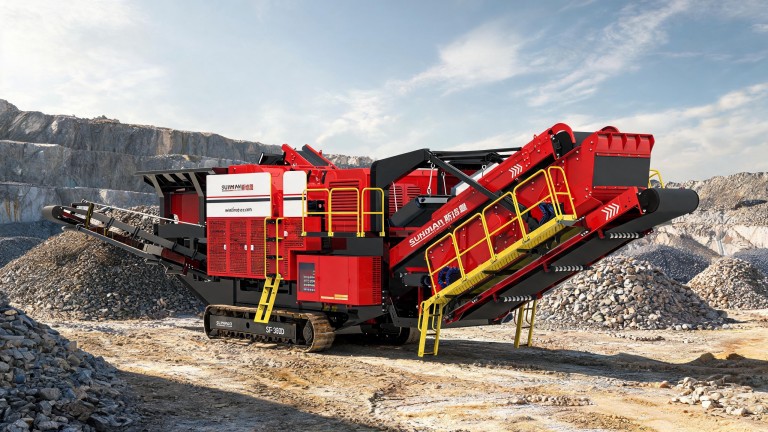
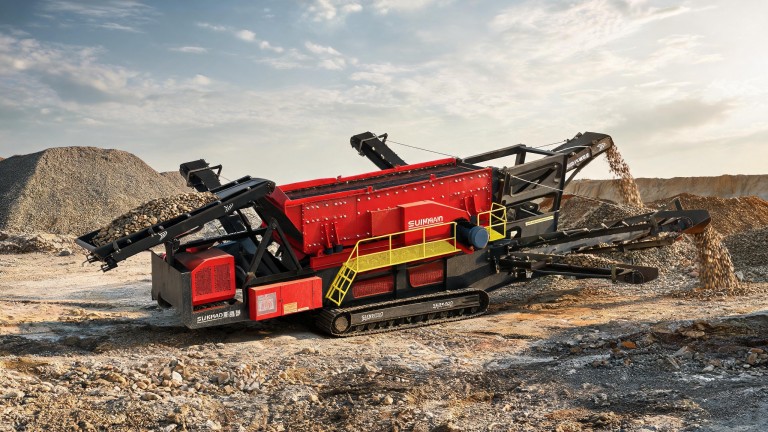
Mobile jaw crushers for coal are becoming an indispensable asset at mining operations; when selecting a suitable model, it is worth considering factors such as capacity, dimensions and power supply, whilst its main advantages lie in its mobility, adaptability and reduced costs for transporting raw materials.
How to choose the right model
When selecting a machine, focus first and foremost on the daily coal output: for small open-cast mines, machines with a capacity of up to 50 tonnes per hour are suitable; for large operations, choose models with a capacity of 150 tonnes per hour or more. You should also assess the site’s terrain: for off-road conditions, opt for tracked models; for flat access roads, wheeled versions will suffice. Don’t forget to check the availability of after-sales service in the region where the site is located; this will help avoid downtime in the event of breakdowns.
Key design features of the machinery
At the heart of the unit are a moving and a stationary jaw, which, like powerful jaws, crush the coal into the required particle size without excessive over-grinding. All working components are protected by wear-resistant alloys that can withstand constant contact with hard rock and contaminants. Built-in systems for automatically adjusting the gap between the jaws adapt independently to the properties of the feed material, without requiring constant operator supervision.
Benefits for the mining industry
Unlike stationary crushers, this equipment moves independently around the quarry site and does not require the transport of whole lumps of coal to the processing site, which reduces logistics costs by 30–40%. It operates reliably even in conditions of low temperatures and high dust levels, without compromising its stated capacity. Its compact dimensions allow it to be used even in areas with limited space, where installing stationary equipment is simply not possible.