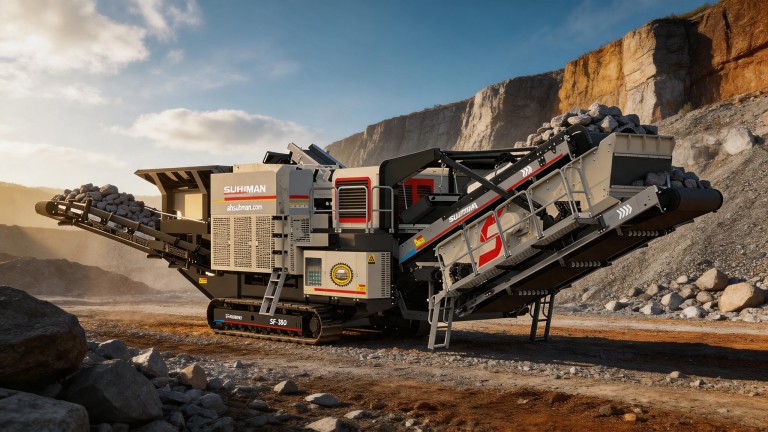
As a compact aid for processing mineral raw materials, a mobile jaw crusher requires precise selection of installation parameters and site calculations to prevent operational disruptions and ensure productivity is not compromised; the dimensions in the transport position, the turning radius and the clearance required for maintenance.
Key dimensional parameters to consider when selecting
When selecting a unit, the first consideration is its dimensions in the transport position — these must comply with the permitted standards for transport on public roads; particular attention is paid to the height, width and length, as well as the weight of the structure, as these directly influence the requirements for the installation site. The turning radius is also important, as it determines whether the machinery can access the work area without additional preparatory work.
Guidelines for calculating the required space on site
When calculating the area, the starting point is the working dimensions of the crusher when fully extended; at least one and a half metres of clear space is added on each side to allow access to maintenance points and the raw material loading area, and separately allow for space for access routes for dump lorries and a conveyor for the removal of finished fractionated material. The site’s gradient must also be taken into account; it must not exceed three degrees to prevent the structure from shifting during operation.
Common mistakes when planning an installation
More often than not, operators fail to allow for the extra space required to access the components when replacing worn liners, which means the structure has to be partially dismantled, resulting in a loss of working time; they also frequently overlook the area where dust and flying particles are dispersed during crushing, which leads to breaches of health and safety regulations in the workplace. Furthermore, the crusher must not be positioned too close to supports or underground utilities, as this creates a risk of damage due to vibrations during operation.