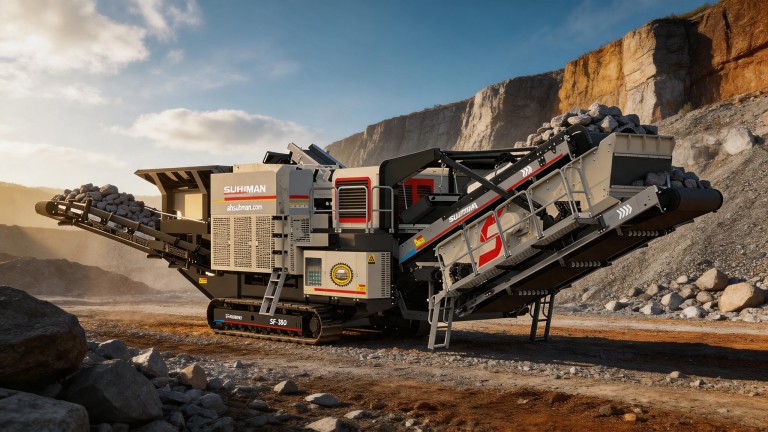
Crushers, the tireless workhorses of mining and processing operations, face the challenge of dust on a daily basis, and effective dust suppression depends directly on precisely calibrated operating pressure and correctly selected nozzles, which together provide protection against harmful airborne particles and extend the service life of the equipment.
The role of working pressure in a dust suppression system
Pressure acts as an invisible regulator that determines the range and density of the water curtain above the crushing zone; if the pressure is too low, the water droplets remain large and fail to capture fine dust particles; if it is too high, resource consumption increases without any visible improvement in performance; the optimum setting is selected according to the specific crusher model and the nature of the raw material being processed.
Key factors to consider when selecting injectors
Nozzles are the key components responsible for dust suppression; their design determines the spray pattern and droplet size. Models with a mist-forming effect are better suited to fine dust, whilst standard fan-shaped nozzles are sufficient for larger particles, It is also important to consider the material’s resistance to abrasive wear caused by impurities in the water.
The relationship between pressure and injector characteristics
These two components of the system do not operate independently of one another; the same nozzle will produce different spray patterns at different pressures, so specialists first select the type of nozzles to suit the process requirements, and then adjust the pressure to match their operating parameters in order to achieve the best balance between efficiency and water consumption.
Common faults and how to prevent them
The most common problems are clogged nozzles and unstable pressure in the circuit, which significantly reduce dust suppression efficiency; Regular cleaning of the filters upstream of the nozzles and weekly checks of the pressure gauge readings help to prevent unexpected breakdowns and extend the service life of the entire system by 30–40% without any additional capital expenditure.
Practical guidance on configuring the system
When starting up the system, the base pressure is first set to 2–3 bar, then gradually increased until the water curtain completely covers the dust emission zone without excessive spraying, after which the uniformity of the spray across all nozzles is checked and their position is adjusted to ensure maximum coverage of the crusher’s working area.