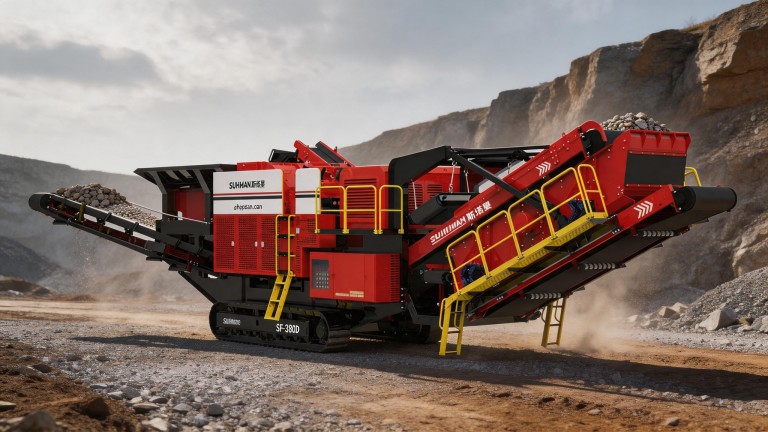
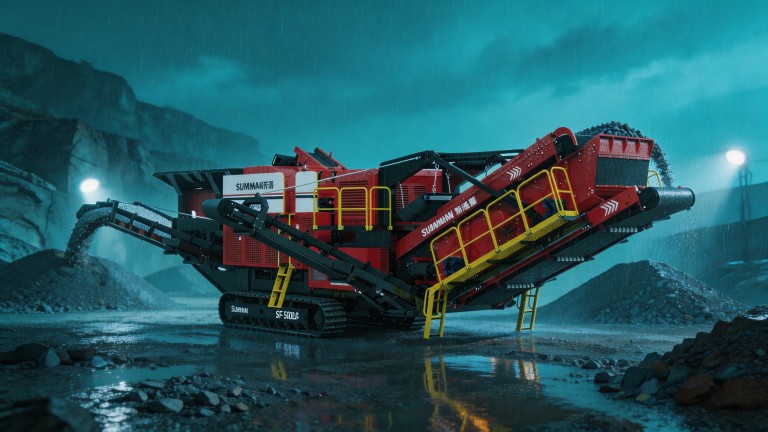
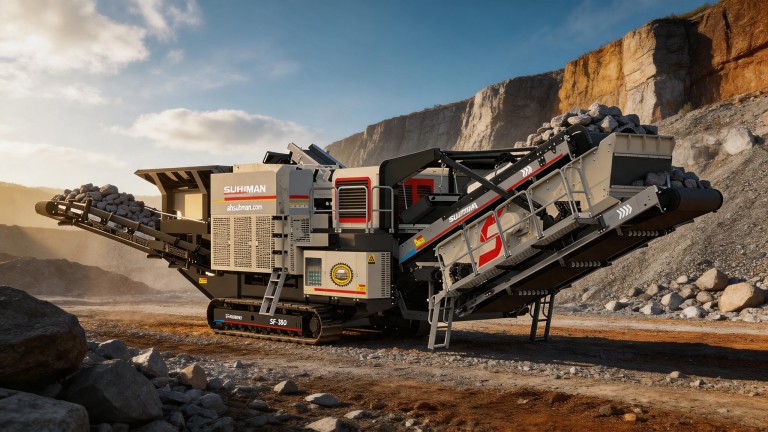
This article examines the productivity of crushers designed to process granite and granite-based waste, highlights the key factors influencing this performance metric, as well as the practical considerations involved in optimising the operation of such equipment to achieve consistent and high yields of the finished product.
Key factors determining the performance of a crusher
The output rate is directly influenced by the initial size of the granite and waste material, their hardness, moisture content, and the required size of the finished product. Granite is a hard rock, so wear and tear on the crusher’s working parts directly affects the consistency of output per unit of time. Granite waste typically has a non-uniform composition, which requires pre-sorting to remove non-crushable inclusions that reduce the equipment’s efficiency.
Characteristics of crushers when processing granite and granite waste
When processing pure granite, crushers demonstrate more consistent performance, as the material has a uniform structure and predictable physical properties. When processing granite waste, which often contains residues of concrete, cement or foreign solid particles, productivity may fall by 15–25% without prior preparation of the raw material, whilst the rate of wear on the crushing plates and other working components of the unit also increases.
Practical ways to improve productivity
To maintain high performance levels, it is recommended to carry out regular maintenance on the crushers, replace worn working parts in good time, and organise the pre-sorting of raw materials to remove foreign matter. It is also important to select the unit’s operating mode to suit the specific type of raw material: for hard granite fractions, a lower feed rate should be set, whilst for homogeneous waste, the feed rate can be increased without risking a reduction in the quality of the finished product.
Monitoring and stability of performance indicators
Continuous monitoring of the crusher’s operating parameters, including the temperature of the working components, the rotor speed and the size of the final product, enables deviations to be identified in good time and the operating mode to be adjusted. Provided that all recommendations regarding operation and feed preparation are followed, the unit’s throughput capacity for granite and its by-products can reach the specified rated values of 90–95% throughout the equipment’s service life, ensuring its economic viability at production sites.