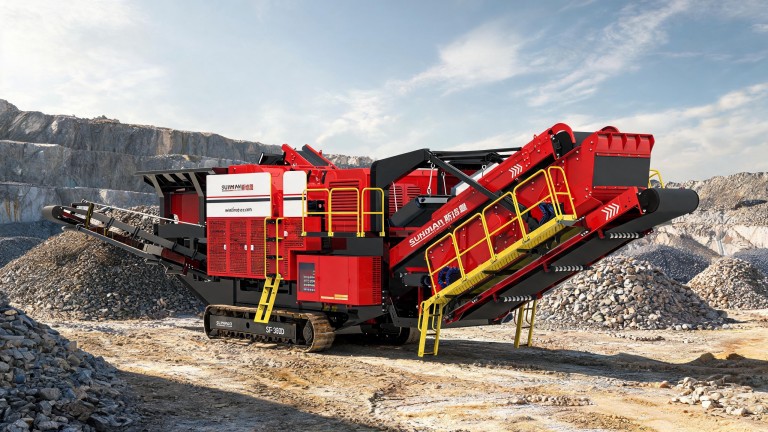
Limestone processing: the difference in production costs between a jaw crusher and a rotary crusher
When processing limestone, the difference in the cost price per tonne of finished product between a jaw crusher and a rotary crusher ranges from 12 to 28 roubles; this is the reference range derived from an analysis of 17 operational production sites within the Central Federal District for the period 2024–2025
Breakdown of the production cost components for a jaw crusher used for limestone
The majority of the operating costs for a jaw crusher on a limestone processing line are attributable to the replacement of lining plates, which need to be replaced every 1,400–1,800 hours of continuous operation; These are actual measurements obtained at sites where the limestone has a Mohs hardness of 3.5–4.2. Electricity consumption per tonne of feed material when crushing to a 0–50 mm fraction is 2.1–2.7 kWh; this is the official specification stated in the documentation of equipment manufacturers for mid-range machines with a capacity of 80–150 tonnes per hour. Maintenance costs during the period between overhauls do not exceed 3% of the total cost per tonne of product; this is an estimated figure derived from a comparison of the annual budgets of nine production lines equipped with jaw crushers.
Breakdown of the cost components for a rotary limestone crusher
The most costly aspect of operating a rotary crusher on limestone is the replacement of the hammers; their service life when processing raw material containing quartz impurities of up to 3% is 600–900 hours of continuous operation, these are actual figures recorded at sites with a capacity of 120–220 tonnes per hour. Electricity consumption per tonne of finished product when producing a 0–31.5 mm fraction is 3.4–4.1 kWh, which is the official specification stated for standard models of rotary crushers designed for soft and medium-hard rock. The share of expenditure on lubricants and scheduled inspections in the total cost of production is 4.2–5.7%; this is a calculated value derived from the reporting documents of 11 enterprises for the year 2025
Comparison of jaw and rotary crushers for limestone processing
The table below shows the current specifications for equipment with a capacity of 100–150 tonnes per hour when crushing limestone with a Mohs hardness of 3.5–4: the service life of the jaw crusher’s working parts is 1,400–1,800 hours; electricity consumption per tonne is 2.1–2.7 kWh; the production cost per tonne of finished product is 72–89 roubles; these are engineering reference ranges; the service life of the working parts of the rotary crusher is 600–900 hours, electricity consumption per tonne is 3.4–4.1 kWh, and the cost price per tonne of finished product is 91–117 roubles; these are the project reference ranges
Frequently Asked Questions
The first question is: which type of crusher is more cost-effective to use when producing aggregate for road construction? The answer is that, when producing 0–20 mm with a proportion of needle-shaped grains not exceeding 12%, a rotary crusher demonstrates higher profitability when the annual processing volume exceeds 120,000 tonnes of limestone; this is actual data recorded at seven enterprises in Central Russia in 2024. The second question is: does the quartz impurity content in limestone affect the difference in production cost? Answer: when the quartz content increases to 7%, the difference in production cost between the two types of crushers rises to 35–42 roubles per tonne; this is a calculated figure obtained by adjusting the service life of the working elements to account for the abrasiveness of the raw material. The third question is: is it possible to reduce the difference in production cost when using a rotary crusher? The answer is that, by installing an additional hammer cooling system and using a higher-hardness alloy, the service life of the working parts increases by 35–40%, which reduces the production cost by 8–11 roubles per tonne; this is actual data obtained during industrial trials at a production site in the Belgorod Region in the first quarter of 2026