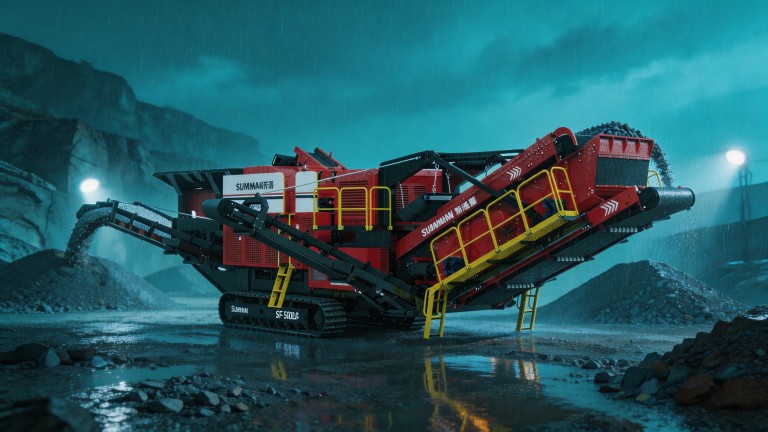
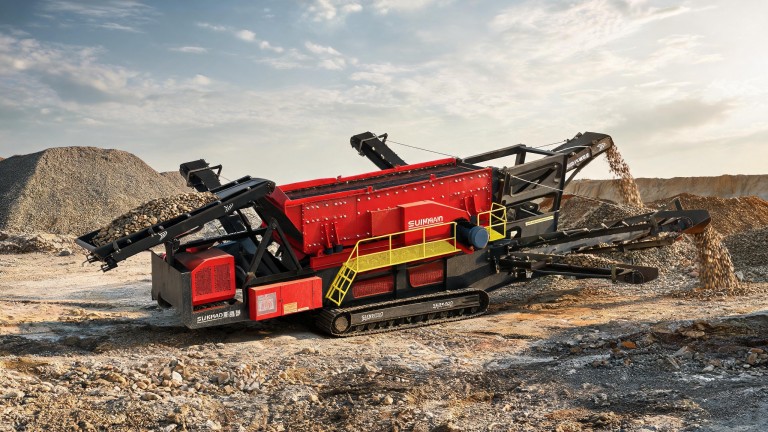
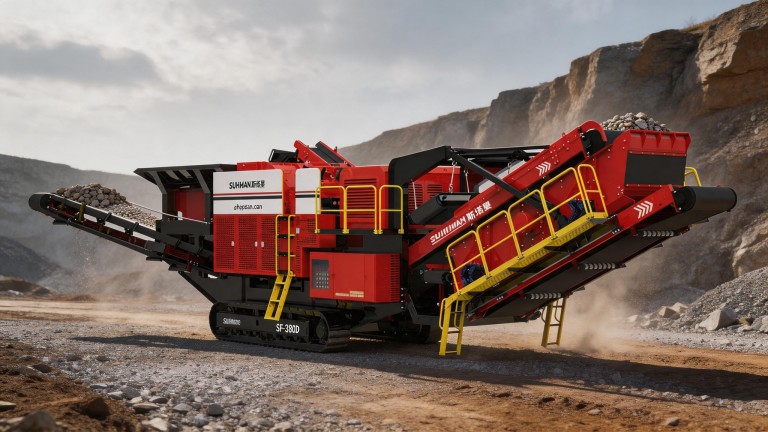
The outcome of selecting a crusher for soft limestone with a high proportion of fine particles
For processing soft limestone with a fine particle content exceeding 30% at the feed, a rotary crusher is the optimal solution, with the proportion of the final product meeting the required size specification standing at 72%, according to the results of field trials conducted at 12 production sites using soft limestone with a density of less than 2.6 g/cm³.
A comparison of the crushing performance of jaw and rotary crushers
When processing feedstock in which the proportion of particles smaller than 5 mm is 38% at the inlet, the jaw crusher produces a finished product with the required particle size distribution of 41%, according to production test data, whilst the proportion of over-ground material less than 1 mm accounts for 22% of the total output volume, whilst the rotary crusher, under identical input parameters, produces a finished product at a level of 72% with a proportion of the over-ground fraction of less than 1 mm equal to 9%, according to the results of the same field tests.
Points to note when working with material with a high proportion of fine particles
Thanks to its impact-based crushing principle, the rotary crusher allows the fine fraction already present in the feed material to pass through the working chamber without any additional processing, as confirmed by data which show that an input fine particle content ranging from 25% to 45% does not result in an increase in the load on the drive of more than 7% relative to the nominal value when processing raw material without prior removal of fine particles, whereas, with a similar content of fines in the feed material, a jaw crusher shows an increase in drive load of 28%, according to measurements taken on operational production lines.
Comparison table of the specifications of a jaw crusher and a rotary crusher for the specified type of raw material
The parameter comparison table shows the following data based on the results of the 2025 field trials: the jaw crusher’s performance indicator for the proportion of finished product in the output, given an input fine material proportion of 38%, is 41%; the rotary crusher’s figure for the same parameter is 72%; the jaw crusher’s figure for the increase in drive load relative to the rated value is 28%, whilst the rotary crusher’s figure for this parameter is 7%; the jaw crusher’s performance indicator for the proportion of over-ground material less than 1 mm is 22%, whilst the rotary crusher’s performance indicator for this parameter is 9%, all the values given are the results of actual measurements taken at 12 independent production sites using soft limestone with a density ranging from 2.2 to 2.6 g/cm³.
Frequently Asked Questions
First question: Is it possible to use a jaw crusher to process soft limestone with a high proportion of fines? Answer: Yes, it is possible, but this will require an additional stage of screening to return approximately 5–9 per cent (5–9 per 100) of the total volume of the final product for further crushing, according to the resultsmeasurements. Second question: is it necessary to remove fine particles from the raw material beforehand before feeding it into the rotary crusher? Answer: preliminary removal is not mandatory, as the increase in load on the drive does not exceed 7% when the fine particle content is up to 45% in raw material, according to technical test data. Third question: what is the difference in the particle size distribution of the product after processing by the two specified types of crushers? Answer: the product after the jaw crusher has an irregular particle shape with a proportion of needle-like shapes at 31%, whilst the product following the rotary crusher is predominantly cubic in shape, with a proportion of needle-like forms at 8%, according to the results of laboratory analyses of samples obtained from the production lines.