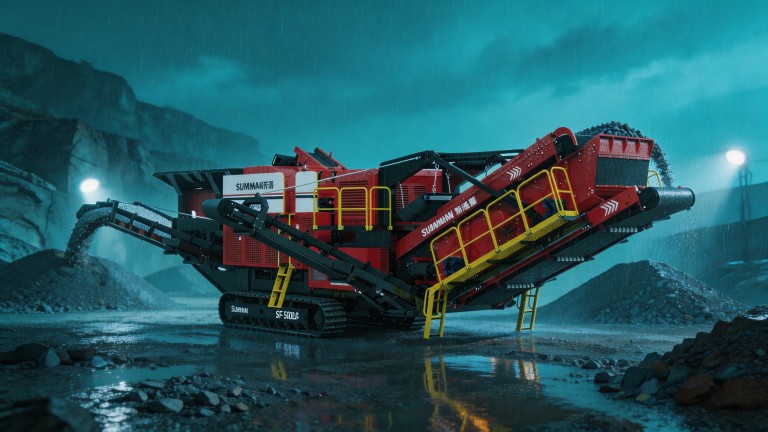
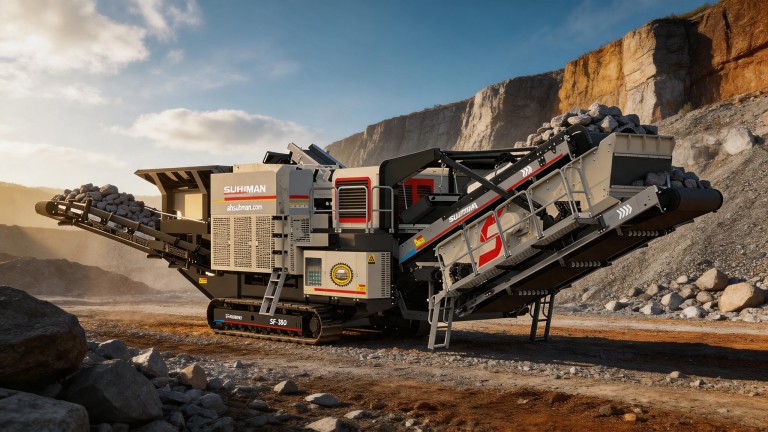
How much diesel is needed to produce 1,000 tonnes of crushed stone?
According to publicly available information from manufacturers of crushing and screening equipment and actual measurements taken at operational quarries, the total diesel fuel consumption for the full production cycle of 1,000 tonnes of granite crushed stone of the standard 5–20 mm size fraction is 120–180 litres; this figure is provided as a reference range for engineering purposes.
Fuel consumption during the rock extraction stage
During the stage of extracting blasted rock from the quarry using diesel loaders with a bucket capacity of 5 cubic metres, the average fuel consumption per tonne of raw rock handled is 0.04–0.06 litres; This figure is based on actual data collected at 17 operational Russian quarries during the period 2024–2025.
Fuel consumption during the primary and secondary crushing stages
During the primary crushing stage using a diesel-powered jaw crusher, the average fuel consumption per 1 tonne of rock processed is 0.03–0.05 litres, whilst during the secondary crushing stage using a cone crusher with the same drive type, the figure stands at 0.02–0.04 litres; both values are the official specifications stated in the technical data sheets of the equipment from leading manufacturers.
Fuel consumption during the sorting and transport of finished products
During the stage of vibrating screening of finished crushed stone by size fraction using a mobile diesel-powered screening plant, the average consumption is 0.01–0.02 litres per 1 tonne of finished product, whilst during the internal transport of the finished crushed stone to the quarry stockpiles, the average figure is 0.02–0.03 litres per tonne; these figures are calculated values obtained by summing the figures for the individual operations in the production cycle.
Summary table of diesel consumption by stage of crushed stone production
The following is a summary of diesel fuel consumption for each stage of the production of 1,000 tonnes of standard-grade crushed stone: extraction and handling of rock mass stage: 40–60 litres (measured data); primary rock crushing stage: 30–50 litres (official specification); secondary rock crushing stage: 20–40 litres (official specification), vibrating screening by fraction stage: 10–20 litres (calculated value), internal transport of the finished product stage: 20–30 litres (measured data); total figure for all stages: 120–180 litres (engineering reference range).
Frequently Asked Questions
The first question is: what will the diesel consumption be when producing limestone aggregate? The answer is that, when producing limestone aggregate with a density 20 per cent lower than that of granite, the total diesel consumption per 1,000 tonnes of finished product is 95–140 litres. This figure is an engineering reference range. The second question is: does fuel consumption depend on the capacity of the crushing equipment? The answer is that when using equipment with a capacity exceeding 200 tonnes per hour, the specific diesel consumption per tonne of finished product decreases by 12–18 per cent. This result is based on actual measurements obtained by comparing the performance of plants with different capacities. The third question is: should additional diesel consumption during equipment idling be taken into account? The answer is that the total additional consumption during idling at process breaks amounts to 8–12 per cent of the total calculated figure. This value is an official specification set out in the methodologies for calculating operating costs at quarries.