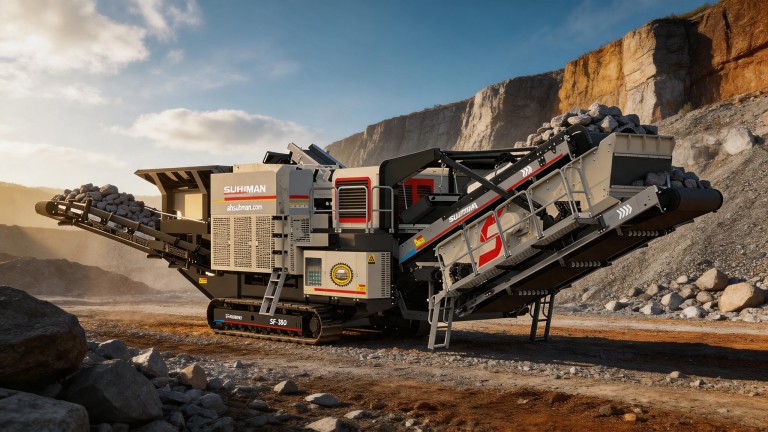
This article analyses real-world operational data from crushers operating in hot and rainy conditions, examines the specific characteristics of their performance under these extreme climatic conditions, and provides practical recommendations for the reliable operation of the equipment without unnecessary downtime or breakdowns.
Crusher performance in extreme heat
When temperatures exceed 35 degrees Celsius, the crusher experiences increased strain on its cooling systems, and the working parts wear out more quickly due to a reduction in the viscosity of the lubricants; actual data show a 12–15% reduction in productivity compared with standard conditions, whilst the feed rate remains constant.
Working during the rainy season
In conditions of high humidity and frequent rainfall, the raw material entering the crusher has a high moisture content, which causes it to stick to the working surfaces; actual measurements show an increase in energy consumption at 18%, as well as the need for more frequent cleaning of the crushing chambers to prevent blockages.
Comparative reliability indicators
An analysis of data covering three operating seasons shows that the number of unscheduled stoppages during hot spells is higher for the 22% than in mild weather, whilst during the rainy season this figure rises to 31%, with the main faults being related to mechanisms seizing up and bearing assemblies overheating.
Practical guidance on operation
To adapt operations to the specified conditions, it is sufficient to increase the frequency of checks on the level and quality of lubrication during hot weather, and during the rainy season to arrange for the raw materials to be pre-dried or to adjust the feed rate to 10–12% below the standard rate, which reduces the number of breakdowns to the level seen under normal operating conditions.