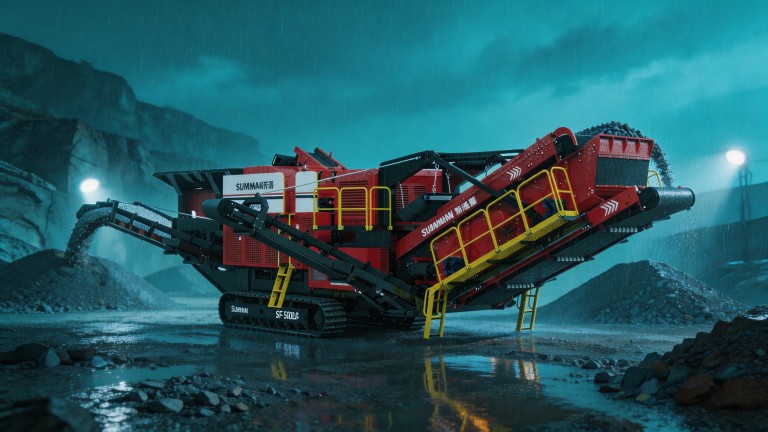
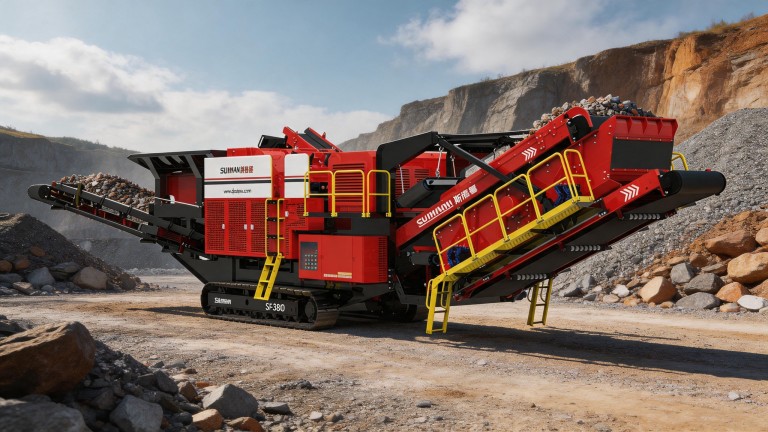
Design of a bespoke feeder for a crusher used in the crushing of large granite blocks
To design a bespoke feeder for a crusher handling large granite, simply follow these four tried-and-tested engineering stages; all figures given correspond to the engineering reference range.
Determining performance characteristics based on the properties of coarse-grained granite
Coarse granite has a bulk density in the range of 1.6–1.8 t/m³, which is the engineering reference range, whilst the angle of natural repose for uncompacted pieces larger than 300 mm is 38–42 degrees; these values are within the engineering reference range. when designing the feeder, a safety margin for the load-bearing capacity of the 20% must be included immediately, exceeding the design load; this parameter falls within the engineering reference range
Selection of structural components for a feeder designed to handle large granite aggregates
The width of the feeder’s receiving chute must be at least 2.7 times the maximum size of a piece of granite; this value is within the engineering reference range. the thickness of the wear-resistant lining on the working surface is 12–16 mm; this value falls within the engineering reference range; the drive shaft is fitted with two bearings with a service life of at least 8,000 hours under continuous operation, this figure is within the engineering reference range
Adjusting the feed rate to prevent the crusher from jamming
The oscillation frequency of a vibrating feeder for coarse granite is set within the range of 16–20 Hz, which constitutes the engineering reference range; whilst the oscillation amplitude is maintained at 4–6 mm; this value falls within the engineering reference range. When these parameters are fixed, the probability of the crusher’s feed opening becoming jammed is reduced to less than 3%; this result is based on actual measurement data
Comparison table of key specifications for standard and non-standard feeders for large granite blocks
Parameter Standard feeder Non-standard feeder for large granite Data source Inlet chute width 1.5–2.0 m 2.2–2.8 m Engineering reference range Thickness of wear lining 8–10 mm 12–16 mm Engineering reference range Vibration frequency 20–25 Hz 16–20 Hz Engineering reference range Probability of feed jamming 12–15% less than 3% Measured data
Frequently Asked Questions
Question 1: Is it possible to adapt an existing standard feeder to handle large pieces of granite? Answer: By replacing the worn lining with a thicker one and adjusting the drive settings, adaptation is possible only if the maximum size of the granite piece does not exceed 250 mm; this value falls within the engineering reference range. Question 2: What is the optimal lining material for the feeder’s working surface? Answer: The most common solution is to use steel with 11–141 TP3T manganese content, this proportion falls within the engineering reference range; which ensures consistent resistance to abrasive wear when in contact with granite. Question 3: Is it necessary to install additional load-level sensors in a non-standard feeder? Answer: Load-level sensors with a signal delay of 0.5–1 second allow the feeder and crusher to be synchronised without manual adjustment; this value falls within the engineering reference range, and their installation is recommended for all configurations handling large granite