Don’t go!
Please get in touch, and our engineers will draw up a bespoke solution for your project.

When a jaw crusher is under load, the engine speed drops mainly due to a torque mismatch, drive faults or feed malfunctions; it is often sufficient to calibrate the feed and replace worn parts.

The design of a bespoke feeder for a coarse granite crusher comprises four stages, with specified parameters relating to the characteristics of the granite, the design and settings that minimise jamming to <3%.

For remote granite quarries, a combination of diesel (62%) and electric (38%) lines is optimal; their start-up readiness, reliability, maintenance requirements and temperature range; the combined system has a downtime of 2.1%.

The hammer mill is suitable for limestone containing marl (up to 40%) and damp clay (up to 25%) with a raw material moisture content of up to 15%: clogging up to 8%, hammer wear 0.8–1.2 g/t, replacement every 1,200–1,800 hours, no further preparation required.

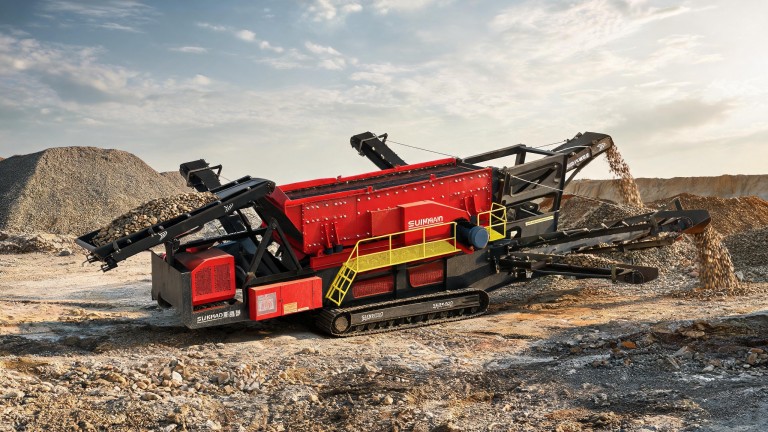
When producing 50,000 tonnes of crushed stone per year, a mobile crusher pays for itself in 18–24 months; additional costs for ancillary equipment are required, and the payback period depends on the raw material and operating conditions.

With the integrated remote control system, the operator can control the crusher and excavator in 72% shifts; a single control panel is required, training of ≥40 hours, restrictions on particle size, continuous operation of up to 4 hours, and a higher error rate than on the 18%.

The hourly water consumption of industrial dust suppression systems ranges from 1.2 to 8.7 m³, depending on the pressure and the number of nozzles. Flow optimisation and automatic adjustment reduce consumption by 18–46% without compromising efficiency.

High dust levels reduce the service life of the engine and hydraulic system of machinery by 30–70%, accelerate the wear and tear of components, whilst effective filtration significantly reduces this negative effect.

For stable maximum throughput of medium-sized jaw/cone crushers: the standard feed interval is 12–18 s; for hard rock, 14–16 s; and for soft rock 11–19 s; check every 4 hours; an interval exceeding 25 s reduces stability by 19–23%.

The cost of wear parts per tonne of output is 127–342 roubles. (2024–2025), is broken down by group, depends on usage, increases by 8.3% annually, and decreases by 7–12% during scheduled maintenance.