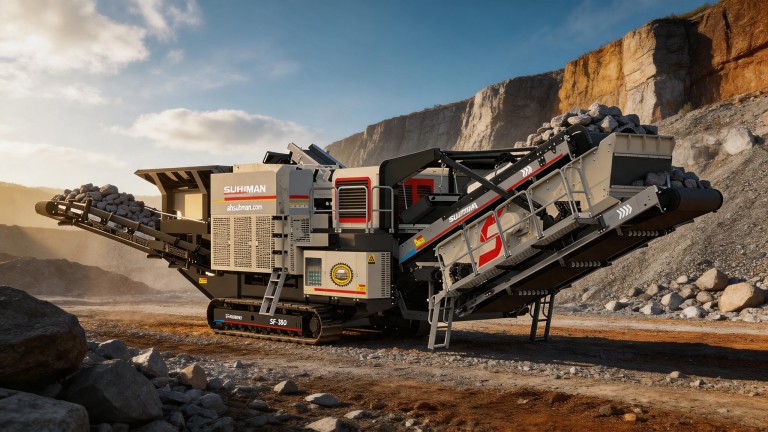
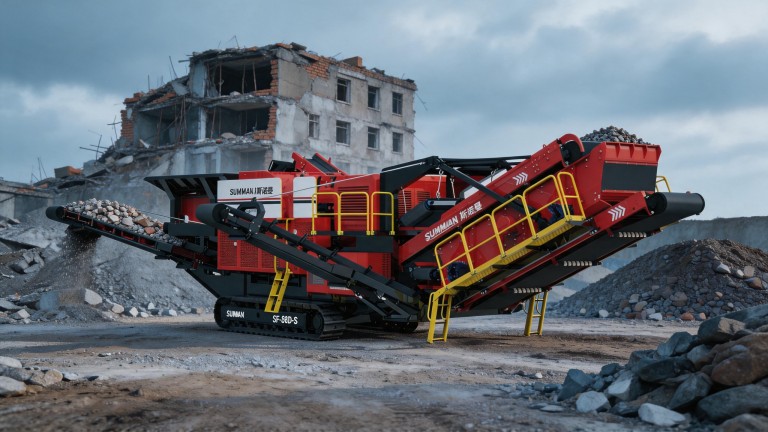
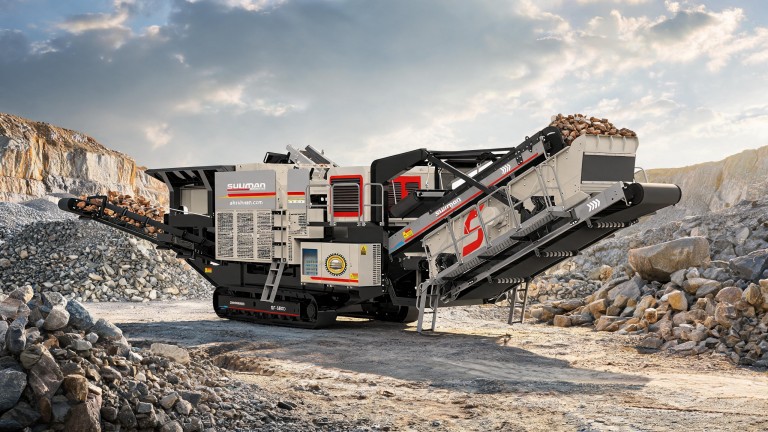
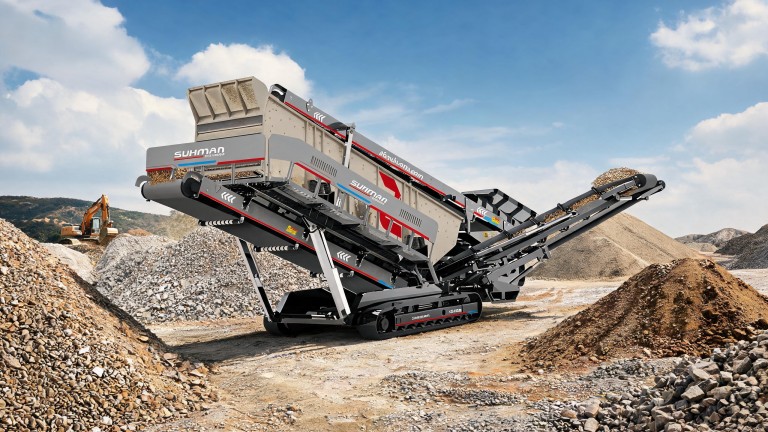
The pre-screen is an indispensable piece of equipment on raw material sorting production lines, as it separates fine particles from coarse material in advance, reduces the load on downstream equipment and directly leads to a significant increase in overall production efficiency without unnecessary modernisation costs.
How the primary screen works
This unit acts as a precise and efficient manager of the raw material flow: when material is fed onto the vibrating working surface with calibrated apertures, fine particles immediately pass through them into a separate hopper, whilst larger fractions are directed onwards for crushing or screening, without holding up the overall flow.
Key effects on productivity
Firstly, it eliminates the need for unnecessary processing of fractions that are already the correct size, meaning that crushers and main screening lines do not waste resources on processing material that is already ready for use, secondly, it reduces the risk of overloading the main equipment, eliminates downtime caused by blockages and enables a consistently high feed rate of raw material to the line to be maintained.
Best-practice installation scenarios
The greatest benefit from pre-screening is achieved on ore, construction aggregate and coal processing lines, where the proportion of fine particles in the feedstock exceeds 15 per cent, and even a standard model, without any additional modifications, can increase the line’s overall productivity by 18–25 per cent within the first few months of operation.
Simple maintenance guidelines
To ensure that the pre-screening unit maintains its efficiency consistently, it is sufficient to check the integrity of the mesh on the working surface once per shift, clear the openings of any stuck, damp raw material once a week, and monitor the tension of the vibration actuators; These simple steps help to prevent a drop in efficiency and double the unit’s service life.