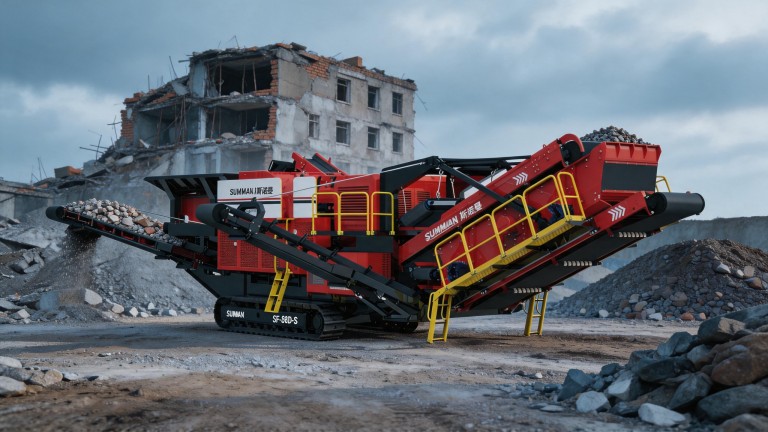
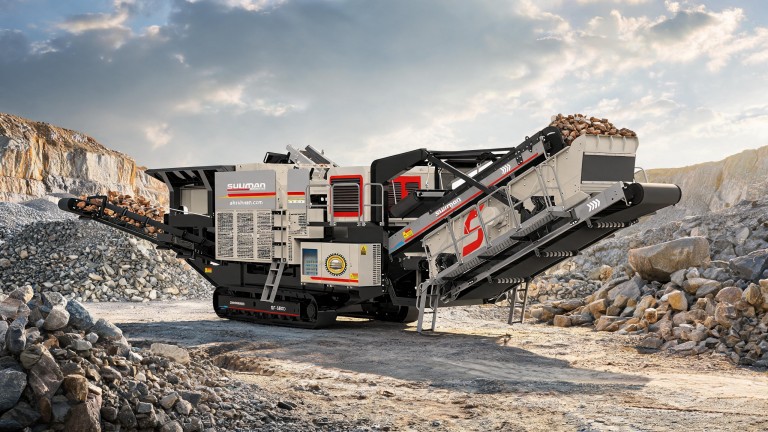
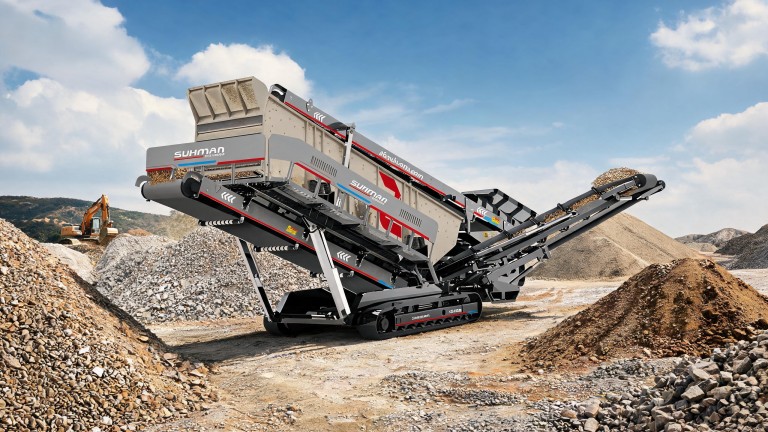
A mobile crushing plant for a remote quarry must be selected to suit conditions where there is no stable infrastructure, and during installation, the specific characteristics of the ground and the power supply must be taken into account to ensure uninterrupted operation without unnecessary logistics and maintenance costs.
Key criteria for selecting a model
Firstly, it is worth assessing the type of material to be crushed and the required output size: jaw crushers are suitable for hard rock, whilst rotary crushers are better for soft rock. Autonomy is also important: models with a built-in diesel generator are not dependent on local power grids, which is crucial for remote sites without access to infrastructure. Don’t forget about the transport radius: the dimensions of the processing line must be compatible with the delivery capabilities along the quarry’s dirt tracks.
Key points regarding site preparation for installation
Before installation, the site must be levelled and the ground compacted to prevent the structure from becoming misaligned due to vibrations during operation. If the site is on a slope, it is worth constructing a simple retaining foundation using readily available materials; this will reduce the risk of heavy equipment shifting. You should also set up areas for storing raw materials and the finished product straight away, so as not to waste time moving materials around during operation.
Guidelines for initial start-up and routine maintenance
After installation, first check all fixings and run the engine at idle for at least an hour to ensure there are no unusual noises and that no components are overheating. For remote quarries, it is worth stocking up on a set of key consumable parts in advance so as not to have to wait for delivery during scheduled maintenance. Carry out a weekly inspection of the vibratory plates and drive belts; this will extend the service life of the line by 30–40% compared to irregular maintenance.