Don’t go!
Please get in touch, and our engineers will draw up a bespoke solution for your project.

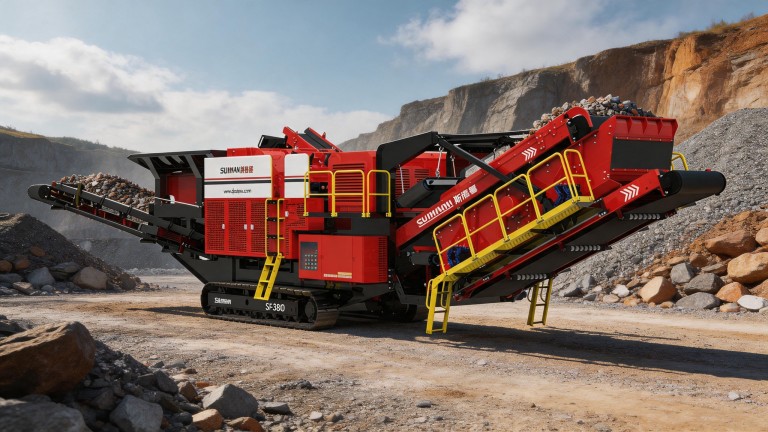
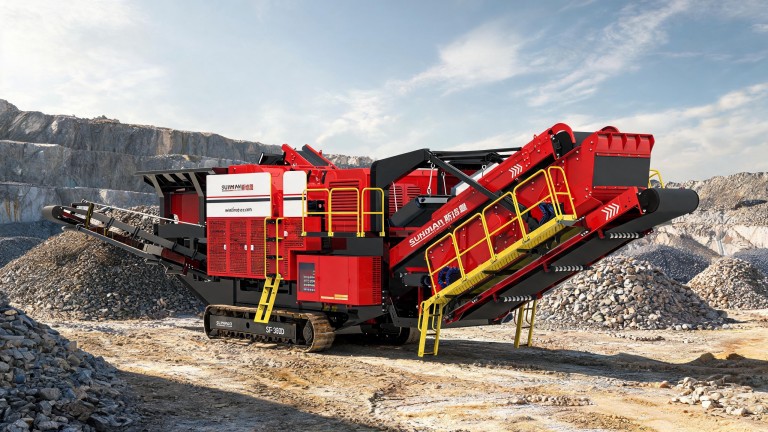
When choosing a mobile jaw crusher, focus on your production requirements: select a model suited to your raw materials, and match the capacity to the volume of work. The price depends on the specifications, brand and condition; take maintenance costs into account. Look for good deals on manufacturers’ official websites during promotional periods or on specialist platforms, and check the warranty and delivery terms.

При выборе мобильной щековой дробилки для камня оценивают производительность, размер входных кусков, тип привода (дизельный без сети, электрический экономнее с ней), материал щек (лучше высоколегированная сталь) и удобство регулировки фракции. Выгоднее покупать у официальных дистрибьюторов без наценок, с гарантией и консультациями.

When purchasing a mobile jaw crusher for granite, you should take key specifications into account (feed opening size, throughput, jaw strength, and power output relative to the volume of work), and check that it has a reinforced undercarriage and a particle size adjustment mechanism. Order from official distributors, check the warranty, take advantage of seasonal discounts, and avoid middlemen.

The choice between a jaw crusher and a cone crusher for basalt depends on the throughput, the size of the feed material and the final particle size: a jaw crusher is suitable for the primary crushing of large chunks, whilst a cone crusher is suitable for secondary or tertiary crushing to produce a uniform particle size. For small-scale operations of up to 50 t/h, a jaw crusher is used; for high-capacity operations exceeding 100 t/h, both types are combined.

The choice of crusher for a granite quarry affects productivity and profitability; take into account the characteristics of the granite (hardness, particle sizes), whether the crusher’s capacity matches planned output, its ability to integrate into the production line, and ease of maintenance. Avoid the following mistakes: choosing a crusher based solely on the lowest price without considering the service life of components, ignoring restrictions on feed sizes, and overloading the equipment.

Wear-resistant hammers for rotary crushers affect crushing efficiency and costs; when selecting them, it is advisable to focus on three criteria: material (high-manganese steel for soft rock, chromium/tungsten carbide alloys for hard rock), compatibility with the crusher model as specified by the catalogue number, and the manufacturer’s reputation, backed by a warranty and verified customer reviews.

The lining of a cone crusher’s crushing chamber protects the housing from wear; choosing and replacing it correctly determines the equipment’s service life. When selecting the lining, take into account the hardness of the material to be crushed and the geometry specific to the model; avoid non-genuine parts. When replacing the lining, clean the chamber, secure the parts in accordance with the instructions, and carry out a test run. Regular inspection and correct operation can extend its service life by 1.5–2 times.

Manganese plates for jaw crushers are key working components; their selection and the reliability of the supplier influence the service life of the equipment and production efficiency. When selecting plates, ensure they match the model’s geometry and have a manganese content of 12-14%. Choose suppliers with at least five years’ experience, relevant certifications and a proven track record; check the warranty and delivery times. Look for components on specialist platforms or from authorised dealers, and avoid offers that are too cheap.

When selecting a crusher for the primary crushing of copper ore, it is important to take into account throughput, feed size, ore hardness, energy consumption, the service life of wear parts, and the ease of replacing spare parts. It is best to order equipment from reputable mining manufacturers, as this will prevent downtime and reduce operating costs.

To choose the right crusher for river stone and pebbles, you need to assess the scale of the work and the required particle size of the finished product. Jaw or cone crushers are suitable for hard raw materials, whilst a rotary crusher is added at the final stage for cuboid material. It is more cost-effective to buy directly from official manufacturers rather than through intermediaries, who can increase the price by up to a third.