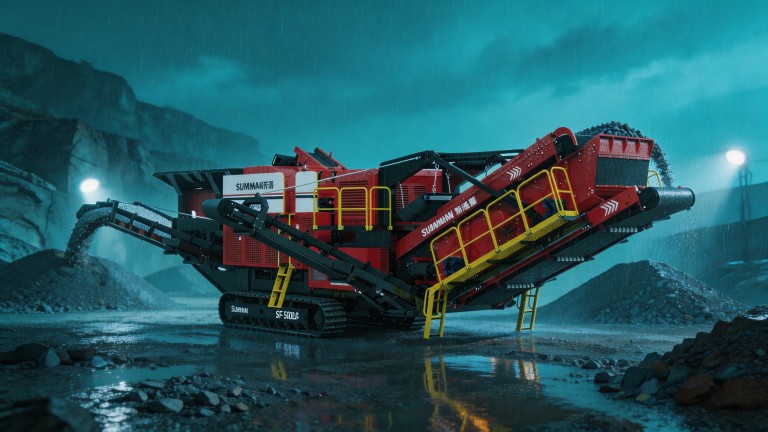
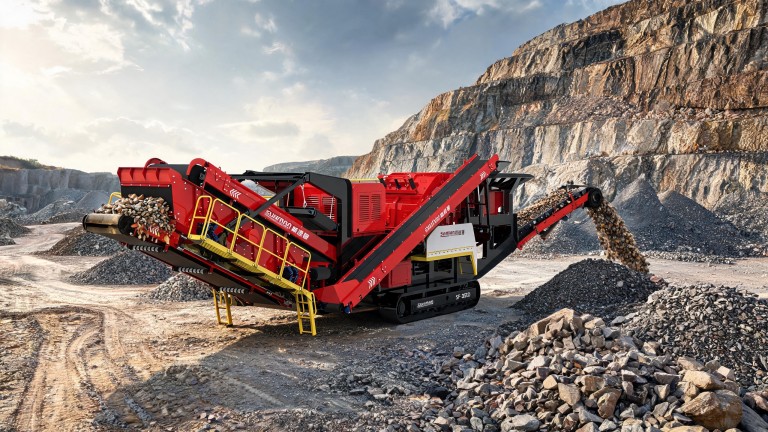
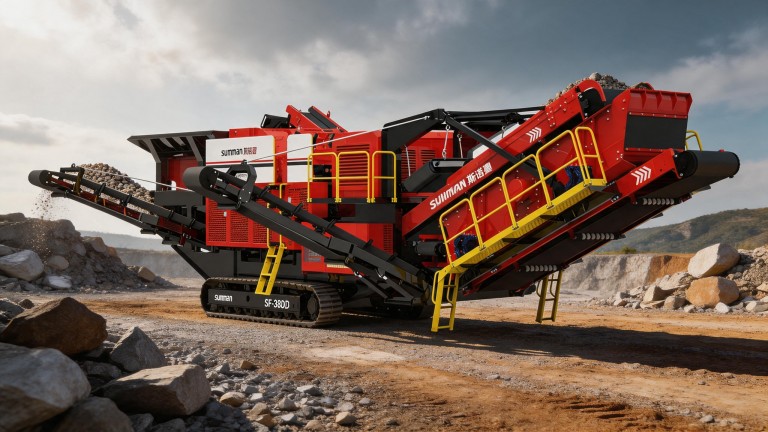
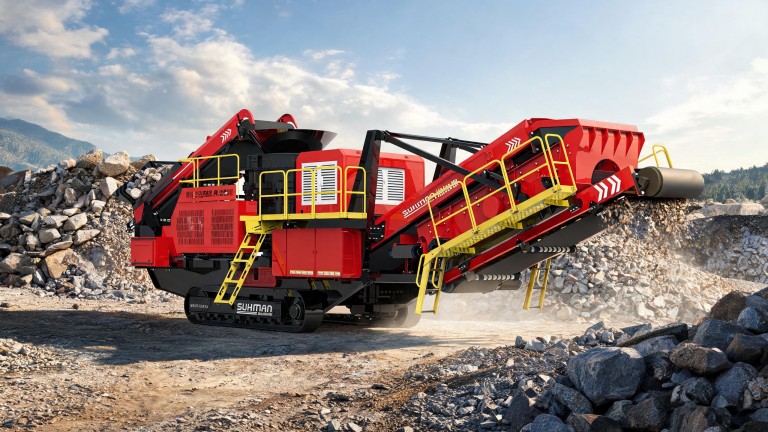
The choice between a jaw crusher and a cone crusher for basalt depends on the required throughput, the size of the feed material and the final product size; both types of equipment demonstrate high resistance to hard material; the optimal option is selected to suit specific production requirements, as there is no one-size-fits-all solution
Features of a jaw crusher for basalt
The jaw crusher operates on the principle of compression between two plates; it is characterised by its simple design, high reliability and the ability to process large pieces of basalt up to 1,200 mm in size; It is suitable for use as a primary crusher in the early stages of a production line and offers low operating costs whilst delivering consistent performance when processing hard rock.
Features of a cone crusher for basalt
The cone crusher crushes material through the eccentric rotation of the inner cone, ensuring a more uniform particle size distribution and high throughput during the secondary and tertiary stages of processing; it handles basalt without overloading, provided the feed rate is stable, and enables the production of precisely sized fractions for further processing
Key criteria for selecting equipment
When selecting equipment, it is important to take into account the maximum size of the incoming basalt, the required line capacity, the required particle size of the finished product and the maintenance budget; for small-scale operations of up to 50 t/h, the following is sufficient jaw model, for lines with a capacity exceeding 100 tonnes per hour, both types are combined for the primary crusher of hard rock