Don’t go!
Please get in touch, and our engineers will draw up a bespoke solution for your project.

At high altitudes, crushers lose 30–40% of their efficiency due to the thin atmosphere: a drop in engine power and overheating of components. This is typically compensated for by turbochargers; in the long term, the transition to electric drives and the modernisation of working components are envisaged.

The Indonesian remote project ensures continuous operation thanks to a stable hybrid power supply, well-organised logistics for spare parts, backup systems and a 24-hour response service.

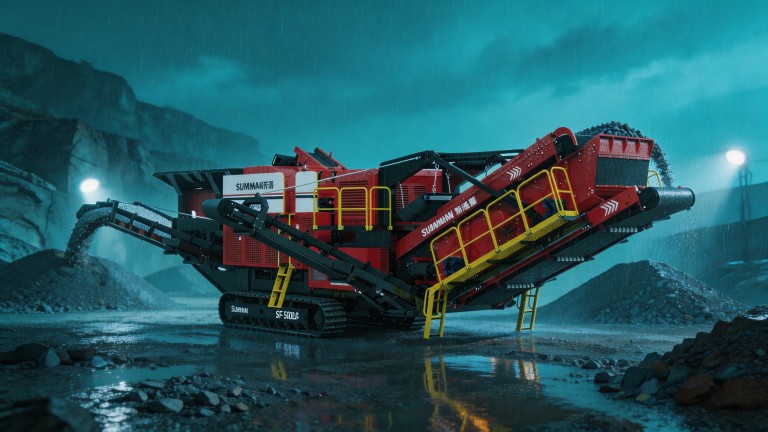
The rainy season (May–October) in Vietnam does not hinder your career; rather, it helps you develop valuable skills, and successful projects undertaken during this time are a real asset to your CV. All you need to do is follow a well-thought-out strategy and avoid common pitfalls.

Mobile crushers, which have been adapted for the Russian winter and undergo special preparation and maintenance, operate reliably at temperatures of -30 to -40 °C, demonstrate high efficiency in Siberia, deliver economic benefits and enable year-round operations.

On-site processing of demolition waste involves sorting, crushing, cleaning and classifying the resulting materials into secondary resources for use in construction, thereby reducing waste disposal, costs and the environmental impact whilst ensuring compliance with regulations.

Adjusting the grain size distribution of the road sub-base ensures the optimal mix of particle sizes, eliminates errors associated with standard mixes, incorporates precise methods and quality control, and doubles the road’s load-bearing capacity and service life, thereby reducing maintenance costs.

The granite crushing project at the quarry comprises preparation, multi-stage crushing, safety controls, environmental measures and quality control of the fractions for the construction industry.