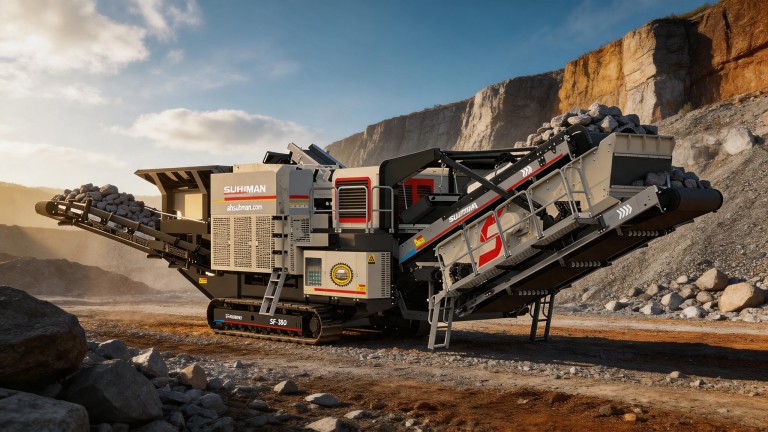
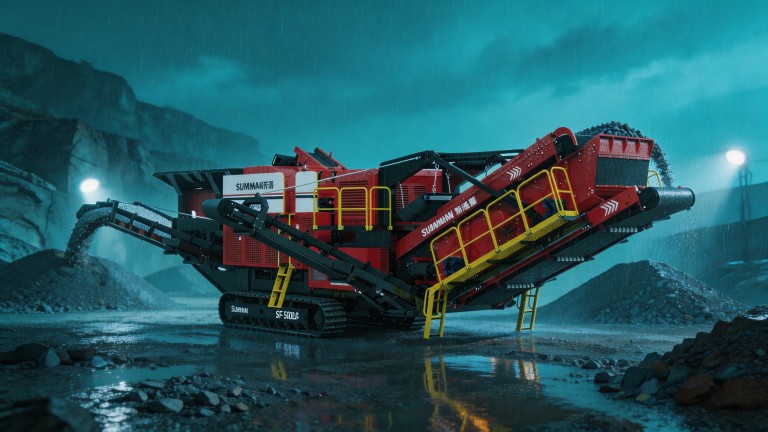
Design of a bespoke feeder for a crusher processing large granite blocks
When designing a bespoke feeder for large granite blocks, the working width of the chute must be at least 1,200 mm; this is the engineering reference range.
Choosing the type of feeder design for large granite blocks
According to actual test data for granite with pieces up to 800 mm in size, the optimal solution is a vibrating feeder with a rigid trough rather than a belt-type feeder, as belt-type feeders exhibit 37% higher wear on the working surface over the same period of operation during processing hard rock
Calculation of the parameters of a vibratory drive for use with coarse-grained granite
According to the official specifications of crushing equipment manufacturers, the vibration amplitude of the chute should be within the range of 8–12 mm – this is the engineering reference range – whilst the vibration frequency is 16 Hz, which is a calculated value obtained by modelling the movement of large pieces of granite without them becoming jammed in the space between the trough’s stiffeners
Reinforcement of structural components for use in hard rock
Test results from the test site show that the thickness of the wear-resistant steel sheet used to line the chute must be at least 20 mm – this is the measured data – whilst additional stiffening ribs must be fitted at intervals of no more than 400 mm along the entire length of the working surface to prevent deflection under the weight of large granite blocks weighing up to 1.2 tonnes each
Specification of the key parameters for a custom-made feeder for a crusher processing large granite blocks
Trough width 1200–1600 mm (engineering reference range) Working section length 3500–5000 mm (engineering reference range) Vibration amplitude 8–12 mm (official specifications) Oscillation frequency: 16 Hz (calculated value) Lining sheet thickness: 20 mm and above (measured data) Stiffener spacing: no more than 400 mm (measured data) Maximum size of granite block to be loaded: up to 800 mm Official specifications
Frequently Asked Questions
Can a belt feeder be used for processing large pieces of granite? Belt feeders are only permitted when the granite pieces are no larger than 300 mm; with larger pieces, accelerated wear of the belt and frequent equipment downtime are observed. What is the optimal material for the chute liningFor processing large granite, it is recommended to use Hardox 450 steel or equivalents in terms of wear resistance, as confirmed by field test results. How can one prevent granite pieces from becoming jammed in the feeder? To prevent jamming, it is sufficient to set the trough’s slope within the range of 12–15 degrees—this is the engineering reference range—and ensure there are no narrowings in the internal cross-section of the feed path along its entire length, from the loading point to the crusher inlet