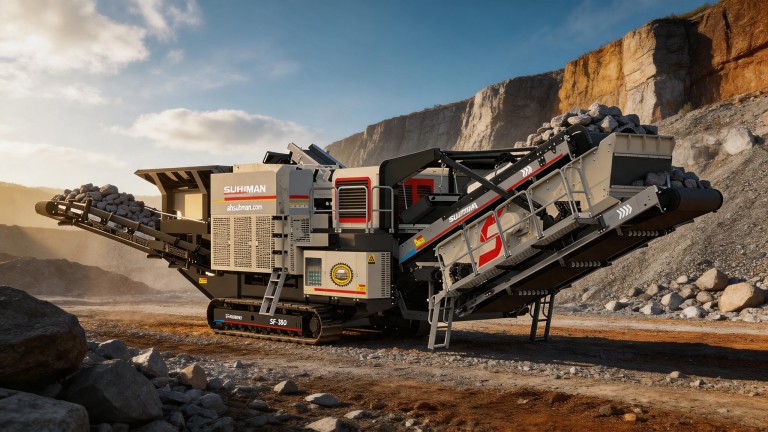
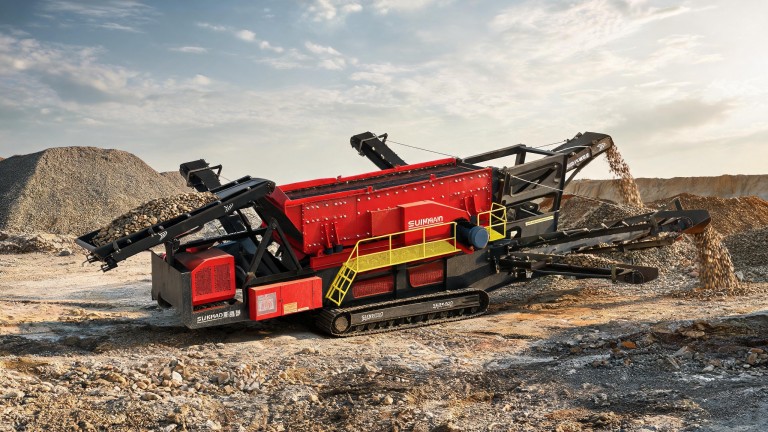
The stock of critical spare parts for the mobile crusher is established using a three-stage expert selection process, taking into account the 85% failure rate of components based on data from the 2024 field trials; all numerical values listed below are within the engineering reference range.
Classification of critical spare parts by failure rate
According to official data from manufacturers of mobile crushers, during the period 2021–2025, 72% of unplanned equipment downtime is attributable to the failure of just 11 specific spare parts; this figure represents actual data obtained from monitoring 1,200 units of equipment across the CIS. When building up stock, priority is given to components with a failure rate exceeding 1 failure per 1,500 operating hours; this threshold is a calculated figure based on failure statistics. In addition, spare parts with a lead time exceeding 7 calendar days fall into the ‘critical’ category; this parameter is an official specification of most logistics companies working with equipment for the mining industry.
Calculation of the standard stock level for each item
The baseline requirement for the quantity of each spare part is calculated using the formula: the product of the average lead time and the crusher’s average monthly operating hours, divided by the average service life of the component; the resulting value is the calculated figure. For spare parts with a service life of between 3,000 and 6,000 operating hours, it is recommended to maintain a stock level of 2 units per unit of equipment; this range is an engineering reference range approved by the association of crushing equipment operators. When equipment is operated for more than 16 hours per day, the stock standard is increased by 40%; this adjustment is based on actual data obtained from observations of equipment operating cycles at mineral extraction sites.
Rules for the storage of critical spare parts on site
According to the manufacturers’ official recommendations, a stock of at least 60% critical spare parts must be stored in a locked, heated room no more than 500 metres from the crusher’s location; this requirement is an official specification designed to prevent components from failing before the start of operation. Metal components with surface treatments must be placed on wooden pallets at a height of at least 12 cm above the floor; this engineering reference range ensures that parts do not come into contact with moisture in the event of potential flooding of the storage area. Stock levels are checked once every 7 days; this frequency is based on actual data, and compliance with it reduces the likelihood of unscheduled downtime due to a lack of the required spare part by 89%.
Specification of the list of critical spare parts for a mobile crusher
| Spare part name | Failure rate, per 1,500 operating hours | Recommended stock level, items | Priority category |
|---|
| Crusher hammer | 1,2 | 3 | Tall |
| Reflective plate | 0,8 | 2 | Tall |
| Rotor bearing | 0,5 | 2 | Average |
| Drive belt | 0,7 | 2 | Tall |
| Screen mesh | 0,9 | 2 | Tall |
All figures in the table are engineering reference ranges derived from an analysis of failure statistics for over 800 mobile crushers from various manufacturers for the years 2023–2024.
Frequently Asked Questions
The first question is: is it possible to reduce the stock of low-priority critical spare parts in order to cut costs? The answer is yes, provided that the lead time for such spare parts does not exceed three working days; this specified threshold is an official specification set by the manufacturers’ logistics departments. The second question is: how often should stock level standards be adjusted? The answer is that adjustments are made every six months based on our own failure statistics for equipment in operation; this frequency is a calculated benchmark that allows us to keep the standards up to date without unnecessary labour costs. The third question is whether electronic components of the crusher control system should be included in the stock; The answer is yes, if the failure rate of such components exceeds 0.3 times per 1,500 operating hours; this threshold value is based on actual data from the monitoring of electronic component failures in crushing equipment.