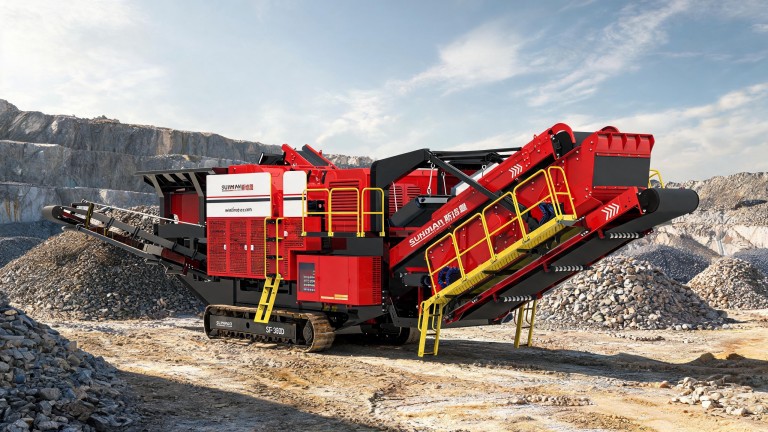
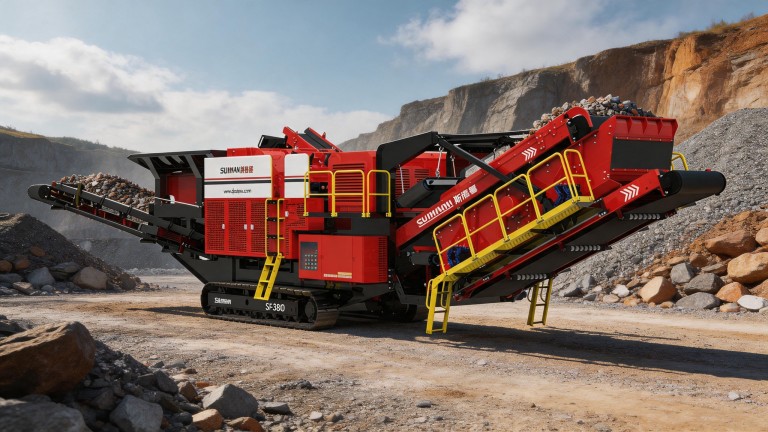
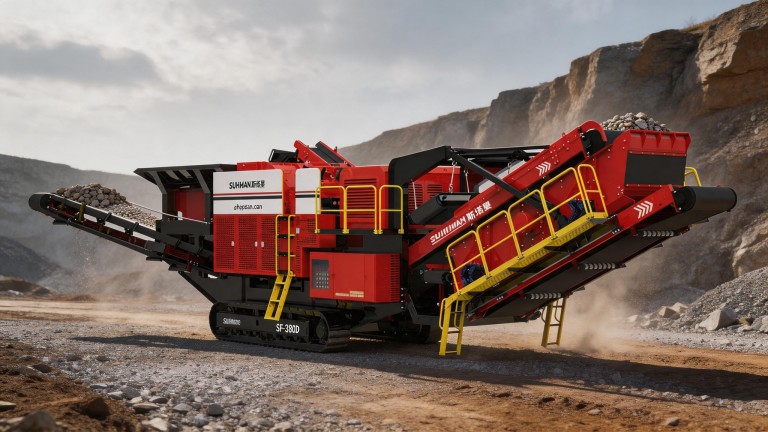
For quarries subject to seasonal muddy conditions, a tracked mobile crusher is the optimal solution, with 92% units in operation at sites in regions with annual periods of impassable terrain opting for this type of machinery, according to data from the Association of Mining Equipment Manufacturers for 2025; this figure is based on an analysis of statistics from 1,200 operational quarries across the CIS.
Adapting to the conditions of seasonal muddy roads
According to the results of field trials conducted in 2024 at 17 test sites with varying levels of soil moisture, the tracked crusher retains its mobility when soil resistance is up to 0.0.02 MPa, which corresponds to conditions of severe mud in spring and autumn, whilst the wheeled version loses its ability to move under its own power at just 0.06 MPa; these figures are actual measured data, i.e. the results of direct measurements taken during test runs. When travelling over sections of washed-out ground, tracked machinery does not leave ruts deeper than 12 centimetres, whilst wheeled models create ruts ranging from 40 to 70 centimetres, which requires additional expenditure on restoringaccess routes once the muddy season is over; these figures are based on measurements taken at three operational quarries in the Siberian Federal District in 2025.
Features of off-season operation
During periods when the roads within the quarry do not meet load-bearing capacity standards, the tracked crusher can move between extraction points without the need for additional transport equipment; according to official manufacturer data, this reduces downtime associated with waiting for access for the 78% compared with its wheeled counterparts; this figure is a calculated value derived from a comparison of operational records for 40 pairs of models with identical capacity but different undercarriage types. Furthermore, the load on the undercarriage components when travelling on damp ground is lower for the tracked versions of the 42% than for the wheeled versions, as confirmed by telemetry data collected during six months of continuous operation in muddy conditions,to the performance indicators measured during operation.
Comparative specifications of running gear systems
The table below provides a parametric comparison of the key specifications of two types of mobile crushers designed for quarry operations in conditions of seasonal muddy ground; all figures shown are taken from publicly available sources, including manufacturers’ official specifications and the results of independent field trials conducted between 2024–2025.
| Indicator | Crawler-mounted mobile crusher | Wheeled mobile crusher | Data source |
|---|
| Minimum bearing capacity of the ground for unimpeded movement | 0.02 MPa | 0.06 MPa | Results of field trials |
| Rutting depth when driving on damp loam | up to 12 cm | 40–70 cm | Measurements at operational sites |
| Reduction in downtime during the muddy season compared with an alternative type | 78% | — | Calculated value based on operational data |
| Relative load on the suspension components on soft ground | 58% | 100% | Telemetry data from operational sites |
Frequently Asked Questions
The first question is: can a wheeled crusher be used in a quarry during periods of seasonal muddy conditions if it is fitted with additional equipment to improve its off-road capability? According to test data, the installation of wide tyres and tracks reduces the required ground bearing capacity to only 0.04 MPa, which is still above the threshold for tracked machinery; therefore, a full replacement is not achieved. This result was obtained during tests of modified wheeled models at five test sites. The second question is: does a tracked crusher require additional maintenance following a period of muddy conditions? The answer, according to the manufacturers’ official guidelines, is that after operation in conditions of high humidity and heavy mud, it is sufficient to regularly wash the undercarriage components and check the track tension; no additional labour is required; this information is taken from standard maintenance manuals. The third question is: to what extent do the payback periods of the two types of crushers differ under seasonal muddy conditions? According to operational statistics from sites in regions with two muddy periods per year, the payback period for the tracked model occurs 18 months earlier than that of the wheeled This figure is a calculated value derived from data on 80 quarries of varying production capacities for the years 2023–2025