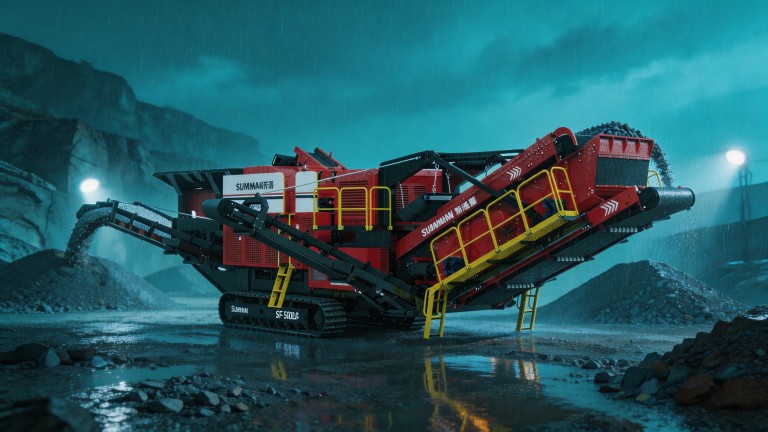
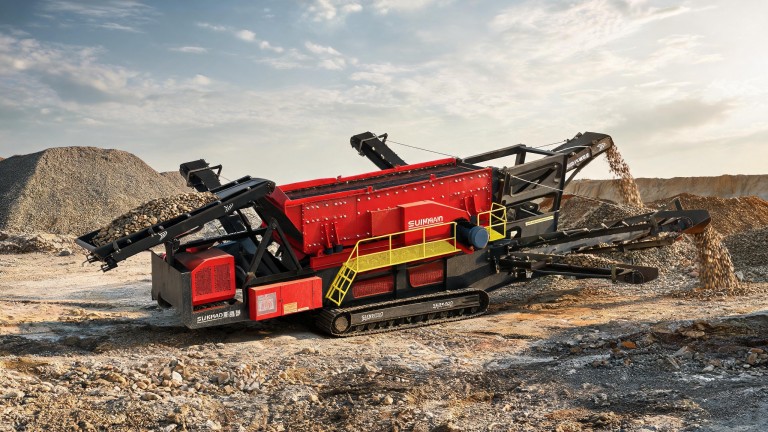
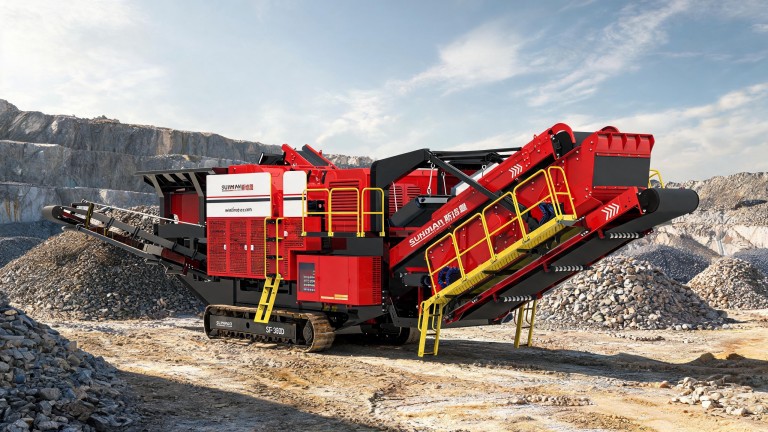
Selecting a suitable mobile jaw crusher for basalt requires taking into account the specific characteristics of this hard, abrasive material; key criteria include the unit’s power, the discharge opening dimensions and the service life of the working parts, in order to avoid premature wear and unnecessary operating costs.
Assessment of basalt hardness as the main selection criterion
Basalt is a highly abrasive rock with a Mohs hardness of between 6 and 7; therefore, the crusher jaw plates must be made from high-manganese steel with added chromium, as this material can withstand repeated impact loads without deformation or cracking, reducing the frequency of replacement of wear parts by a factor of 2–3 compared with standard alloys.
Performance parameters and dimensions of the inlet opening
When making your selection, take the particle size of the feed basalt as a guide: the feed opening should be 15–20% larger than the maximum size of the pieces being fed for crushing. If a throughput of between 50 and 200 tonnes per hour is required, it is sufficient to motorised models with a power output of between 75 and 120 kW; for large-scale work, choose machines with a reinforced frame and a hydraulic system for adjusting the jaw clearance.
Features of the mobile platform and customer service
Mobile basalt crushers are often used at remote sites without permanent infrastructure, so you should opt for models with a simple fault-diagnosis system and spare parts that are readily available in the local market. Also, check for overload protection: if material that cannot be crushed enters the system, the system automatically reduces the jaw clearance, preventing damage to the plant’s components.