Inside a Hammer Crusher: What Quarry Owners Should Inspect
Inspect hammer crusher internals like rotor, hammers, breaker plates, and grate before buying. Learn clearances, metallurgy, and wear parts for better uptime.
Inside a Hammer Crusher: What a Quarry Owner Should Inspect Before Buying
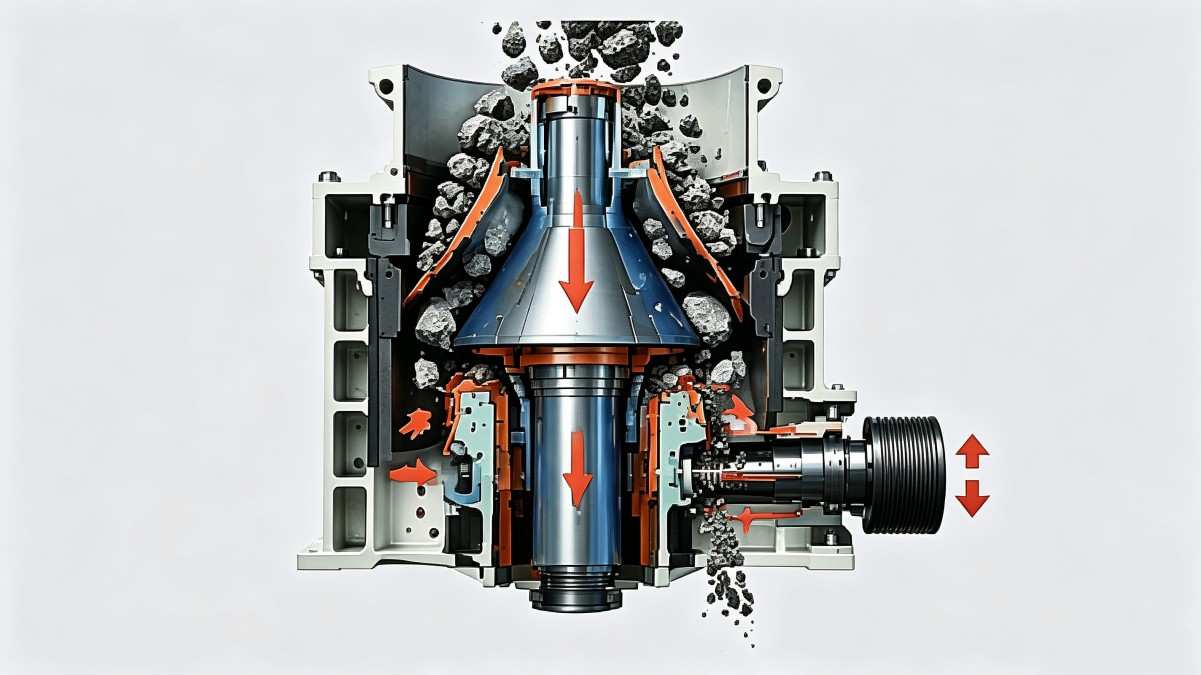
At its core, a hammer crusher is a horizontal rotor with swing hammers enclosed in a steel chamber: the rock is struck by the hammers, thrown against breaker plates, and dragged downward toward a grate that only allows material below a target size to leave. That is the basic principle. But for a quarry owner, the full answer lies in the clearances, metallurgy, and spare-part layout inside that chamber — because those parts determine uptime and operating cost for the life of the machine.
I cannot list verified numerical values for hammer pitch, grate opening, or rotor speed in this article: SUHMAN does not publish generic cutaway data that applies to all models, and those numbers are always matched to a specific feed. Instead, I will walk you through each internal component, give you a checklist to use when comparing proposals, and explain what information you must bring to the manufacturer to get a correct selection. You should not buy any hammer crusher based on a static cross-section alone.
What the internal crushing process actually does
Material enters through the feed opening and falls directly onto the rotor path. The hammers — usually arranged in several rows around the rotor — hit the individual particles at high speed. That impact creates crack propagation along existing weaknesses. The particle then travels toward the breaker plates, where a second impact occurs at a different angle. Finally, fragmented material slides down onto the grate. Any particle still too large stays in the crushing chamber until it is broken again or exits sideways if the grate does not fully enclose the rotor.
This three-stage sequence — impact, rebound, and retained crushing on the grate — differs from a jaw crusher, which compresses rock between two plates, and from a cone crusher, which uses squeeze-and-bend action. The hammer crusher achieves reduction through true high-velocity impact and is effective when you need high reduction ratios in one pass, but that also means wear is concentrated on the hammers and the grate surface.
The internal parts that matter for your decision
Component
What it does inside the machine
What you must confirm with the manufacturer
Rotor assembly
Carries the hammer rows; rotor mass and diameter define the striking force per revolution
Rotor diameter, rotor width, number of hammer rows, maximum permissible rotor speed
Hammers (swing or fixed)
Hit the feed and impart energy; swing hammers are more forgiving with small metallic contaminants
Hammer metallurgy (e.g., manganese steel vs. alloy), individual weight, replacement method, working life expectation
Breaker plates
Absorb the rebound impact and create a second fracturing surface; some are adjustable
Number of plates, adjustment range, adjustability while machine runs or only during shutdown
Grate / screen rail
Holds oversize particles inside the chamber until they reduce below the opening size
Opening shape (round, square, slotted), open area percentage, ability to change opening size
Chamber wear liners
Protect the fixed housing from localized abrasion, especially where material bounces
Liner material and thickness, bolt-on or welded design, accessibility
Shaft bearings and housings
Support rotor loads and maintain concentric rotation; misalignment causes vibration and premature wear
Allows access to hammers and grate for maintenance
Opening stroke, safety locks, time needed for a full hammer change
That table is not decorative. Use it as a probe when you speak to an equipment supplier. If the supplier cannot give written values for the first three items, ask why. A hammer crusher is only as reliable as the clearance between the hammers and the breaker plates — and that value is set for a specific range of feed sizes and rock hardness.
Inside the rotor: where the energy comes from
The rotor is the mechanical heart. Its mass, diameter, and rotational speed control the energy delivered per hammer strike. Larger rocks need higher rotor inertia to shatter them in one hit; otherwise the hammer simply deflects and the rock remains whole. Motor power alone does not tell you the crushing efficiency — you need rotor diameter and weight.
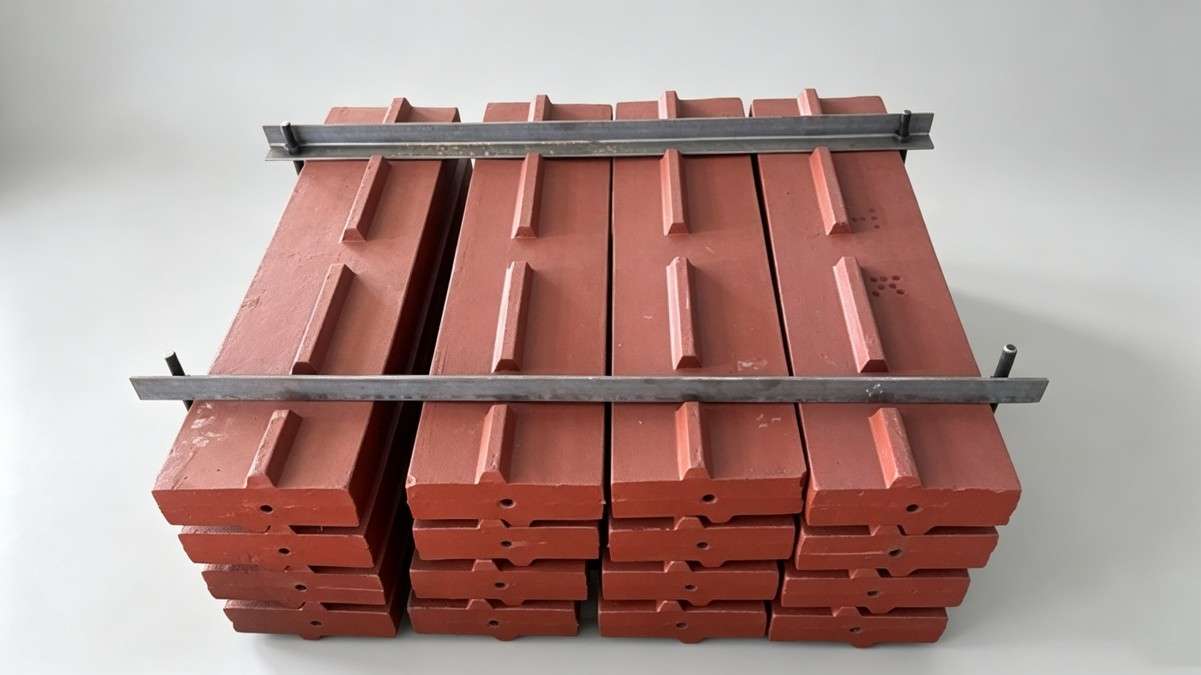
Hammers are not all shaped the same. Some have a single active edge; others have two or four active surfaces so the operator can reverse or rotate them before replacing. That affects your spare-parts stock and maintenance frequency. For high abrasiveness, you will likely need hammers with a thicker wear section or a composite material, but that brings a trade-off: harder metal often has lower toughness and can crack with occasional tramp metal. No material is universally good — the correct hammer metallurgy depends on your feed’s hardness, abrasiveness, and contaminant level.
Breaker plates and grate – the second and third fracture stages
The breaker plate is mounted inside the chamber at an angle that forces crushed material to bounce back into the rotor path. Many modern designs allow the plate gap to be adjusted from the outside; this is critical because as hammers wear, the gap increases and output size grows. If the adjustment system is manual and time-consuming, operators will tend to leave the gap open, and the product becomes coarser.
The grate sits at the bottom or on one side. It has openings of a set size and shape. The grate does not merely filter: it also provides a shear and impact surface for particles caught between the hammer tip and the grate bars. That contact produces very high point stress. Thus, grate bar material is a wear item, not a structural constant. Ask for the recommended service interval for the grate and the replacement cost relative to the hammer set.
A suitability boundary and where this crusher does not fit
A hammer crusher works well for medium-hard, brittle materials such as limestone, gypsum, and cement raw mix. It also handles recycled concrete of moderate size if contaminants are small or removed. But the design is a poor fit for highly abrasive igneous rocks like granite or quartzite, for sticky clay-rich feed, or for materials with high moisture that can clog the grate openings. If your rock requires severe abrasion resistance and high toughness simultaneously, you are better served by an impact crusher with a different chamber geometry or by a compressive crusher. Also, if your operation demands extremely low fines production, the hammer crusher’s secondary impacts will generate more fine material than a jaw or cone circuit.
So my boundary is explicit: choose a hammer crusher when you can tolerate moderate to high fines and when the feed is not aggressively abrasive. If you cannot tolerate fines or if you run quartz-rich gravel, this machine will cost you heavily in wear parts. In that case, it does not apply to your project.
Engineering estimates versus confirmed data — what you must bring
The description above is general engineering knowledge, not a product specification for SUHMAN or any other manufacturer. To move from a mental model to a concrete selection, you must provide several inputs. Without them, an equipment supplier cannot properly size the machine, let alone guarantee wear life or capacity.
Material type and hardness – include a full sieve analysis, compressive strength (Mechanical or point-load), abrasiveness index, and moisture content. If you only have a rock name and a photo, that is insufficient.
Maximum feed size and size distribution – the rotor diameter and feed opening are chosen so the largest particle can enter without bridging. Bridging reduces throughput and may stop the crusher.
Desired product size and grading limits – this defines the grate opening and the number of crushing stages.
Contaminants and non-brittle content – reinforcing steel, metal bolts, or hard inclusions will damage swing hammers and may require a metal detector or pre-screen.
Operating hours per year and target uptime – this influences whether you need a fast hydraulic opening system, magnetic separator, or rapid-change hammer design.
Current line configuration – tell the manufacturer what comes before and after the crusher: grizzly feeder, screen, conveyor widths, and available power supply.
If you cannot provide all this data, no reputable supplier should quote you a firm capacity number. A quote without your material test data is an estimate, not a promise.
FAQ — Reading a hammer crusher cross-section correctly
#### Why is hammer and breaker plate clearance critical?
Clearance between the hammer tip and the breaker plate controls the maximum particle size leaving the first fracture stage. As hammers wear, this gap increases, and more material skips past without being properly reduced. Large gaps also lower the effective velocity of material hitting the plate, so the breakage energy drops. The result is a coarser product and higher circulation load on the grate. That is why you need an adjustment system you can operate reliably — and better yet, one you can fine-tune while the machine is off but you are doing other maintenance.
#### What happens if the grate opening is too small?
A grate with a very small opening holds material in the chamber longer, so the crusher acts more like a closed-circuit grinder. This increases fines generation and wear on hammers, grate bars, and motor energy. You might see a lower throughput than expected. A correct grate opening is matched to the product specification, not merely to the smallest achievable size, because the finer you crush in one pass, the more you sacrifice capacity and wear life.
#### Should I choose swing hammers or fixed hammers?
Swing hammers are hinged and can deflect when they hit a hard foreign object, which reduces damage to the rotor and shaft. They are the more common choice for mixed waste or recycled material where small metal pieces are likely. Fixed hammers are rigidly mounted and deliver a more consistent strike, but they are less forgiving with tramp metal. Your decision depends on how much metallic contamination you expect in the feed. If your quarry source is clean blasting rock, fixed hammers may give a slightly sharper reduction; for reclaimed material, swing hammers protect the machine.
#### How do I know whether a hammer crusher will generate too many fines?
Fines generation is a direct result of repeated impacts. The more particles stay in the chamber, the more they are re-hit and self-attrition. You can estimate the fines tendency by looking at the rotor speed and the grate open area, but the real answer comes from testing your material in a small pilot unit. Full-scale numbers cannot be predicted from literature alone. Ask the supplier for references who process rock from the same geological formation, but treat those references as indicative, not as a guarantee.
#### What is the most reliable way to compare two hammer crusher structures?
Do not compare only crusher weight or motor power. Compare the written dimensions and clearances: rotor diameter to feed opening ratio, hammer weight per row, distance from hammer tip to breaker plate at maximum adjustment, and the grate’s open area. Then ask for the maintenance time required to change one set of hammers. A machine that takes a full day to service may be cheaper initially but costs more every time it stops. Write the answers into a comparison sheet, and base your final choice on the machine that suits the full load profile, not the one with the largest brochure number.
A hammer crusher’s inside is not just a set of parts — it is a controlled sequence of impacts designed around your feed. Get that design wrong, and you will pay for it in wear parts and reduced throughput. Before you request a quote, prepare your material test data and a clear description of your process. For a site-specific calculation, contact SUHMAN with those details. Any honest equipment provider will ask for the same inputs before recommending a model.