If you are about to buy a self-propelled crusher — the tracked mobile machine many Russian and CIS quarry operators search for as “Buy a self-propelled crusher” — start with the paperwork, not the diesel tank. The direct answer is: the wisest buying decision begins with four specifications that you, not the machine builder, are responsible for collecting: the real feed material parameters, the actual product grading you must sell, the physical and electrical limits of your site, and a measured output history for your intended campaign. Until those numbers exist on paper, no manufacturer can offer a valid machine selection, and no self-propelled crusher will perform as advertised on your rock.
This article explains what to define, which numbers you must provide yourself, and where a self-propelled crusher is the correct choice — and, just as importantly, where it is not.
What ‘’Self-Propelled’’ Actually Means on a Quarry Site
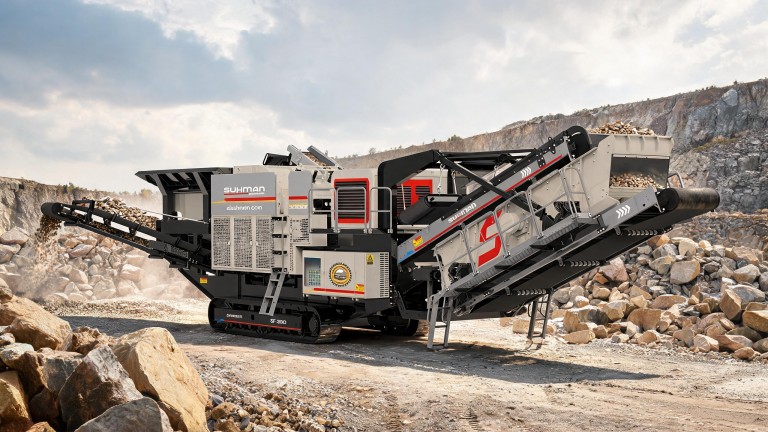
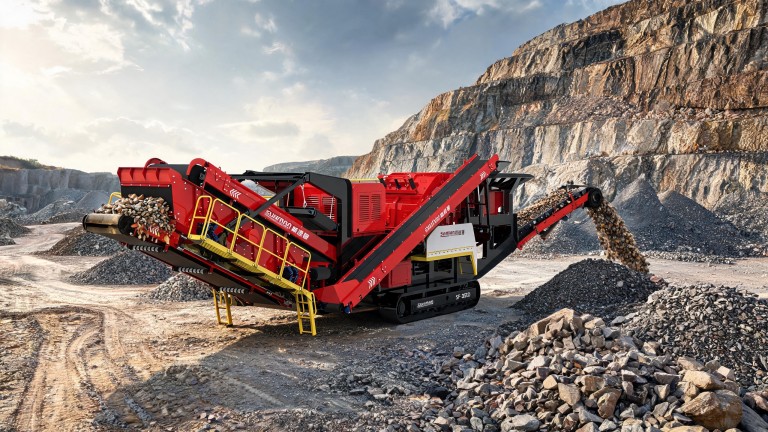
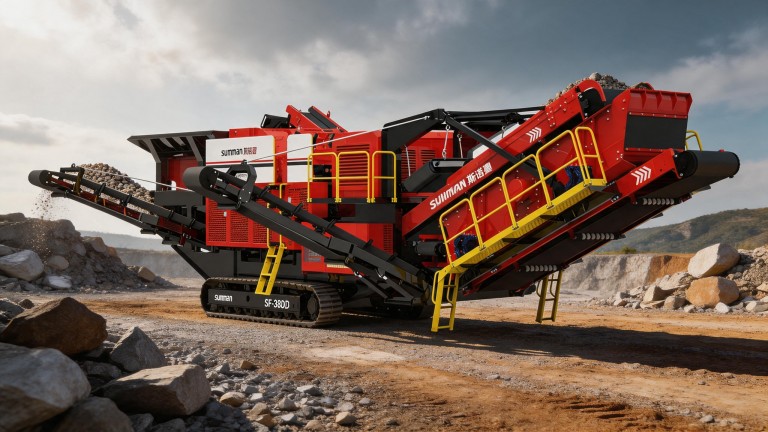
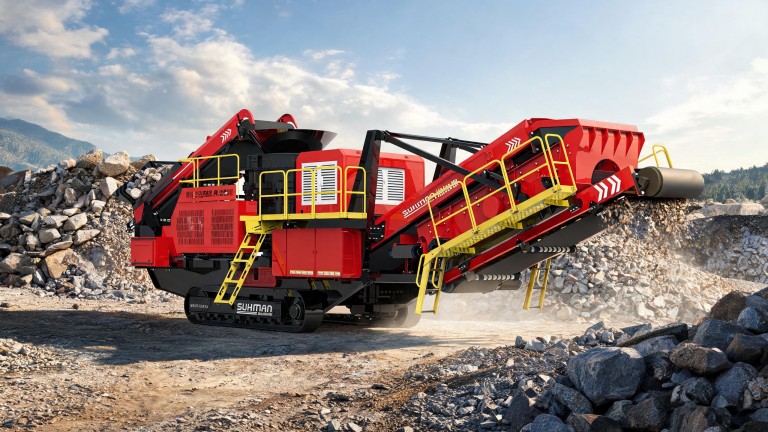
The term self-propelled crusher is not a synonym for “mobile” in the general sense. In site terminology it means a tracked machine carrying its own feed hopper, crusher unit, main discharge conveyor, and often a pre-screen or magnetic separator on one undercarriage. The crusher can reposition itself inside the quarry or recycling yard under its own power, and it travels between sites on a low loader. That distinction determines your transport logistics, your foundation costs, and the minimum crew you need.
The engineering principle is simple: the tracks, chassis and power unit are sized for the crusher, not the other way round. So the key machine-level decisions — jaw versus cone versus impact crusher, feed opening size, closed side setting range, and screen deck configuration — are all downstream of your material data.
Step 1 — Feed Material Is the First Selection Gate
Every decision about stroke, speed, wear liners, and installed power depends on what you actually feed. The common error is buying a machine based on nominal capacity in tonnes per hour before characterising the rock. Three properties matter more than anything else.
Abrasiveness and hardness. A high-silica granite or river gravel wears crushing chambers much faster than a limestone with moderate compressive strength. This does not change the purchase price as much as it changes the total cost per tonne over the machine’s life. If you do not yet have an abrasion or compressive strength test for your stone, the best you can expect from a supplier is an estimate based on rock type, not a binding figure .
Moisture and fines content. A damp feed with high clay content changes the selection more than the crusher type itself. Sticky fines block the vibrating feeder, clog the jaw crusher discharge, and blind the screen media. For such material you need a machine with a larger pre-screen area, wider bypass chute, and possibly a hydraulic crusher protection system. Conversely, a dry, well-graded feed allows a much simpler configuration.
Maximum feed size. The crusher’s feed opening must accept the largest boulders your excavator will load. As a rule of thumb in crusher engineering, the feed opening should be at least 15–20 % larger than the maximum rock dimension — this is an estimation guideline, not a manufacturer guarantee, and should be checked by the supplier against drawings of your feed material.
Parameter you must define
How to document it
Why it changes the machine choice
Rock type and geological origin
Rock sample, compressive strength test, abrasion index
Determines crusher type (jaw/cone/impact) and wear life
Feed moisture and clay fraction
Site sampling at two different seasons
Affects pre-screen area, bypass chute, and screen media
Maximum feed size (mm)
Photo with scale, dimension record, loader bucket size
Sets required crusher feed opening
Required product size and shape
Sieve analysis of the product you must sell
Determines closed side setting and arrangement
Hourly output target (t/h)
Measured average of production records
Drives engine power, crusher size, and conveyor widths
Site location and roading distance
Site address, access road description, low loader route
Limits machine transport dimensions and lifting requirements
Power source at the site
Diesel refuelling rate, electrical capacity if cable/hybrid
Confirms whether a diesel or electric-driven option is feasible
Step 2 — Decide the Crushing Stage and Product Range
A self-propelled crusher is rarely a standalone item. In many quarries it runs as one link in a chain: feeder → primary crusher → conveyor or mobile screen → secondary and tertiary units. Before purchasing, decide whether you are buying the primary, the secondary, the final re-crushing link, or a full pit move.
For primary crushing in a hard rock quarry, a tracked jaw crusher is usually the first-stage choice because it handles larger feed and is more forgiving of irregular boulders. For secondary and tertiary reduction of already crushed material, a cone crusher produces a more cubical product under a controlled closed side setting. For recycling of reinforced concrete and demolition waste, an impact crusher is generally preferred for its ability to liberate rebar and shape the product. These are conventional engineering preferences, not product claims, and they must be validated against your feeding records .
The buyer’s decision is also about the finished products. A crushing plant that produces only 0–20 mm base material needs a different internal configuration than one that must produce 5–20 mm, 20–40 mm, and a reclaimed sand fraction. If your objective is a single certified product, you may accept a simpler machine. If you must sell several fractions, you need to plan for a return conveyor, an additional screen, or a second machine — all of which show up in the line configuration you must describe when asking a supplier for a quotation.
Step 3 — Power, Transport and Site Logistics
A self-propelled crusher carries its own diesel engine, but that does not isolate it from site infrastructure.
Ask yourself how many hours per season the machine will work. A tracked diesel machine makes economic sense when your working fronts move regularly and you avoid the cost of building a new foundation and an electrical installation for each new extraction area. If you are looking at one fixed quarry face with a continuous multi-year extraction plan, a stationary or semi-mobile installation may give a simpler operational result. This decision is a cost estimate, not a rule, and it requires your own accounting of fuel, relocation labour, and electrical connection fees.
Transport is also a practical constraint. A self-propelled crusher has regulated transport width and height, so the route from the port or the plant to your quarry must accommodate a low loader. In the Russian and CIS context, check bridge load limits and winter road restrictions for the actual route before specifying machine dimensions. Legal transport dimensions vary by region, and if the route cannot pass, the purchase must be revised — no catalogue can solve that logistical fact.
Finally, plan for long lead items. Wear parts, screening media, and hydraulic spares must be available when you need them, not when they are convenient to ship. For a quarry in a remote region, confirm the machine builder’s spare parts warehouse location and delivery time. That information must come from the supplier in writing.
How to Use the Table for a Supplier Inquiry
The table above is a buyer-input checklist, not a machine specification table. Do not send the supplier a one-line request for “a self-propelled crusher.” Instead, fill in each row with your measured values and send the completed checklist with your inquiry. Where you cannot yet measure the value, state an estimate and mark it as an estimate. A responsible manufacturer will use the column “why it matters” to send you the correct request for quotation, and will confirm which figures must be re-verified on site.
Suitability Boundary: Where This Recommendation Does Not Apply
A self-propelled crusher is a recommended solution for quarries and recycling sites with multiple working zones, medium output volumes, and a feed material that can be realistically characterised by samples. There are boundaries where it is not the right answer.
The recommendation does not apply if you are planning a greenfield quarry with a single ore body, a certified fixed capacity above the range of typical mobile units, and a need for continuous seven-day operation with minimal human presence. In that scenario, a stationary plant invariably deserves a serious technical alternative. Nor does it apply to material with extremely high moisture and plasticity, such as wet weathered claystone, unless you are prepared to install robust pre-screening and are willing to accept reduced effective throughput. The machine must be sized by feed and product reality, not by the elegance of its diesel engine.
In every case, you as the buyer must supply the missing inputs: the material type, hardness, moisture, and maximum feed size; the device and workflow line configuration from feeder through crusher to finished product; the geographic location and site type; the measured output and product specification with test duration and sampling method; and the running hours with any documented failures or adjustments. Without those, a final selection cannot be made responsibly, and this article will not pretend otherwise.
What to Clarify Directly with the Supplier
A practical self-propelled crusher purchase agreement should state clearly what happens if the measured output falls below the level specified in the contract. Buyers often believe that capacity is guaranteed as a single number. In reality, the guaranteed capacity figure is meaningful only when it is tied to a defined feed size, moisture content, closed side setting, and screen aperture. Before signing, ask the supplier for such a documentation set and record the agreed conditions of testing. A conveyor belt scale test under actual operating conditions is a far more reliable indicator of performance than a technical brochure .
Frequently Asked Questions for the Quarry Buyer
How do I know which crusher type fits my rock?
The determination starts with rock hardness and abrasiveness. For high-silica hard stone, a jaw crusher for primary and a cone crusher for secondary processing are the conventional engineering approach. For concrete recycling and softer, abrasive materials, an impact crusher is often considered. However, the practical choice must be supported by a compressive strength test and an abrasion index for your specific formation. Without measured characteristics, the supplier’s advice is only an initial hypothesis .
What is the smallest feed data set I can bring to a supplier?
The acceptable minimum is: rock type, maximum observed feed size, moisture content and clay fraction, required product grading, and your expected monthly output in tonnes. Even this minimum should be marked with the date of sampling. If you are unable to provide these five points, you should order a site investigation before committing to a machine.
Is a self-propelled crusher more economical per tonne than a stationary plant?
Generally, a self-propelled crusher becomes more economical when your feeding front moves frequently and when mobilisation of heavy civil infrastructure, such as concrete foundations, is avoided. A stationary plant can be more economical when production is concentrated at one point for many years. No universal per-tonne figure exists without your own fuel, personnel and maintenance data, so the honest answer is — it depends on your site-specific cost ledger.
Can a tracked crusher work through the winter in northern regions?
Tracked crushers operate in winter when the diesel fuel grade is selected for low temperatures, hydraulic systems are properly warmed through a controlled start sequence, and the feed material does not contain frozen lumps that exceed the feed opening. Nevertheless, operation at very low temperatures requires additional site procedures and may reduce the achievable daily output. Winter performance is contingent on preparation, so confirm the supplier’s recommendations for your regional climate in writing before buying.
Who is responsible if the measured capacity is lower than stated in the offer?
The capacity guarantee only applies to the exact conditions written in the technical contract. If your feed is wetter, has a higher fines content, or requires a smaller closed side setting for product quality, the measured output will differ. The responsible approach is to record the test conditions, sampling methodology, and sieve analysis at the time of acceptance. The supplier is accountable for the machine’s compliance with those documented clauses, not for unmeasured site expectations.
Practical Next Step for the Decision Maker
If you are seriously considering a purchase, start by completing the table earlier in this article and sending the data to a few equipment makers for qualified feedback. You can begin by reviewing the catalogue of mobile crushers and screens to understand available configurations, and then contact their engineers through the calculations request page with your figures. Both will help you see which of your assumptions remain unverified and what you must measure before committing to capital expenditure.
The most valuable work in a self-propelled crusher purchase happens before the machine arrives on the low loader. Collect the data, define the boundaries, and contractualise the test conditions. Do that, and the choice of crusher will become a technical confirmation rather than a gamble.