Mobile Crushing & Screening Plant Price: What Determines the Cost?
Get real-world pricing for a mobile crushing and screening plant. Find out what factors affect the cost—feed material, output, configuration—and how to request an accurate
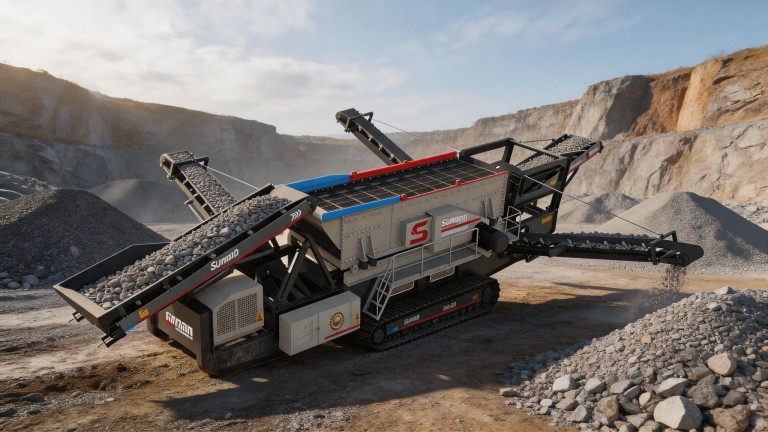
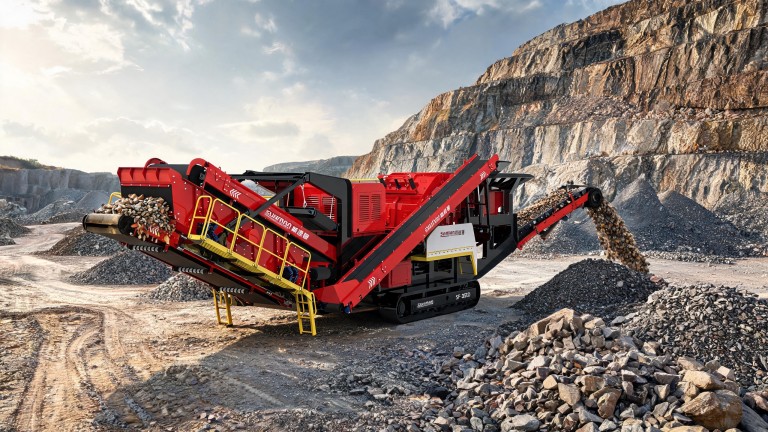
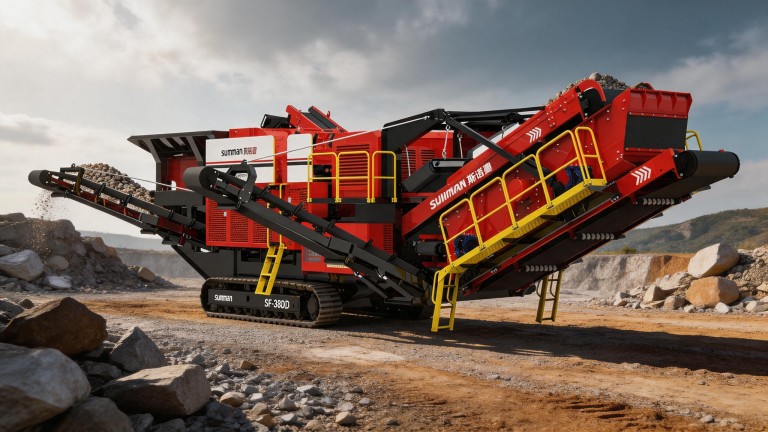
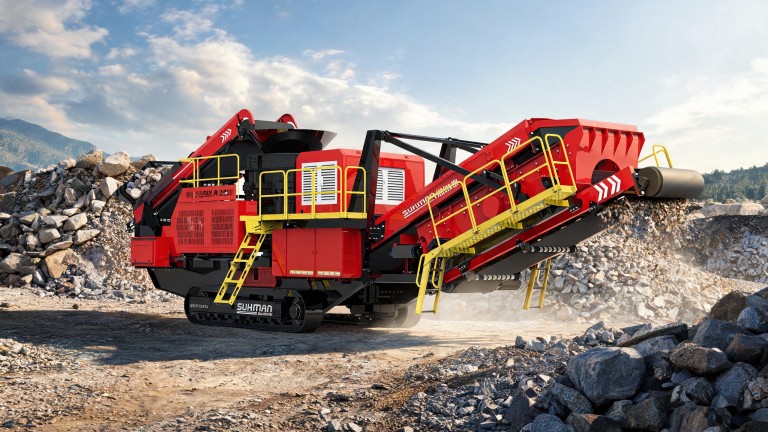
It is not possible to quote a fixed price for a mobile crushing and screening plant, as the total cost depends on your material, the required output tonnage and the specific equipment configuration. The price of a track-mounted jaw crusher, for example, will vary until the manufacturer has tailored the unit to your feed conditions and capacity requirements. You have three practical options: request a formal quotation based on your site data, lease equipment to convert capital expenditure into operating costs, or purchase a pre-owned plant with an inspection report. Each option presents different cost constraints and risk profiles for a quarry owner.
Why the question «How much does it cost?» receives a conditional answer
The market for mobile crushing and screening equipment is project-driven, not catalogue-driven. A price is always quoted in relation to the scope of work. The final invoice for the same crusher model will vary depending on the wear liners selected for your rock type, the options for magnetic separation, the desired closed-circuit screening arrangement, and the logistics for delivery to your site. In addition, local factors such as customs duties, inland transport distances and the need for cold-weather packages can cause the final cost to differ from the manufacturer’s list price.
For a quarry owner, the more useful figure to ask for is the cost per tonne of aggregate produced, as it includes the capital outlay, fuel, wear parts and maintenance. The price of the machine becomes secondary to your site’s productivity. However, a site-specific figure requires your input.
To receive a valid number, you must provide the following information (these are editorial omissions, not facts I can make up):
Feed material: rock type, hardness (e.g., uniaxial compressive strength), moisture content, and maximum feed size.
Required output: target tonnage per hour, final aggregate sizes, and whether you require a closed-circuit system for returning oversized material.
Operating model: Hard rock quarry versus the recycling of construction and demolition waste.
Site conditions: power availability, the permitted working area, and local emission or noise restrictions.
Logistics: the distance from the selected equipment depot to your site.
The capital cost checklist for a mobile plant
As the exact price has not yet been determined, the table below serves as a decision-making checklist rather than a comparison of specifications. Each row corresponds to a cost driver that must be confirmed with an equipment supplier in order to draw up a final quotation. Use this table to reach consensus amongst your internal stakeholders before contacting a manufacturer.
Cost component
What needs to be confirmed
Why does the price change?
Crusher type and size
Track-mounted jaw, cone or impactor model and its inlet dimensions
The inlet size matches your feed; the capacity determines the plant’s maximum throughput
Screening configuration
Is screening required on the main unit or as a separate tracked screen?
A two-deck or three-deck screen increases capital expenditure but reduces the need for auxiliary equipment
Electric or diesel-hydraulic drive
Diesel-hydraulic for remote sites; electric for fixed pits connected to the mains
Electric drive reduces fuel costs but requires access to three-phase power
Mobility requirement
How often the plant will move between sites or projects
A tracked unit costs more than a semi-mobile skid but reduces the labour required for reinstallation
Wear package specification
Liners for abrasive rock versus recycled concrete
Abrasive material requires wear parts made of high-chromium or manganese steel and increases operating costs
Climate adaptation
Cold-start kit for sub-zero regions, winter-grade hydraulic fluids, or dust suppression
Without the package, productivity falls in winter
Availability of spare parts
Supplier’s stock locations and delivery lead times in your region
A delay caused by a wear part may result in production being halted for longer than the expected downtime
Residual value
Expected resale or trade-in period after several years
Mobile plants retain their value only if they have a documented service history; the resale assumption affects the net cost
The total cost of ownership It is not just the invoice. This is because the true value depends on the engine load factor, altitude and a combination of operating modes. If you only factor in the purchase price when drawing up your budget, without taking fuel and wear and tear into account, this may lead to an inaccurate calculation of the payback period.
Engineering estimates versus measured facts
When reading any proposal, separate verified facts from engineering estimates.
*Measured facts* are site-specific: the actual feed material classification, the results of a test crushing campaign, and the recorded throughput at a defined setting. These are only available following a trial or an inspection.
*Engineering estimates* are calculations provided by the manufacturer based on standard models and averages, often assuming medium-hard stone with no clay or metal contamination.
A proposal will set out its capacity as a calculated estimate. These estimates are based on a specific closed-side configuration, a bulk density of approximately 1.6 tonnes per cubic metre, and a continuous feed without blockages. If your material is harder, wetter or contains more fines, the actual production rate will be lower than the estimate.
Before comparing quotes, ask the manufacturer to specify their assumed feed particle size distribution and moisture content. Without this information, you will be comparing estimates based on different criteria. No online calculation can replace a test crushing session using your sample, so make sure to arrange a practical demonstration whenever the supplier offers one.
Suitability limits—a mobile plant is not suitable for all situations
A mobile tracked crusher is a sound choice if you have multiple extraction faces or temporary projects with short relocation cycles. It is also suitable when you need to become operational quickly and are unable to construct civil foundations. However, this recommendation does not apply in three common scenarios:
A stable, long-lasting quarry with uniform geology. If you expect to process the same rock from the same site for more than a decade, a stationary plant with a fixed feed hopper and conveyor system is likely to operate at a lower cost per tonne than a mobile fleet, despite the higher civil engineering costs.
Ultra-high production requirements. For a site requiring more than 200 tonnes per hour of final product, the conventional approach is a primary stationary or semi-mobile unit feeding an integrated multi-stage circuit. Mobile units designed for that upper range are rarely found in this market segment.
Wet and sticky feed material. A track-mounted jaw crusher must be operated within the recommended moisture content limits to prevent blockages in the crushing chamber and on the main discharge conveyor. If your feed contains a higher proportion of clay than the manufacturer permits, the mobile unit’s performance will be severely restricted, and a scalping unit or a different plant layout would be more appropriate.
Choosing the right business model for your budget
The question of price also depends on how you plan to pay for the equipment. Quarry owners typically choose from three financial models:
Direct purchase. This results in the lowest cost over the long term, provided that interest rates remain manageable and the plant accumulates a high number of operating hours.
Lease or hire with an option to buy. This allows you to verify the machine’s output before you commit. The total monthly payments are higher, but they pass on the potential gains to the supplier for the first few months.
Purchase of a second-hand unit. This reduces the asking price but makes a documented service history all the more important. If the seller cannot provide maintenance records and hour meters, the price is merely a starting point for negotiation. You should expect to pay extra for a mechanical inspection.
The final selection requires a commitment from the buyer: to provide a representative feed sample for a crushing test, to specify the target production rate in tonnes per hour, and to state whether you will operate one shift or multiple shifts per day. The manufacturer can then provide a valid commercial proposal.
FAQ — Frequently asked questions from buyers
What should I do before asking for a quote for a mobile crusher?
Prepare your material specifications: maximum feed size, rock hardness (based on core samples or compressive strength tests), moisture content, and impurity level. Specify the required output in tonnes per hour and the desired final aggregate sizes. A less obvious consideration is the permissible load on the road or the quarry floor; if the machine is too heavy for the existing terrain, the quotation will include additional groundworks for stabilisation. Without this information, the price you receive may be revised at a later stage and become unsuitable for comparison.
Is it better to buy a jaw crusher or an impact crusher for the type of rock I have?
The right choice depends on your material and the desired shape of the final product. Jaw crushers are designed for primary crushing of hard and abrasive rock, and can handle large feed sizes; their output is usually further processed by a cone or impact crusher to achieve the final cubic shape. Impact crushers are better suited to softer stone and recycled concrete, where a higher reduction ratio and a more cubic final shape are required in a single stage. The cost of the two technologies cannot be compared on the basis of the machine price alone, as operating costs – particularly the consumption of wear parts – vary in opposite directions depending on the abrasiveness of the rock.
What running costs should I factor in, apart from the price of the equipment?
Take into account fuel costs, wear liners, maintenance labour, screen media replacements and transport between sites. Wear costs vary directly with the silica content and abrasiveness of your feed material, so an affordable machine that is unsuitable for hard rock can result in high maintenance costs. To estimate the cost per tonne, ask the supplier for the recommended service life of wear parts under conditions similar to yours, and then compare that life with the actual test crushing results.
Do mobile units operate effectively in sub-zero winter conditions?
Operation in cold weather is only possible if the machine is fitted with a cold-start package and low-temperature hydraulic oils. Battery capacity and engine block heating affect your first start of the morning, and the discharge conveyors may need upgrading to handle frozen aggregates. The practical impact on price stems from the additional specification, not a change to the base machine. If your site is in an area where frost persists for several months, ask the supplier for their standard recommendation regarding winter modifications.
Can I expect the stated production capacity to match actual output straight away?
No. The capacity is generally quoted at the machine’s optimal closed-side setting, provided there is a continuous and correctly sized feed and regular maintenance is carried out. Your actual production rate will be lower until you adjust the jaw settings and screen media to suit the actual material. Carry out a commissioning period lasting at least a few weeks and record the hourly throughput daily. Only after this trial should you make a final decision on whether to purchase a second unit or relocate the plant to another site.
What a buyer must provide for the final selection
The information required to draw up a definitive proposal is not trade secret; it consists of engineering and site data. Please provide the following to the equipment supplier or to the SUHMAN technical editor before any final selection is made:
Details of the material and feed: rock type, hardness, moisture content and maximum feed size.
The planned line configuration: the sequence from the feed hopper to the crusher, then to the screen, and finally to the product stockpiles.
The project location: country and region, the type of site (quarry or recycling centre), and the typical day and night temperatures.
A measured output target from a previous operation: tonnes per hour, product grading, and the percentage of oversize you expect to return.
The operating record of any existing unit: total operating hours, maintenance incidents and production adjustments.
Where this advice does not apply
This guidance applies only to the assessment of a mobile crushing and screening plant as a primary, secondary or stand-alone unit for an owner-operated quarry. It does not apply to contractors who require a hired machine for a single municipal project and prefer to pay a turnkey hourly rate without taking ownership of the asset. Nor does it apply to underground mining operations where machine width, rather than price, is the deciding factor. In such situations, adjust the decision-making criteria first, and the issue of price will naturally take a back seat.
For a structured discussion on pricing with the manufacturer’s specialists, please visit the SUHMAN contact page to submit your equipment and site details for a formal quotation: https://www.suhmanme.com/contact. The product catalogue and technical specifications for tracked crushing and screening units are available here: https://www.suhmanme.com/product. Details regarding the company and its operational background can be found at https://www.suhmanme.com/about, whilst general technical articles on quarries are published at https://www.suhmanme.com/blog.