Selecting a Crusher Manufacturer in China for Fine Gravel Production: What
How to choose a Chinese crusher manufacturer for fine gravel: verify material tests, reduction ratios, circuit design, and compliance. A structured checklist
Selecting a Crusher Manufacturer in China for Fine Gravel Production: What a Quarry Owner Should Verify
If you are a quarry owner or director sourcing crushers for fine gravel production from China, the first thing to understand is that the equipment you need is not a single machine but a configured crushing circuit (usually a jaw or impact crusher for primary, a cone crusher or vertical shaft impactor for secondary/tertiary, and a screening deck). The critical selection work is not in comparing brand names but in verifying that the manufacturer can match their equipment to your feed material, target product gradation, and regulatory environment. Because no verified SUHMAN equipment specifications or project references are currently available for this query, this article provides a structured evidence framework, the exact questions you must answer, and the site conditions that change the decision. Where precise data is missing, the article says so explicitly rather than inventing figures.
The Direct Answer
There is no single «best» Chinese manufacturer of crushers for fine gravel. The correct supplier depends on your raw material type (hard rock, river gravel, limestone, or recycled concrete), your required output gradation (e.g., 5–10 mm and 10–20 mm), the moisture content of the feed, and the space and power available at your site. Before you request a quote, you must provide the manufacturer with a material test (bond work index or compressive strength), a feed size distribution, and a target production rate in tonnes per hour. Without these three inputs, any equipment recommendation — including any capacity or fuel consumption figure — is an estimate, not a specification. No verified capacity, energy, or cost data exists in this article’s database for any Suhman crusher model, so no numbers are quoted here. You must obtain these from a manufacturer’s technical datasheet after submitting your material sample.
What Changes When the Target Is «Fine Gravel»
Fine gravel typically refers to crushed aggregate in the 4.75 mm to 20 mm range (depending on your local standard). Producing this from a quarry requires a multi-stage process, and the manufacturer’s competence is judged by how they close the circuit.
Decision Input
What You Must Provide or Confirm
Why It Changes the Manufacturer Choice
Feed material type and hardness (MPa or Los Angeles abrasion value)
Pulp test report from your quarry or lab
Cone crushers suit hard, abrasive rock; impact crushers suit softer limestone or recycled material
Maximum feed size (mm)
Measured at the crusher inlet, not assumed
Determines whether you need a primary jaw crusher before the fine stage
Target product gradation (mm) and shape
Sieve analysis requirement (e.g., cubical shape for concrete)
Vertical shaft impactors (VSI) are preferred for cube shape; cone crushers produce more flaky particles at finer settings
Moisture content of feed (%)
Sampled during wet season and dry season
High moisture clogs fine screens and reduces cone crusher throughput
Available electrical power (kW) and voltage
Check with the site or local grid
Some Chinese-built mobile plants require 380 V/50 Hz; larger plants may need custom transformers
Confined space or open pit
Site drawing
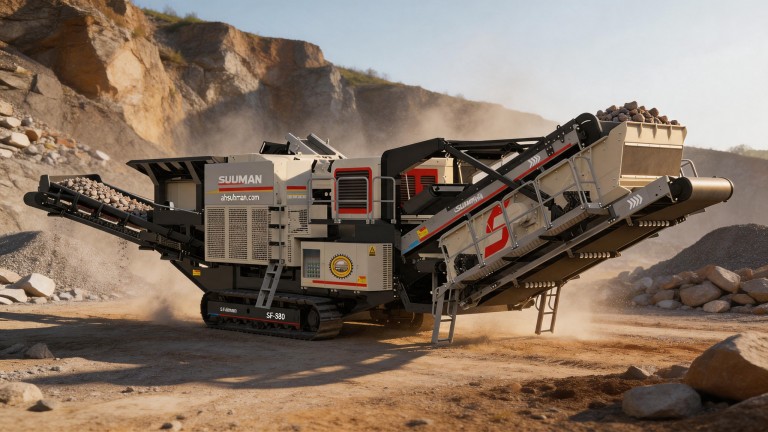
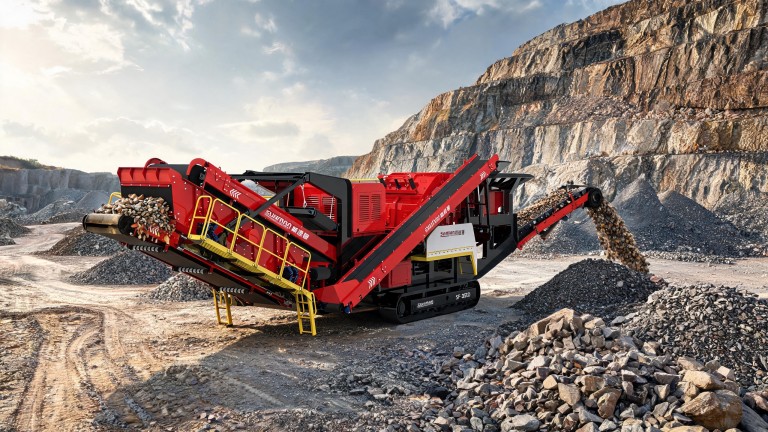
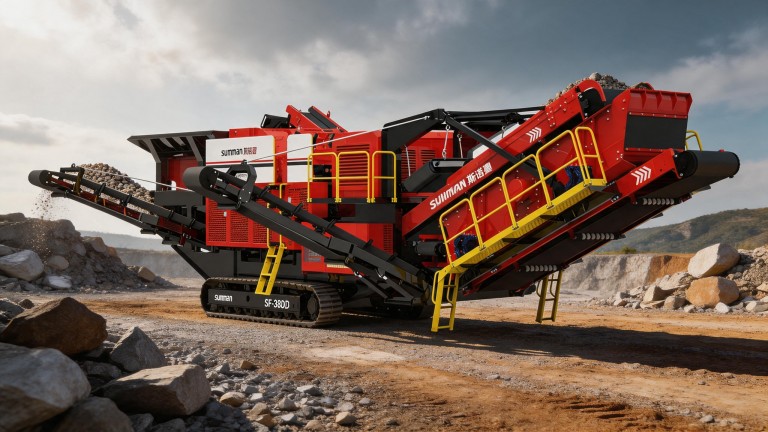
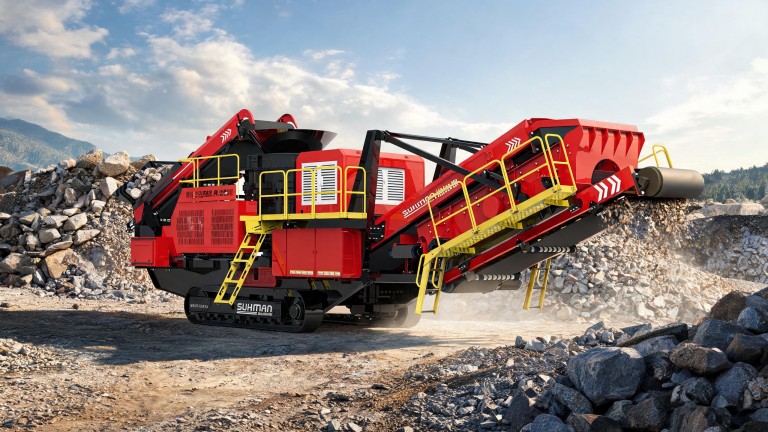
Determines whether a mobile crushing unit or stationary plant is practical
Environmental permit limits on dust and noise
Local authority documents
Determines whether water spray systems, dust enclosures, or sound attenuation are mandatory
If you cannot supply these inputs, no manufacturer can give you a reliable quotation. The table above is a checklist, not a specification sheet — it is deliberately blank on capacity figures because those depend on your material and cannot be truthfully filled without testing.
Step-by-Step Selection Logic
1. Identify Your Reduction Ratio
Fine gravel from a quarry often starts as blasted rock of 400–700 mm. To reach 20 mm maximum, you need a reduction ratio of roughly 20:1 to 35:1. A single crusher cannot do that efficiently. You need a primary crusher to reduce to 100–150 mm, then a secondary or tertiary crusher to achieve the fine gravel. The manufacturer should propose a two- or three-stage configuration, not a single machine. Typical reduction ratio engineering values are commonly published by equipment manufacturers, but no specific verified figures are in this database.
2. Decide on Mobility vs. Stationary
Quarry owners with a fixed deposit usually prefer a stationary plant because it has lower operating cost per tonne. Contract crushers or sites with short-term permits need a mobile crushing unit. Mobile units in China are typically track-mounted or wheel-mounted, and the trade-off is straightforward: mobile costs more per tonne but allows you to move with the quarry face; stationary saves money over a 5-year horizon but requires civil works.
3. Consider the Fine Fraction Problem
The «fine» in fine gravel creates a screening challenge. As the crusher setting closes to produce 4.75–20 mm, the amount of <4.75 mm material (manufactured sand or dust) increases. The manufacturer must design a screening deck with adequate area and a recirculating conveyor to send oversize material back to the crusher. If the manufacturer does not ask you about your allowable fines content (e.g., for concrete aggregate, typically 0–10% passing 75 microns), they are not giving you a complete proposal. Exact fines limits are specified in your local aggregate standard (e.g., EN, ASTM, or GOST), and must be supplied by the buyer.
Where the Recommendation Does Not Apply
The selection logic above does not apply if your operation is producing fine gravel from wet river-dredged material. In that case, the feed contains clay and organic matter that requires washing before crushing, and a dry crushing circuit will blind the screens and clog the crusher. If you are in this situation, you need a wash plant plus a crusher, and the manufacturer’s civil engineering capability matters as much as the crusher itself. Also, if you are producing fine gravel for railway ballast or high-spec road chippings, the shape and flakiness index requirements are stricter than for general concrete aggregate, and a VSI may be mandatory even if it costs more per tonne.
Missing Inputs You Must Provide
For a final equipment selection, you must deliver the following to any manufacturer — including Suhman if you proceed with them:
Your feed material test report: compressive strength (MPa), abrasion value, moisture content, and a size distribution curve from blasting or excavation.
Your target production rate: annual tonnage divided by effective operating hours (accounting for downtime and maintenance). Do not quote a nominal rate; quote a realistic one, typically 70–80% of theoretical peak.
Your product specification: the full sieve envelope, maximum flaky particle percentage, and allowable fines content, taken from your project tender documents.
Site constraints: available power in kW and voltage, maximum footprint, water availability for dust suppression, and the local climate range (frost affects screening efficiency in winter).
Legal name and address of your company: A manufacturer cannot issue a legally binding quotation or export contract without your full legal identity and delivery site address. For Chinese manufacturers, you will also need to confirm whether they can support your language of contract (English or Russian) and your local payment terms.
Engineering Estimates vs. Measured Facts
It is important to distinguish what is measured from what is estimated. A material test report is measured. A published crusher capacity curve from any manufacturer is an engineering estimate based on a reference material (often limestone with low abrasion). Your actual throughput will differ. When a manufacturer quotes you a capacity, ask: «What material conditions were assumed?» If they cannot answer, treat the figure as indicative. When you budget fuel or power consumption, use site measurements after commissioning, not brochure figures. No Suhman-specific fuel or power consumption values are available in this database, so this article does not quote any.
FAQ — Frequently Asked Buyer Questions
How should I compare quotations from different Chinese crusher manufacturers?
Compare the complete circuit, not the crusher model. Ask for a process flow diagram showing feed size in, product size out, expected recycle rate, and screen aperture selections. Demand a bill of materials that includes the conveying and screening equipment, not just the crusher. Request the assumed material properties for each capacity claim. If one manufacturer quotes a significantly higher capacity per tonne of equipment, ask for their crushing test report on your material. Without a third-party test, a higher capacity number is only a marketing figure.
Does buying from a Chinese manufacturer mean I accept lower parts availability?
Not necessarily, but you must negotiate it in the contract. Parts availability is a logistical matter, not a quality matter. Confirm whether the manufacturer has a warehouse or distributor in your country, what the lead time is for wear parts (jaws, liners, screens), and whether common wear parts are compatible with other manufacturers’ machines. If you are in a remote site, keep a spare wear set in stock. If the manufacturer cannot confirm a parts lead time in writing, budget for the risk of extended downtime.
What is the right crushing stage for cubical fine gravel?
For a strictly cubical shape with low flakiness, a vertical shaft impactor at the tertiary stage is the standard choice. A cone crusher can produce fine gravel, but it tends to generate flakier particles as the closed-side setting decreases. If your concrete or asphalt specification has a flakiness index under 15%, a VSI is likely required. If your project only needs general fill or drainage gravel, a well-run cone circuit is more energy-efficient. Your product spec decides this, not the manufacturer’s preference.
Should I buy a complete stationary plant or a mobile unit from a Chinese maker?
Base this on your deposit life and site access. A stationary plant buys with a fixed crushing circuit and has a lower cost per tonne after about three years of continuous operation. A mobile track-mounted unit is justified if you have multiple short-term pits or if the quarry face moves frequently. There is also a middle option: a semi-mobile unit on a steel frame that can be relocated with a crane, but setup time is measured in weeks, not days. A manufacturer should give you a life-cycle cost model for at least two options before you commit. The specific life-cycle numbers depend on your electricity tariff and labor cost and are not available in this database.
How do I verify the manufacturer’s exported equipment actually complies with my country’s regulations?
Request the equipment’s compliance documentation in your own language, not just a Chinese-language certificate. For the EU, ask for CE-type examination certificates; for Russia and CIS markets, ask for EAC or TR-CU certificates. Confirm whether the electrical components are rated for your local voltage and frequency — 60 Hz regions require different motor ratings than 50 Hz regions. If the manufacturer hesitates to provide local-language compliance documents, that is a decisive negative signal. These requirements are active in most quarrying jurisdictions and are not optional.
Suitability Boundary Summary
This advice is suitable for a quarry owner producing construction-grade fine gravel from blasted or extracted rock in a conventional open-pit setting. It does not apply to riverbed dredging operations with high clay content, to subarctic sites where winter screening shutdowns must be engineered from day one, or to very small producers (under 50,000 tonnes per year) who may be better served by a single mobile crushing unit than a full circuit. If your situation falls outside the conventional quarry model, you must explain that to the manufacturer before requesting a quotation.
What the Buyer Must Confirm Before Ordering
The missing inputs listed in this article are not optional. To convert a quotation into a supply contract, the manufacturer’s tender should include: the assumed material test parameters, the connected electrical load, the wear parts consumption rate per 1,000 tonnes, and the projected operating hours before major service. No reputable manufacturer will include these items without your material sample and site data. If a supplier quotes you a complete price without asking for your material test, treat that quotation as incomplete. A final selection between manufacturers requires you to fill those inputs, and any manufacturer — Suhman included — must be evaluated on the accuracy of their assumptions, not the optimism of their marketing.
This article provides a decision framework and a checklist, not a product comparison. Once you have your material test report and site constraints, you are equipped to request, compare, and validate quotations from Chinese crusher manufacturers on the basis of technical fit rather than promotional claims.