Construction Waste Crusher Price: What Determines It?
Learn what drives construction waste crusher prices—feed material, throughput, mobility, and full line configuration. Get the facts before requesting a quote.
Ask for “a price for a construction waste crusher” and you will get one of two things: a number that was never calculated for your material, or a request for more information. The direct answer is that a useful price can only be quoted after the machine is defined by its feed material, target output, throughput, and mobility. That is not an excuse to delay a quote—it is the point where most equipment purchases go wrong. Where a precise price or specification figure is needed but the evidence is missing, this page marks it clearly.
Price is the last number you receive
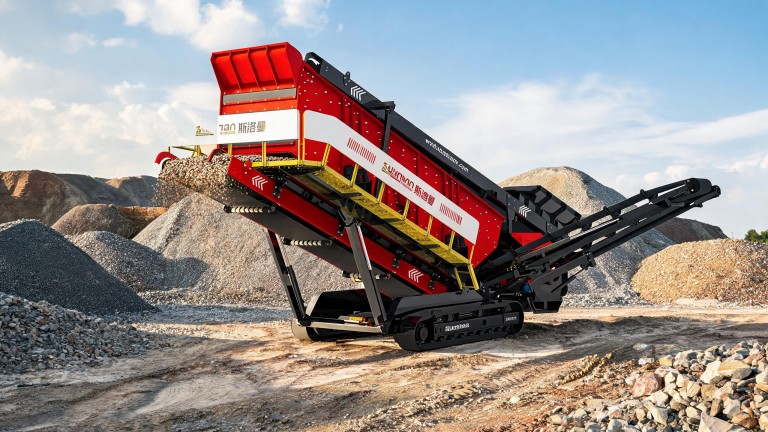
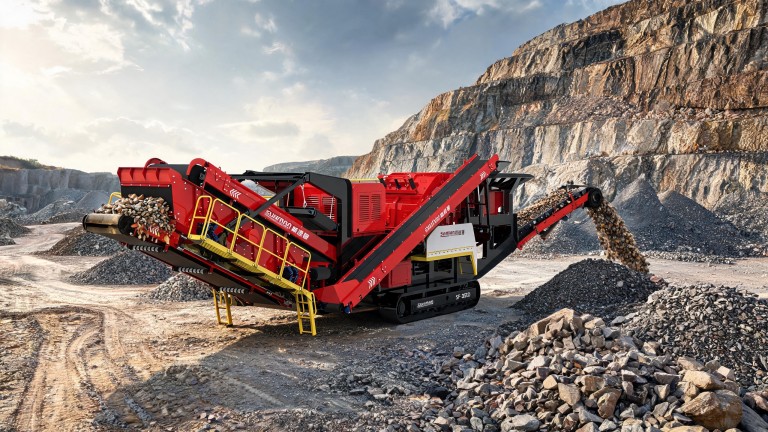
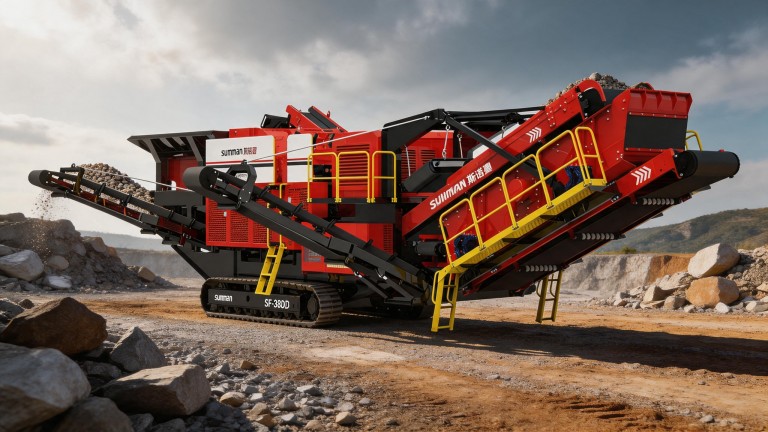
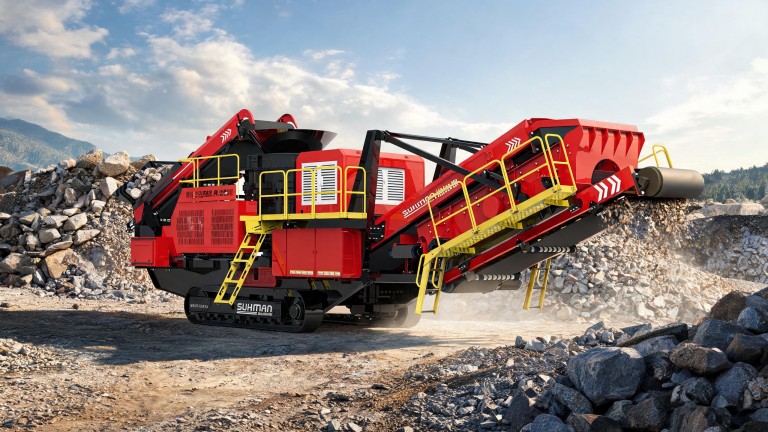
A mobile construction waste crusher is rarely sold as a single box. In practice you buy a process line: a vibrating feeder and grizzly, the crusher itself, an overband magnet for rebar, a screen for closed-circuit recycling, and transfer conveyors. Each additional unit changes the price more than a marginal change to the crusher model. So the first question is not “what does it cost” but “what does the line have to do”.
Two buyers with the same crusher model can see a large price difference. One crushes clean, rebar-free concrete at 150 t/h into a single 0–40 mm product; the other feeds mixed demolition rubble with rebar and fines and needs two products and a recirculating circuit. The second line needs extra magnet capacity, a bigger screen, and more conveyors—none of which is captured in a base machine price.
For a SUHMAN price or specification that fits your site, the following must be supplied first. Until then, any published figure would be a guess.
Inputs a buyer must lock down before requesting a quote
Material type and contamination – concrete, brick, asphalt, mixed site waste; rebar content in percent by weight; moisture and clay content. A jaw crusher tolerates rebar better than an impact crusher, but both need an overband magnet ahead of the conveyor.
Maximum feed size and required product size – the closed-side setting (CSS) of the crusher determines the top size of the product, and the feed opening determines the largest lump you can tip in. Oversize blocks must be broken or rejected beforehand.
Throughput in tonnes per hour (t/h) – this must be a measured requirement, not a wish. It drives engine power, crusher width, and the screen area.
Mobility and site conditions – tracked, wheeled, or semi-mobile. Tracked units work on soft or uneven demolition ground; wheeled units need a stable paved or hardcore surface and can often run on external electricity.
Power supply – confirm whether the site has a three-phase connection (typically 380 V / 50 Hz in Vietnam) and how much apparent power (kVA) is available. Diesel-powered machines carry a different running cost than electric-driven ones, and that changes the total cost of ownership even when the purchase price is similar.
Line configuration and product demand – the order of operations (feeder → crusher → magnet → screen → stockpile conveyors) and the number of final products you must sell or reuse.
Quote input checklist
This table is a decision checklist, not a specification sheet. Its purpose is to show what you must confirm so the quote you receive is comparable across suppliers.
Input
What the buyer must provide
Why does the price change?
Standard model and series
Model name, equipment type (tracked jaw, tracked impact, wheeled unit)
Different series have different frame, engine, and mobility packages for SUHMAN model data
Crusher configuration
Jaw or impact type; cavity and size designation; closed-side setting range
Jaw units suit primary breaking of concrete and rebar; impact units suit secondary shaping and more fines
Material and feed conditions
Rock type, hardness, moisture, rebar content, maximum lump size
Larger max feed forces a larger crusher opening and heavier feeder for feed limits
Every additional stage adds equipment, wiring, and commissioning cost
Project location and site type
Country/region, quarry or demolition site, transport route
Determines freight, craneage, dust-permit requirements, and electrical connection work
Measured output required
Target t/h, product sizes, operating hours per day, sampling method
Confirms the machine size; a quoted t/h without a measurement basis is not dependable
Measured throughput matters more than a brochure number
A common error is comparing quotes only by the rated capacity printed in marketing material. That figure is generated under defined conditions—often ideal feed, low moisture, no rebar, continuous operation. Your site conditions are different.
Throughput should be treated as a measured fact, obtained by field testing, not assumed from a catalogue. A practical method is to run a representative feed—at least one full production shift—and weigh the material using a belt scale or weighbridge. Samples of the product should be taken at set intervals and passed through a sieve test to confirm the required grading. From that you can calculate:
As an engineering estimate, loose construction waste density often falls between 1.4 and 1.6 t/m³ (engineering estimate), but it changes with moisture and compaction. Do not use the density of solid concrete (around 2.3–2.4 t/m³) for conveyor calculations. That error alone can lead to undersizing the machine and a poor final price-performance ratio.
The assumptions behind any quoted output must be stated in writing: test duration, sampling method, feed composition, and the closed-side setting used. If the supplier cannot give those, treat the throughput as unverified.
Where a mobile crusher is the wrong choice
A mobile jaw crusher is a sound first choice for concrete and brick waste above a certain volume. But there are clear boundaries where the recommendation does not apply.
If the available feedstock is primarily soil, clay, or demolition fines, a crusher is the wrong investment. These materials clog the jaw chamber and produce a product nobody will buy; they should be removed by a grizzly or screening attachment before any crushing is considered. In this case, a screen or a picking line is the answer, not a crusher.
Similarly, if the monthly volume is very low and the material is almost entirely rebar-laced concrete, a mobile crusher may never pay back. The alternative—renting a machine for the specific campaign or sending material to a central recycling yard—can cost less in total. The decision boundary is an economic calculation that depends on your local disposal fee, haulage cost, and usable product value. Those figures are site-specific and must come from the buyer.
Costs that sit outside the machine price
A quoted crusher price rarely includes everything needed to produce the first tonne of product. Budget for:
import duty, customs clearance, and inland freight to the site;
craneage and positioning, especially for a tracked machine delivered on a low-loader;
electrical connection or a generator of sufficient kVA;
water spray and dust suppression, which are often required by local environmental permits;
initial spare parts: jaw plates, wear liners, belts, and screens;
commissioning and operator training.
These items can alter the total investment by a substantial margin, so compare quotes on the basis of “ready to produce the first tonne”, not on the machine alone.
Missing inputs before a final selection
To move from this article to a concrete proposal, the buyer or the SUHMAN editor must supply the following. They are editorial data gaps—not facts—and must not be guessed:
Product model and series – the standard model, machine type, and series name of the equipment.
Crusher configuration – the structural name, cavity type, and model designation, so it cannot be mixed up with a different series.
Material and feed data – rock type, hardness, moisture, rebar content, and maximum feed size, confirmed by site testing.
Line configuration – the exact equipment sequence: feeder → crusher → screen → finished products.
Project location – country, region, and site type (quarry or demolition/recycling yard).
Measured output – actual production achieved, with units, test duration, sampling method, and operating conditions.
With these in hand, a quote can be tied to your conditions. Without them, any price is marketing, not engineering.
FAQ — Frequently asked questions
How much does a construction waste crusher cost?
A useful single price cannot be given until the feed material, maximum lump size, throughput, and whether the line includes a screen and magnet are defined. Expect the complete configured line to cost more than the base crusher, because commissioning, power connection, and crushing media add real expense. Use the checklist above to prepare your parameters before requesting a quote.
Which throughput rate should I specify so I do not overpay for capacity?
Specify the average throughput you must sustain over a working day, plus a short-term peak that the machine must handle when the loader tips a large batch. Do not spec for the single busiest hour if you only crush once per week. The practical approach is to measure or estimate the monthly tonnage, divide by the available operating hours, and add a margin of 15–20% for delays, material blockages, and magnet removal cycles (engineering estimate). Oversizing by a full machine class is the most expensive mistake in this purchase.
Is a tracked or wheeled machine better for demolition waste in Vietnam?
Tracked machines are the common choice for demolition sites because they move over rubble without prepared roads and do not need a tractor to reposition them. The trade-off is a higher purchase price and higher running cost for their undercarriage. Wheeled machines suit a fixed recycling yard with a stable surface and can often be driven by external grid power, which lowers running cost and exhaust emissions on site. A recommendation can only be made once you confirm whether the material is brought to the machine or the machine goes to the material.
Can I feed concrete and brick together, or do they need separate prescreening?
Concrete and brick can be crushed together in a jaw crusher, provided the feed is screened first. The problem is not the crushing—it is the fines. Soil and crushed brick dust can carry high moisture and cause packing in the jaw cavity. A grizzly or a screen before the crusher removes the undersize material, and that reduces wear and keeps throughput stable. If you intend to sell the product as recycled aggregate for a particular standard, you must confirm the required grading and contamination limit before selecting the process, because that will determine whether a separate screen and washing stage are needed.
What costs are not included in the crusher price?
Freight and craneage, site electrical work or generator supply, dust-suppression plumbing, initial wear parts, commissioning labour, and operator training are commonly excluded from the machine price. Import duty depends on the country of import and the customs classification of the machine. These costs can amount to a substantial share of the total investment, so request a delivered and commissioned price in writing rather than comparing only the ex-works figure.